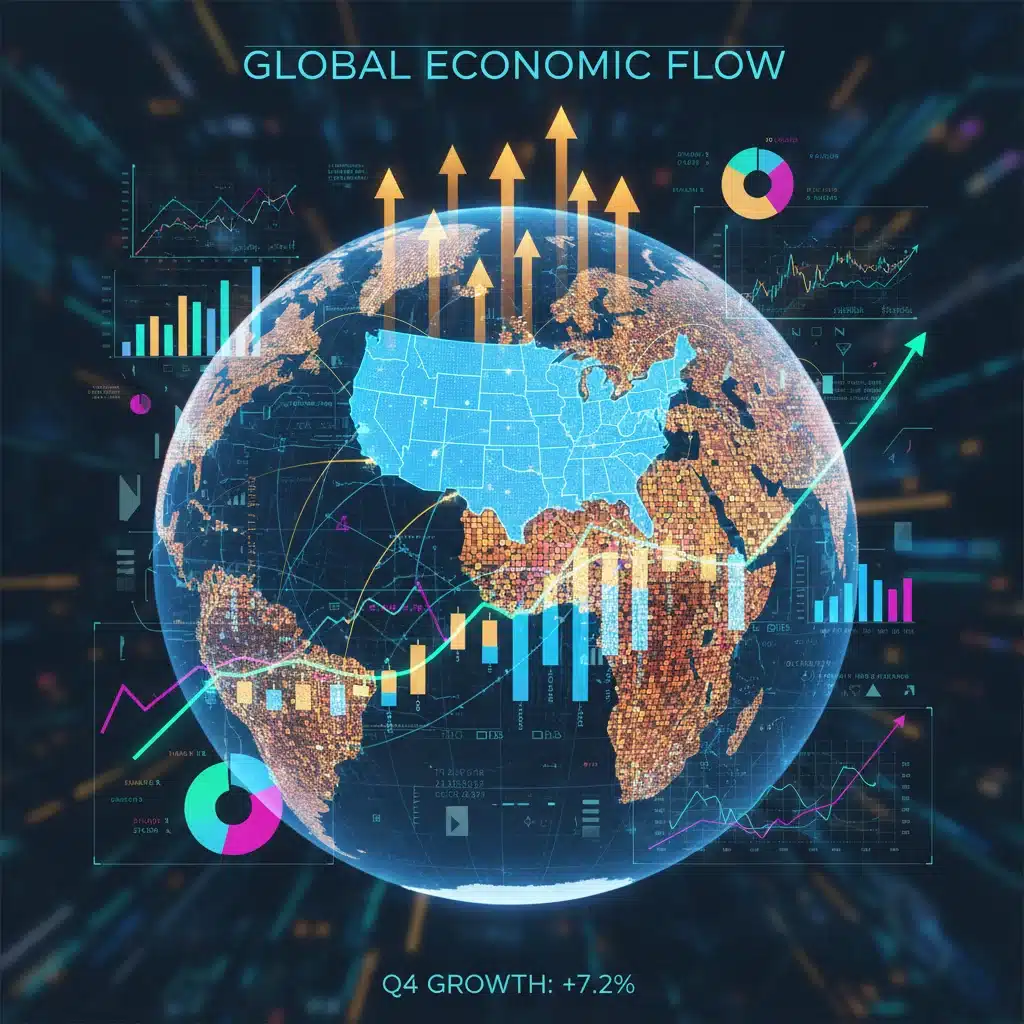
The Latest 2026 Economic Forecast: US GDP Growth Projected at 2.8% Amid Global Shifts
As we navigate the complexities of the current global landscape, understanding the trajectory of key economic indicators becomes paramount. The 2026 Economic Forecast provides a critical lens through which we can examine the anticipated performance of the United States economy and its interconnectedness with global trends. Projections suggest a robust US GDP growth rate of 2.8% for 2026, a figure that reflects both resilience and adaptation in the face of ongoing challenges and emerging opportunities. This comprehensive analysis will delve into the factors underpinning this forecast, exploring the nuances of inflation, labor markets, monetary policies, and the geopolitical landscape that will shape the economic narrative in the coming years.
The global economy is a dynamic entity, constantly influenced by a myriad of forces ranging from technological advancements to geopolitical tensions. The 2026 Economic Forecast is not merely a set of numbers; it is a narrative woven from intricate data, expert analysis, and an understanding of historical patterns. For businesses, policymakers, and individuals alike, grasping the intricacies of this forecast is essential for strategic planning, investment decisions, and financial stability. Our aim is to provide a detailed, accessible, and insightful overview of what to expect, helping you to prepare for the economic environment of 2026 and beyond.
Understanding the US GDP Growth Projection for 2026
The cornerstone of the 2026 Economic Forecast is the projected US GDP growth of 2.8%. This figure indicates a healthy expansion, signaling a continued recovery and expansion phase for the American economy. Several key drivers are expected to contribute to this growth. Consumer spending, which accounts for a significant portion of GDP, is anticipated to remain strong, supported by stable employment and potentially rising real wages. Business investment, fueled by technological innovation and a need for increased productivity, is also expected to play a crucial role. Furthermore, government spending on infrastructure and strategic initiatives could provide additional impetus.
However, achieving this 2.8% growth rate is contingent on a delicate balance of factors. The ability of supply chains to normalize, the containment of inflationary pressures, and the stability of the global trading environment will all influence the actual outcome. The US economy has demonstrated remarkable adaptability in recent years, pivoting from pandemic-induced shutdowns to a period of rapid recovery. This adaptability will be tested as new challenges emerge, but the underlying strength of the American market, coupled with its innovative capacity, provides a solid foundation for the projected growth.
When discussing the 2026 Economic Forecast, it’s important to consider the qualitative aspects of growth as well. Is this growth sustainable? Is it inclusive? What are the potential environmental impacts? A healthy GDP growth rate is desirable, but it must be viewed within the broader context of societal well-being and long-term sustainability. The focus will increasingly be on smart growth – growth that leverages technology, promotes equity, and minimizes ecological footprints. The composition of GDP growth in 2026 will therefore be as important as the headline number itself.
Key Drivers of US GDP in 2026
- Consumer Spending: A resilient labor market and potentially easing inflation could bolster consumer confidence and spending on goods and services. The shift in consumer preferences towards experiences and sustainable products may also influence spending patterns.
- Business Investment: Companies are expected to continue investing in automation, artificial intelligence, and renewable energy technologies to enhance efficiency and competitiveness. This capital expenditure will be a significant contributor to GDP.
- Government Expenditure: Ongoing infrastructure projects, investments in green technologies, and defense spending will provide a steady stream of government-led economic activity. Fiscal policy will likely remain supportive of growth.
- Net Exports: While global trade remains subject to geopolitical dynamics, a strengthening global economy could lead to increased demand for American goods and services, positively impacting net exports.
- Technological Innovation: The rapid pace of technological advancement, particularly in areas like AI, biotechnology, and advanced manufacturing, will drive new industries, create jobs, and boost productivity across sectors.
Global Economic Outlook: A Backdrop to the 2026 Economic Forecast
The 2026 Economic Forecast for the US cannot be analyzed in isolation. The global economic environment serves as a critical backdrop, influencing everything from trade balances to investor sentiment. In 2026, the world economy is expected to continue its recovery path, albeit with varying speeds and challenges across different regions. Emerging markets, particularly in Asia, are projected to remain significant contributors to global growth, driven by demographic dividends and increasing integration into global value chains. Europe’s economic recovery will likely be influenced by its energy transition and geopolitical stability, while Latin America and Africa will continue to navigate their unique development trajectories.
One of the most significant global factors impacting the 2026 Economic Forecast is the ongoing evolution of supply chains. The lessons learned from recent disruptions have prompted a re-evaluation of globalization strategies, leading to a trend towards regionalization and diversification. While this may initially lead to some inefficiencies, it is also expected to build greater resilience into the global trading system over the long term. International trade policies, including potential new agreements and existing tariffs, will also shape the flow of goods and services, affecting corporate profitability and consumer prices.
Furthermore, the global push towards sustainability and decarbonization will be a major economic theme in 2026. Investments in renewable energy, electric vehicles, and green infrastructure are expected to surge worldwide, creating new industries and job opportunities. This transition, while necessary, will also present challenges, particularly for economies heavily reliant on fossil fuels. The pace and coordination of global climate action will have profound implications for economic growth and stability.
Regional Economic Highlights for 2026
- Asia: Expected to remain the engine of global growth, with China and India leading the charge. Focus on domestic consumption and technological self-sufficiency.
- Europe: Gradual recovery, potentially bolstered by green investments and digital transformation initiatives. Energy security and geopolitical stability remain key concerns.
- Latin America: Mixed outlook, with some countries benefiting from commodity prices and others facing structural challenges. Political stability will be crucial.
- Africa: Continued growth potential, driven by young populations and increasing urbanization. Investment in infrastructure and human capital will be vital for sustained development.
Inflation Outlook: A Critical Component of the 2026 Economic Forecast
Inflation has been a dominant economic concern in recent years, and its trajectory will significantly influence the 2026 Economic Forecast. Experts anticipate that by 2026, inflationary pressures will have largely moderated, settling closer to central banks’ target rates. This moderation is expected to result from a combination of factors: the easing of supply chain bottlenecks, a rebalancing of demand and supply, and the lagged effects of tighter monetary policies implemented in previous years. However, risks remain, including potential geopolitical shocks that could disrupt energy or food supplies, or persistent wage-price spirals in certain sectors.
Central banks, including the Federal Reserve, will continue to play a pivotal role in managing inflation. Their monetary policy decisions – particularly regarding interest rates and quantitative easing/tightening – will be closely watched. The challenge for central bankers will be to maintain price stability without stifling economic growth. The 2026 Economic Forecast assumes a delicate dance between controlling inflation and fostering an environment conducive to sustainable expansion. Credibility of monetary policy will be key to anchoring inflation expectations and preventing erratic price movements.
Beyond headline inflation, understanding core inflation (which excludes volatile food and energy prices) will be crucial. This measure provides a clearer picture of underlying price pressures and the effectiveness of monetary policy. Additionally, the impact of structural changes, such as de-globalization or increased domestic production, on long-term inflation trends will be an area of intense study. The ability of economies to absorb higher labor costs through productivity gains will also be a defining factor in the inflation narrative of 2026.
Factors Influencing Inflation in 2026
- Supply Chain Normalization: Continued improvement in global logistics and manufacturing capacity will help reduce input costs.
- Monetary Policy Effectiveness: The cumulative effect of interest rate hikes and balance sheet reduction will dampen aggregate demand.
- Energy Prices: Stability in global energy markets, barring unforeseen geopolitical events, will contribute to overall price stability.
- Wage Growth: While a strong labor market may lead to wage increases, these are expected to align more closely with productivity gains than in recent inflationary spikes.
- Geopolitical Stability: Major conflicts or trade wars could disrupt supply and drive up prices unexpectedly.
The Labor Market in the 2026 Economic Forecast
A healthy labor market is a strong indicator of economic well-being, and the 2026 Economic Forecast anticipates continued strength in US employment. While the rapid job growth seen in the immediate post-pandemic recovery might moderate, unemployment rates are expected to remain low, consistent with full employment conditions. The nature of work, however, will continue to evolve rapidly. Automation, artificial intelligence, and new technologies will reshape job roles, creating demand for new skills and potentially displacing others.
The challenge for the labor market in 2026 will be to bridge the skills gap, ensuring that the workforce possesses the capabilities required by the evolving economy. Investment in education, vocational training, and lifelong learning initiatives will be critical. The gig economy and remote work trends, accelerated by the pandemic, are also expected to solidify their presence, offering both flexibility and new challenges for labor market regulation and social safety nets. The 2026 Economic Forecast will therefore highlight the importance of adaptability and continuous learning for both employers and employees.
Demographic shifts, including an aging population in many developed economies, will also influence labor market dynamics. This could lead to continued labor shortages in specific sectors, pushing up wages and encouraging greater investment in automation. Immigration policies will also play a role in addressing these demographic challenges. The focus will be on creating a dynamic and inclusive labor market that can support sustainable economic growth and provide opportunities for all segments of the population.
Key Labor Market Trends for 2026
- Skill Gap: Continued demand for STEM skills and digital literacy, requiring significant investment in education and training.
- Automation and AI: Reshaping job roles, increasing productivity, and necessitating upskilling/reskilling programs.
- Remote and Hybrid Work: Permanent fixtures in many industries, impacting urban planning and office space demand.
- Demographic Shifts: Aging workforce leading to potential labor shortages in certain sectors, emphasizing the need for immigration and automation.
- Gig Economy Expansion: Increased flexibility for workers but also challenges in ensuring social protections.
Monetary and Fiscal Policy in the 2026 Economic Forecast
The interplay of monetary and fiscal policy will be crucial in shaping the 2026 Economic Forecast. As mentioned, central banks are expected to maintain a vigilant stance on inflation, potentially keeping interest rates at levels that are neither excessively restrictive nor overly stimulative. The emphasis will be on data-driven decisions, with flexibility to adjust policies as economic conditions evolve. The quantitative tightening measures initiated by many central banks will likely continue, gradually reducing their balance sheets without causing market disruptions.
On the fiscal front, governments will face the dual challenge of supporting economic growth while managing public debt levels. The substantial fiscal stimulus deployed during the pandemic has led to elevated debt-to-GDP ratios in many countries. In 2026, the focus will likely shift towards more targeted fiscal policies aimed at enhancing long-term productivity, such as investments in research and development, green infrastructure, and education. The 2026 Economic Forecast will assume a degree of fiscal prudence, balancing immediate needs with long-term sustainability.
The coordination between monetary and fiscal authorities will be paramount. A synchronized approach can amplify the effectiveness of policy interventions, while conflicting objectives could create instability. The global nature of economic challenges, from climate change to pandemics, also necessitates international cooperation in policy formulation. The G7, G20, and international financial institutions will continue to play a vital role in fostering this coordination, aiming for a stable and prosperous global economic environment.
Policy Considerations for 2026
- Interest Rate Management: Central banks will aim for a neutral stance, balancing inflation control with growth support.
- Debt Sustainability: Governments will focus on reducing deficits and managing public debt through targeted spending and revenue generation.
- Targeted Investments: Fiscal policy will prioritize investments in areas like green technology, infrastructure, and human capital to boost long-term potential.
- International Policy Coordination: Joint efforts to address global challenges like climate change, trade imbalances, and financial stability.
- Regulatory Environment: Evolution of regulations in areas like digital assets, artificial intelligence, and environmental standards will impact economic activity.
Geopolitical Risks and Opportunities in the 2026 Economic Forecast
Geopolitical developments always cast a long shadow over economic forecasts, and the 2026 Economic Forecast is no exception. Ongoing conflicts, trade tensions, and shifts in international alliances can introduce significant volatility and uncertainty into the global economy. The stability of key regions, particularly those vital for energy and raw material supplies, will be a critical factor. Any escalation of existing conflicts or emergence of new ones could disrupt supply chains, drive up commodity prices, and dampen investor confidence.
Conversely, diplomatic breakthroughs and increased international cooperation present significant opportunities. The resolution of trade disputes, for example, could unlock new avenues for economic growth and foster greater global integration. Collaborative efforts to address shared challenges, such as climate change and global health, could also stimulate innovation and create new markets. The 2026 Economic Forecast must therefore account for a range of potential geopolitical scenarios, from optimistic cooperation to heightened tensions.
The rise of economic nationalism and protectionist policies in some countries could also fragment global markets, leading to inefficiencies and reduced trade volumes. However, the inherent benefits of international trade and specialization are likely to ensure that globalization, albeit in a modified form, continues to be a dominant force. Companies will increasingly need to navigate a complex geopolitical landscape, diversifying their supply chains and understanding regional political dynamics to mitigate risks and capitalize on opportunities.
Major Geopolitical Factors for 2026
- International Conflicts: Ongoing regional conflicts and their potential for escalation or resolution will impact global stability and commodity prices.
- Trade Relations: Evolution of trade agreements, tariffs, and trade disputes between major economic blocs.
- Resource Security: Competition for critical resources like rare earth minerals, water, and energy will influence international relations.
- Cybersecurity: State-sponsored cyberattacks and digital espionage pose risks to critical infrastructure and economic stability.
- Global Governance: The effectiveness of international institutions in addressing shared challenges like climate change, pandemics, and financial stability.
Technological Advancements: Shaping the 2026 Economic Forecast
Technological innovation is a relentless force, consistently reshaping economies and societies. In the 2026 Economic Forecast, advancements in artificial intelligence (AI), machine learning, biotechnology, quantum computing, and renewable energy will be pivotal. These technologies are not just improving existing processes; they are creating entirely new industries, business models, and job categories. The pace of digital transformation is expected to accelerate, impacting nearly every sector from manufacturing to healthcare to finance.
AI, in particular, is poised to drive significant productivity gains across various industries. While concerns about job displacement are valid, the overall consensus is that AI will augment human capabilities, leading to higher-value work and new forms of employment. Investment in AI research and development, along with the ethical considerations surrounding its deployment, will be key themes in 2026. The 2026 Economic Forecast will reflect the economic benefits derived from these technological leaps, assuming responsible development and widespread adoption.
Beyond AI, the continued maturation of renewable energy technologies will transform global energy markets, reducing reliance on fossil fuels and mitigating climate change. Biotechnology holds the promise of revolutionary advancements in medicine and agriculture, while quantum computing could unlock unprecedented computational power. These innovations will not only contribute to GDP growth but also enhance human well-being and environmental sustainability, forming a crucial part of the long-term economic narrative.
Technological Innovations Impacting 2026
- Artificial Intelligence (AI): Driving productivity, automating tasks, and creating new service industries.
- Biotechnology: Advances in medicine, agriculture, and materials science.
- Renewable Energy: Continued growth in solar, wind, and other clean energy sources, transforming energy grids.
- Quantum Computing: Early stages of commercialization, with potential to revolutionize data processing and cryptography.
- Advanced Manufacturing: Robotics, 3D printing, and smart factories enhancing efficiency and customization.
Investment Opportunities and Challenges in the 2026 Economic Forecast
For investors, the 2026 Economic Forecast presents both exciting opportunities and notable challenges. Sectors poised for significant growth include technology, renewable energy, healthcare, and infrastructure. Companies at the forefront of innovation in these areas are likely to attract substantial capital. The shift towards sustainable investing will also accelerate, with environmental, social, and governance (ESG) factors becoming increasingly integrated into investment decisions.
However, investors will need to navigate a landscape characterized by potential volatility, influenced by geopolitical events, inflation surprises, and policy shifts. Diversification across asset classes and geographies will remain a prudent strategy. The rising interest rate environment, while potentially moderating by 2026, will continue to influence valuations, particularly for growth stocks. The 2026 Economic Forecast suggests a need for careful due diligence and a long-term perspective.
Specific challenges include the ongoing regulatory scrutiny of large technology companies, the potential for cybersecurity risks, and the impact of climate-related events on certain industries. Emerging markets, while offering higher growth potential, often come with increased political and economic risks. Understanding these dynamics and conducting thorough risk assessments will be paramount for successful investing in 2026.
Investment Themes for 2026
- Tech Innovation: AI, cloud computing, cybersecurity, and software-as-a-service (SaaS) companies.
- Green Economy: Renewable energy production, electric vehicle infrastructure, sustainable agriculture, and circular economy solutions.
- Healthcare & Biotech: Personalized medicine, gene therapies, and digital health platforms.
- Infrastructure Development: Investments in modernizing transportation, energy grids, and digital networks.
- Emerging Markets: Opportunities in fast-growing economies, particularly in Asia and parts of Africa, with careful risk assessment.
Conclusion: Navigating the 2026 Economic Landscape
The 2026 Economic Forecast paints a picture of continued growth for the US economy, with a projected GDP expansion of 2.8%, underpinned by resilient consumer spending, robust business investment, and ongoing technological innovation. This positive outlook is, however, set against a complex global backdrop characterized by evolving geopolitical dynamics, the imperative of climate action, and persistent inflationary considerations.
Navigating this landscape will require proactive strategies from businesses, adaptive policies from governments, and informed decisions from individuals. The emphasis will be on fostering sustainable growth, building resilient supply chains, addressing skill gaps in the labor market, and harnessing the transformative power of technology. While challenges are inevitable, the inherent strengths of the global economy, coupled with a renewed focus on international cooperation and innovation, offer significant opportunities for progress.
The 2026 Economic Forecast is not a static prediction but a dynamic projection, subject to revisions as new data emerges and unforeseen events unfold. Continuous monitoring of key economic indicators, geopolitical developments, and technological breakthroughs will be essential for staying ahead of the curve. By understanding the forces at play, we can better prepare for the economic realities of 2026 and work towards a more prosperous and stable future for all.