2026 Unemployment Benefits: State Programs & 26-Week Support
Comparing 2026 Unemployment Benefits: Which State Programs Offer the Most Support for Up to 26 Weeks?
The economic landscape is in constant flux, and for many, the possibility of job loss, while hopefully distant, remains a concern. Understanding the safety nets available, particularly unemployment benefits, is crucial for financial planning and peace of mind. As we look ahead to 2026, it’s vital to examine how different state programs are structured, especially concerning the duration of support. The standard duration for unemployment benefits in many states is 26 weeks, but this isn’t universal, and the specific rules and benefit amounts can vary significantly. This comprehensive guide aims to shed light on the 2026 Unemployment Benefits landscape, helping you understand which states provide the most robust support for up to 26 weeks and what you need to know about eligibility and application processes.
Unemployment insurance (UI) is a joint federal and state program that provides temporary financial assistance to eligible workers who are unemployed through no fault of their own. While the federal government sets broad guidelines, each state administers its own UI program, leading to a patchwork of rules, benefit amounts, and durations across the nation. This decentralization means that a worker in California might receive a different weekly benefit and for a different length of time than a worker in Florida, even if their previous earnings were similar.
As we approach 2026, it’s unlikely that the fundamental structure of these programs will undergo radical changes without significant federal intervention. However, states continually review and adjust their policies based on economic conditions, legislative priorities, and the solvency of their unemployment trust funds. Therefore, staying informed about the specifics of your state’s program is paramount.
Understanding the Basics of 2026 Unemployment Benefits
Before diving into state-specific comparisons, let’s establish a foundational understanding of how unemployment benefits generally work. To be eligible for 2026 Unemployment Benefits, individuals typically must meet several criteria:
- Monetary Eligibility: You must have earned a certain amount of wages during a specified period (known as the ‘base period’) before becoming unemployed. This base period usually covers the first four of the last five completed calendar quarters before you filed your claim.
- Reason for Separation: You must be unemployed through no fault of your own. This generally means you were laid off, your position was eliminated, or you quit for ‘good cause’ connected with your work. Quitting voluntarily without good cause or being fired for misconduct typically disqualifies you.
- Availability and Search for Work: You must be able, available, and actively seeking work. States often require claimants to register with their state’s employment service and document their job search efforts.
- Weekly Certification: To continue receiving benefits, you must typically certify weekly or bi-weekly that you meet the eligibility requirements, including being unemployed, able to work, available for work, and actively seeking work.
The weekly benefit amount (WBA) is usually calculated based on a percentage of your earnings during your base period, up to a state-defined maximum. The duration of benefits, which is a primary focus of this article, refers to the maximum number of weeks you can receive these payments.
The 26-Week Standard: A Closer Look at State Programs
The standard maximum duration for unemployment benefits was set at 26 weeks by the Social Security Act of 1935. While many states still adhere to this, some have modified their duration, either extending it during periods of high unemployment (often with federal assistance) or shortening it, especially during periods of low unemployment, to conserve trust fund balances. For 2026 Unemployment Benefits, we anticipate that the 26-week mark will remain the benchmark for many states.
States Generally Offering Up to 26 Weeks of Support
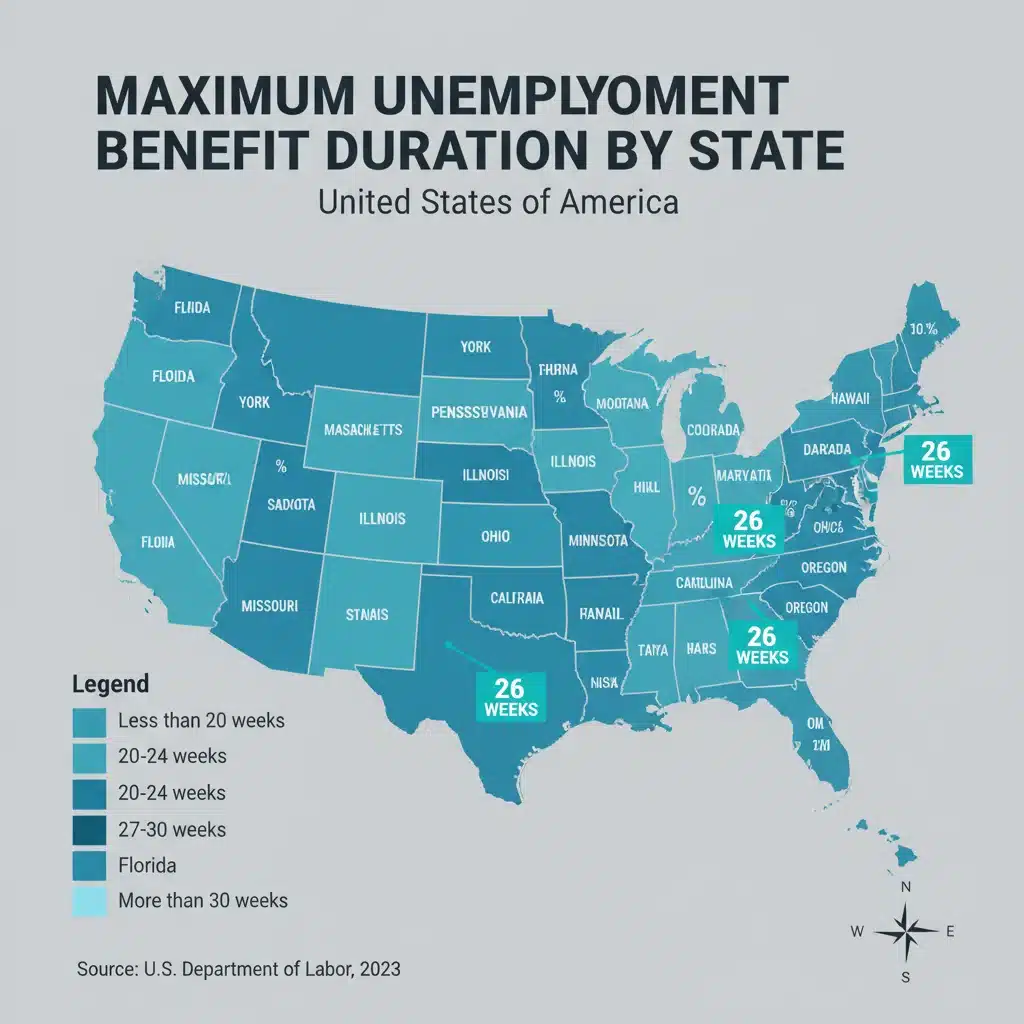
As of current trends and historical data, a significant number of states are expected to continue offering a maximum of 26 weeks of unemployment benefits in 2026. These typically include, but are not limited to:
- California: Known for its robust social safety net, California has historically offered 26 weeks of benefits.
- New York: A state with a large workforce, New York consistently provides 26 weeks of support.
- Illinois: Another populous state, Illinois maintains the 26-week standard.
- Pennsylvania: Pennsylvania’s program is also structured around the 26-week maximum.
- Ohio: Ohio typically provides 26 weeks of benefits to eligible claimants.
- Michigan: Michigan’s unemployment system generally offers 26 weeks of aid.
- Massachusetts: Known for its strong worker protections, Massachusetts offers 26 weeks.
- New Jersey: New Jersey’s program aligns with the 26-week standard.
- Washington: The Evergreen State provides up to 26 weeks of benefits.
- Oregon: Oregon’s unemployment system is also designed for 26 weeks of support.
- Colorado: Colorado typically offers 26 weeks of benefits.
- Virginia: Virginia’s program usually provides up to 26 weeks.
- Maryland: Maryland also adheres to the 26-week maximum.
- Connecticut: Connecticut offers 26 weeks of unemployment benefits.
- Minnesota: Minnesota’s program provides up to 26 weeks of aid.
- Wisconsin: Wisconsin typically offers 26 weeks of benefits.
- North Carolina: After previous changes, North Carolina is expected to maintain 26 weeks.
- Georgia: Georgia’s system generally provides 26 weeks.
- Arizona: Arizona typically offers 26 weeks of benefits.
- Nevada: Nevada’s program usually provides up to 26 weeks.
It’s crucial to remember that while these states generally offer 26 weeks, the actual duration for an individual claimant can be less if they exhaust their total benefit amount before 26 weeks. The total benefit amount is often capped at a certain percentage of their base period wages or a fixed monetary limit, whichever comes first.
States with Variable or Shorter Durations
Some states have implemented variable duration models or have set their maximum duration below 26 weeks. These changes are often tied to the state’s unemployment rate. When unemployment is low, the maximum duration might be shorter, and it might extend as unemployment rises. This approach aims to keep unemployment trust funds solvent and to encourage reemployment more quickly during stronger economic periods.
For 2026 Unemployment Benefits, some states that have historically had variable or shorter durations include:
- Florida: Florida’s maximum duration has historically varied between 12 and 23 weeks, depending on the state’s unemployment rate.
- North Carolina: While expected to be at 26 weeks, North Carolina previously had a variable duration model. It’s important to verify current legislation.
- South Carolina: South Carolina has also had a maximum duration that can be shorter than 26 weeks.
- Missouri: Missouri’s duration can be less than 26 weeks, often depending on the unemployment rate.
- Arkansas: Arkansas has also had a variable duration system.
- Kansas: Kansas has historically offered fewer than 26 weeks, with variations based on the unemployment rate.
- Alabama: Alabama’s maximum duration can also be less than 26 weeks.
For individuals in these states, it’s particularly important to monitor their state’s Department of Labor or Workforce Development website for the most up-to-date information regarding benefit durations as 2026 approaches. Economic forecasts and legislative changes can impact these figures.
Factors Influencing Benefit Duration and Amount
Beyond the maximum duration set by the state, several factors can influence the actual amount and length of time an individual receives 2026 Unemployment Benefits:
- Base Period Earnings: As mentioned, your weekly benefit amount is tied to your past earnings. Higher earnings during the base period generally lead to a higher weekly benefit, up to the state maximum.
- Total Benefit Amount (TBA): Many states calculate a total benefit amount that you are eligible to receive over your benefit year. Once this amount is exhausted, benefits cease, even if you haven’t reached the maximum number of weeks.
- Partial Unemployment: If you find part-time work while receiving benefits, your weekly benefit amount will likely be reduced, but you might still be eligible for partial benefits. This can sometimes extend the period over which you receive some form of assistance, though not the total monetary value.
- State Unemployment Trust Fund Solvency: The financial health of a state’s unemployment trust fund can sometimes influence legislative decisions regarding benefit duration and eligibility. During economic downturns, these funds can be depleted, leading to calls for federal assistance or state-level adjustments.
- Federal Programs: Historically, during severe recessions, the federal government has implemented extended benefit programs (like Emergency Unemployment Compensation during the Great Recession or Pandemic Unemployment Assistance during COVID-19) that can significantly extend the duration of benefits beyond state maximums. While no such broad federal programs are currently anticipated for 2026, economic conditions could change.
Maximizing Your 2026 Unemployment Benefits Claim
If you find yourself in a position where you need to claim 2026 Unemployment Benefits, understanding the process and your rights is key to maximizing your support:
1. File Your Claim Promptly
Do not delay. Benefits typically begin from the week you file your initial claim, not from when you lost your job. Waiting can mean losing out on eligible weeks of benefits.
2. Gather Necessary Documentation
Before applying, collect essential information:
- Social Security number
- Driver’s license or state ID
- Mailing address and phone number
- Employer’s name and address for all employers during your base period
- Dates of employment
- Reason for separation from each employer
- Gross earnings for your base period (pay stubs, W-2s, or tax returns can help)
- Alien Registration Number (if not a U.S. citizen)
- DD Form 214 (for ex-military personnel)
- SF-8 or SF-50 (for former federal employees)
3. Understand Your State’s Specific Rules
Each state has its own Department of Labor or Workforce Development website. This is your primary resource for accurate and up-to-date information on eligibility, weekly benefit amounts, and duration for 2026 Unemployment Benefits. Pay close attention to:
- Weekly Certification Requirements: How often do you need to certify, and what information do you need to provide?
- Job Search Requirements: How many job contacts are required per week, and how should you document them?
- Reporting Earnings: If you work part-time, understand how to report your earnings to avoid overpayment and potential penalties.
4. Actively Seek Work
This is a non-negotiable requirement. Most states will require you to register with their state employment service and actively search for suitable work. Keep detailed records of your job search activities, including dates, company names, contact persons, and outcomes.
5. Appeal Denials if Necessary
If your claim is denied, don’t despair. You have the right to appeal the decision. Understand the appeals process, deadlines, and how to present your case. Often, initial denials can be overturned on appeal, especially if there was a misunderstanding of the facts or a procedural error.
6. Consider Training and Re-employment Services
Many state workforce agencies offer free job search assistance, career counseling, resume writing workshops, and even retraining programs. Taking advantage of these resources can not only help you find a new job faster but also potentially qualify you for extended benefits if you are enrolled in approved training programs.
The Broader Economic Context for 2026 Unemployment Benefits
The state of the economy in 2026 will undoubtedly play a significant role in how unemployment benefits function. A robust economy with low unemployment typically means fewer claimants and healthier state trust funds. Conversely, an economic downturn could strain these funds and potentially trigger discussions around federal intervention or state-level policy adjustments.
Policymakers constantly balance the need to provide a safety net for those out of work with the desire to maintain fiscal responsibility and encourage reemployment. This balance can lead to legislative changes, sometimes impacting benefit duration or eligibility criteria. Therefore, while this article provides a forward-looking perspective on 2026 Unemployment Benefits based on current trends, it’s essential to remain vigilant for any legislative updates at both the state and federal levels.
Technological Advancements in UI Systems
Many states are also investing in modernizing their unemployment insurance systems. The COVID-19 pandemic exposed vulnerabilities and inefficiencies in many legacy systems, leading to significant backlogs and delays. By 2026, we can expect to see more streamlined online application processes, improved communication channels, and potentially more sophisticated tools for job matching and reemployment services. These technological advancements aim to make the process of claiming and receiving 2026 Unemployment Benefits more efficient and user-friendly.
The Role of Federal vs. State in Unemployment Benefits
It’s important to reiterate the distinct roles of federal and state governments in the unemployment insurance program. The federal government, through the Federal Unemployment Tax Act (FUTA), funds the administrative costs of state UI programs and also provides temporary extended benefits during periods of high unemployment. However, it is the state governments that:
- Determine eligibility requirements.
- Set weekly benefit amounts.
- Establish the maximum duration of regular benefits (e.g., 26 weeks or less).
- Collect unemployment taxes from employers.
- Process claims and disburse benefits.
This dual system means that while there’s a baseline framework, the specific experience of claiming 2026 Unemployment Benefits can differ significantly depending on where you reside.

Impact of State-Specific Economic Conditions
A state’s unique economic conditions also play a critical role. States with diverse economies and lower unemployment rates may have more solvent trust funds, allowing them to maintain more generous benefit structures. Conversely, states with economies heavily reliant on a single industry, which might be prone to cyclical downturns, could face greater challenges in maintaining their unemployment trust fund solvency, potentially leading to shorter benefit durations or stricter eligibility criteria in the future.
For instance, a state heavily reliant on tourism might experience a different unemployment landscape during a global travel slowdown compared to a state with a strong technology sector. These localized economic realities can influence how 2026 Unemployment Benefits are structured and administered.
Preparing for Potential Job Loss in 2026
While no one hopes for job loss, proactive preparation can significantly ease the burden if it occurs. Beyond understanding 2026 Unemployment Benefits, consider these steps:
- Build an Emergency Fund: Aim for at least 3-6 months of living expenses in an easily accessible savings account. This provides a buffer while you navigate the unemployment process.
- Maintain a Professional Network: Strong professional connections can be invaluable for job searching and receiving leads.
- Keep Your Resume Updated: Regularly update your resume with new skills, experiences, and accomplishments.
- Understand Your Severance Package: If your employer offers one, understand its terms and how it might interact with unemployment benefits. Some states might delay the start of unemployment benefits if you receive a significant severance.
- Review Your Health Insurance Options: Losing a job often means losing employer-sponsored health insurance. Research COBRA, marketplace plans (Affordable Care Act), and Medicaid eligibility in advance.
These proactive measures, combined with a clear understanding of the 2026 Unemployment Benefits landscape, can provide a stronger sense of security in uncertain times.
Conclusion: Navigating Unemployment Benefits in 2026
The system of unemployment benefits in the United States is complex, with significant variations from state to state. As we look towards 2026, the 26-week maximum duration for benefits remains a cornerstone for many state programs, offering a vital safety net for workers experiencing job loss. However, it’s equally important to acknowledge that some states operate with shorter or variable durations, often tied to local economic conditions.
For anyone who might need to access 2026 Unemployment Benefits, the key takeaways are clear: be informed, act promptly, and understand the specific requirements of your state’s program. Utilize official state Department of Labor or Workforce Development websites as your primary source of information. By doing so, you can effectively navigate the system, maximize the support available to you, and focus on your path to reemployment.
Remember, unemployment benefits are not a handout but an earned insurance, designed to provide temporary relief and stability during challenging transitions. Being prepared and knowledgeable about the specifics of 2026 Unemployment Benefits is your best defense against the financial uncertainties that can accompany job loss.