Choosing Your College Major 2026: Data-Driven Insights for U.S. Applicants

Choosing a college major is one of the most significant decisions a U.S. applicant will make. It’s a choice that can shape your academic journey, professional trajectory, and ultimately, your financial well-being. With the landscape of higher education and the job market constantly evolving, making an informed decision for 2026 requires more than just following your passion; it demands a data-driven approach. This comprehensive guide aims to equip you with the insights, trends, and considerations necessary to navigate the complex world of college major selection, ensuring your choice aligns with future opportunities and personal fulfillment.
The stakes are high. The average cost of a four-year degree in the U.S. continues to rise, making the return on investment (ROI) a critical factor. Moreover, the rapid pace of technological advancement and global economic shifts means that certain fields are experiencing unprecedented growth, while others face stagnation or decline. Understanding these dynamics is paramount for any prospective college student aiming for success in the mid-2020s and beyond. We will delve into current job market trends, examine majors with high earning potential, explore fields experiencing significant demand, and provide a framework for aligning your interests with viable career paths. Our focus is on providing actionable intelligence so you can make the best possible college major selection for your future.
The Current Landscape: Why Data-Driven Decisions Matter for College Major Selection
In today’s competitive environment, anecdotal advice often falls short. Relying solely on what your parents studied, what your friends are pursuing, or what seems ‘fun’ without considering broader trends can lead to suboptimal outcomes. The Bureau of Labor Statistics (BLS) provides invaluable data on occupational outlooks, wage projections, and educational requirements, offering a crucial foundation for any serious college major selection process. For 2026 applicants, this data is not just informative; it’s foundational.
Consider the rapid advancements in artificial intelligence, automation, and biotechnology. These aren’t just buzzwords; they represent seismic shifts in the labor market. Jobs that were once considered stable may become automated, while entirely new roles are emerging at an astonishing pace. Therefore, a major that prepares you for adaptability, critical thinking, and continuous learning will be more valuable than one focused on highly specialized, routine tasks. Our discussion on college major selection will emphasize majors that foster these transferable skills.
Furthermore, the concept of a “job for life” is largely a relic of the past. Most individuals today can expect to change careers multiple times. This reality underscores the importance of choosing a major that provides a strong foundational skill set, allowing you to pivot and retrain as industries evolve. It’s about building a robust intellectual toolkit, not just acquiring a single trade. This perspective is vital when contemplating your college major selection.
Understanding Job Market Projections for 2026 and Beyond
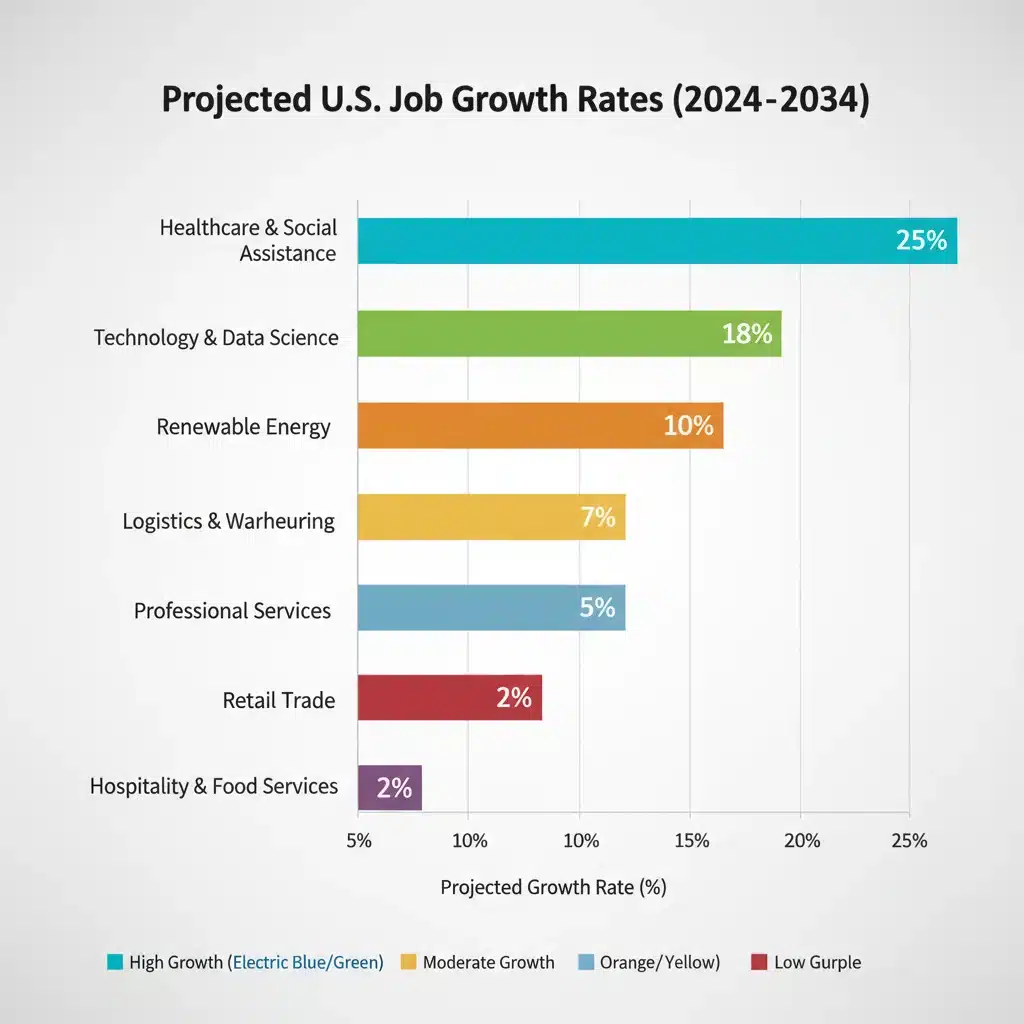
The U.S. job market is projected to continue its growth, albeit with significant variations across sectors. According to the latest BLS projections, healthcare, technology, and renewable energy sectors are expected to lead in job creation. For instance, roles within healthcare, such as registered nurses, medical and health services managers, and physical therapists, are consistently in high demand. Similarly, the demand for software developers, data scientists, and cybersecurity analysts shows no signs of slowing down.
Conversely, some traditional sectors may experience slower growth or even decline due to automation and changing consumer behaviors. This doesn’t mean these fields are “bad” choices, but it does mean that individuals pursuing them might need to consider advanced degrees, specialized niches, or roles that incorporate technology and analytical skills to remain competitive. This nuanced understanding is crucial for strategic college major selection.
When evaluating job market projections, look beyond the headlines. Dig into specific occupations within a broader field. For example, while “business” is a broad category, a major in business analytics or supply chain management might offer more direct career pathways and higher earning potential than a general business administration degree without a specialization. This level of detail in your research is what distinguishes a truly data-driven college major selection.
High-Demand Majors: Where the Opportunities Are
For applicants targeting 2026, understanding which majors lead to the most in-demand careers is a critical first step. These are the fields where employers are actively seeking talent, often offering competitive salaries and robust career progression opportunities. Focusing on these areas can significantly enhance your post-graduation prospects. Here are some of the top high-demand categories for your college major selection:
1. STEM Fields (Science, Technology, Engineering, Mathematics)
STEM continues to be a powerhouse for job growth and high salaries. Within STEM, certain areas stand out:
- Computer Science/Information Technology: With the digital transformation accelerating across all industries, the demand for professionals skilled in software development, cybersecurity, data science, artificial intelligence, and cloud computing is insatiable. A major in computer science, information systems, or a related field opens doors to a vast array of roles.
- Engineering: While traditional engineering disciplines like civil and mechanical engineering remain important, newer fields like biomedical engineering, environmental engineering, and software engineering are experiencing particularly strong growth. These majors often lead to roles in innovation, research, and infrastructure development.
- Data Science/Analytics: As businesses increasingly rely on data to make decisions, the ability to collect, analyze, and interpret large datasets is a highly sought-after skill. Majors in data science, statistics, or applied mathematics with a focus on data analytics are excellent choices.
- Biotechnology/Life Sciences: Advances in genetics, pharmaceuticals, and medical technology are driving demand for biologists, chemists, and biotechnologists. These majors can lead to careers in research, drug development, and healthcare innovation.
2. Healthcare
The healthcare sector is consistently one of the largest and fastest-growing employers in the U.S., driven by an aging population and advancements in medical care. Many healthcare professions require specialized degrees and certifications, making early college major selection crucial.
- Nursing: Registered nurses (RNs) are always in high demand across various settings – hospitals, clinics, schools, and home healthcare. A Bachelor of Science in Nursing (BSN) is often preferred.
- Allied Health Professions: This broad category includes physical therapists, occupational therapists, medical technicians, and physician assistants. These roles often require specific undergraduate majors (e.g., Kinesiology, Biology, Health Sciences) followed by graduate degrees.
- Health Information Technology: As healthcare becomes more digitized, professionals who can manage patient data, electronic health records, and healthcare IT systems are becoming indispensable. Majors in health informatics or health information management are excellent options.
3. Business and Finance (with a quantitative focus)
While general business degrees can be versatile, specializations that incorporate strong analytical and quantitative skills are particularly valuable.
- Finance/Financial Technology (FinTech): Majors in finance, particularly those with a focus on quantitative finance, financial engineering, or FinTech, prepare students for roles in investment banking, financial analysis, and innovative financial services.
- Supply Chain Management/Logistics: The complexities of global supply chains have highlighted the need for skilled professionals who can optimize logistics, manage inventory, and ensure efficient operations.
- Marketing Analytics/Digital Marketing: In the digital age, marketing is increasingly data-driven. Majors that combine marketing principles with data analytics, consumer behavior, and digital strategy are highly attractive to employers.
Earning Potential: Maximizing Your ROI
While passion and interest are vital, understanding the potential financial returns of your college major selection is a pragmatic and important consideration. Data on median salaries for recent graduates and mid-career professionals can offer valuable insights. It’s important to note that these are averages, and individual earnings can vary significantly based on factors like university prestige, geographic location, specific job role, and individual performance. However, these figures provide a general benchmark to guide your college major selection.
Top-Earning Majors Post-Graduation
Generally, majors within engineering, computer science, and certain specialized business fields consistently rank among the highest for starting salaries. For instance:
- Petroleum Engineering: Often at the top, though job market volatility can be a factor.
- Computer Engineering/Science: Consistently high demand and competitive salaries, especially in tech hubs.
- Aerospace Engineering: Strong salaries, often tied to defense and space industries.
- Chemical Engineering: Versatile degree with applications in many industries.
- Electrical Engineering: Foundational for many tech and manufacturing roles.
- Operations Research & Industrial Engineering: Focuses on efficiency and problem-solving in complex systems.
- Information Systems/Technology: Bridging business and tech, these roles are crucial for modern enterprises.
- Finance (especially quantitative roles): High potential in financial services.
Mid-Career Salary Growth
Beyond initial salaries, consider which majors offer substantial salary growth over a career. Fields that emphasize problem-solving, advanced analytical skills, and leadership often see significant increases in earning potential. Many STEM and quantitative business majors show strong mid-career salary growth, reflecting the increasing value of experience and specialized knowledge in these areas. This long-term perspective is key when making your college major selection.
It’s also worth noting that some majors, while not having the highest starting salaries, offer excellent long-term earning potential if combined with advanced degrees (e.g., medicine, law) or specialized certifications (e.g., project management, cybersecurity certifications). This highlights the importance of viewing your undergraduate college major selection as a stepping stone rather than the final destination.
Aligning Interests, Skills, and Opportunities
While data on job growth and earning potential is crucial, your college major selection should also genuinely align with your interests, strengths, and personal values. Pursuing a major solely for its financial prospects without any genuine interest can lead to burnout, dissatisfaction, and ultimately, a less fulfilling career.
Self-Assessment: Knowing Yourself
Before diving deep into major descriptions, take time for self-reflection:
- What subjects genuinely excite you? Are you drawn to solving complex math problems, writing compelling narratives, understanding human behavior, or designing innovative solutions?
- What are your natural aptitudes? Are you a strong analytical thinker, a creative problem-solver, an empathetic communicator, or a meticulous organizer?
- What kind of work environment do you envision? Do you thrive in collaborative teams, independent research settings, fast-paced corporate environments, or public service roles?
- What are your long-term career goals? Do you aspire to leadership, entrepreneurship, scientific discovery, artistic expression, or community impact?
Resources like career aptitude tests, personality assessments (e.g., Myers-Briggs, Holland Codes), and discussions with guidance counselors can be very helpful during this self-assessment phase of your college major selection process.
Exploring Majors and Their Career Pathways
Once you have a clearer understanding of yourself, begin to research majors that align with your profile. Don’t just look at the major’s name; investigate the curriculum, the types of projects students undertake, and the common career paths graduates pursue. Many universities offer detailed major descriptions and career services resources that map majors to potential occupations. Pay attention to:
- Core coursework: Does it sound engaging and challenging in a good way?
- Elective options: Do they allow for specialization or exploration of diverse interests?
- Internship opportunities: Are there strong connections to relevant industries?
- Alumni outcomes: What are graduates of this program doing now?
Remember that many majors are highly versatile. A liberal arts degree, for example, can lead to a wide range of careers if supplemented with internships, strong communication skills, and a clear career focus. The key is to understand how your chosen college major selection provides you with transferable skills that are valued across various industries.

Emerging Trends and Niche Majors to Consider for 2026
Beyond the well-established high-demand fields, several emerging areas and niche majors are gaining prominence and offer exciting future prospects for your college major selection. Staying ahead of these trends can give you a significant advantage.
1. Environmental Science and Sustainability
With increasing global concern over climate change and resource depletion, majors focused on environmental science, sustainability studies, renewable energy, and conservation are becoming vital. These fields address critical societal challenges and offer careers in policy, research, engineering, and corporate sustainability. This area is seeing significant investment and job growth.
2. Human-Computer Interaction (HCI) and User Experience (UX) Design
As technology becomes more integrated into our daily lives, the design of intuitive, user-friendly interfaces is paramount. HCI and UX design majors combine elements of psychology, computer science, and design to create seamless digital experiences. This is a rapidly growing field with strong demand in tech companies and beyond.
3. Public Health and Epidemiology
The recent global health crises have highlighted the critical importance of public health professionals. Majors in public health, epidemiology, and global health prepare students for careers in disease prevention, health promotion, policy development, and community health initiatives. This field offers significant societal impact.
4. Cybersecurity
As cyber threats become more sophisticated, the need for cybersecurity experts is skyrocketing across all sectors. A major in cybersecurity, often housed within computer science or information systems departments, provides specialized skills to protect digital assets and infrastructure. This is a field with high demand and excellent compensation.
5. Robotics and Automation
The integration of robotics and automation into manufacturing, logistics, and even service industries is creating new demands for engineers and technicians. Majors in robotics, mechatronics, or automation engineering are at the forefront of this technological revolution. Consider this for your college major selection if you have a strong interest in cutting-edge technology.
The Importance of Internships and Experiential Learning
Regardless of your chosen college major selection, practical experience is invaluable. Internships, co-op programs, research opportunities, and volunteer work in your field of interest provide several key benefits:
- Clarify Career Goals: Real-world experience can help confirm your interest in a particular field or reveal that it’s not the right fit, allowing you to adjust your academic path if necessary.
- Develop Practical Skills: Classroom learning is essential, but internships allow you to apply theoretical knowledge, develop industry-specific skills, and understand workplace dynamics.
- Build Your Network: Internships are excellent opportunities to meet professionals in your desired field, build connections, and potentially secure future job offers.
- Enhance Your Resume: Employers highly value candidates with relevant work experience. Internships make your resume stand out in a competitive job market.
Many universities have strong career services departments that can help you find and secure these opportunities. Prioritize institutions that offer robust internship programs and strong industry connections when considering your college major selection and overall university choice.
Flexibility and Adaptability: Preparing for the Unknown
While data-driven insights are powerful, the future is inherently unpredictable. The most successful professionals will be those who can adapt to change, learn new skills, and pivot their careers as needed. Therefore, your college major selection should ideally equip you with a foundation of transferable skills:
- Critical Thinking and Problem-Solving: The ability to analyze complex situations and devise effective solutions.
- Communication Skills: Both written and verbal, for conveying ideas clearly and persuasively.
- Digital Literacy: Proficiency with various technologies and software.
- Teamwork and Collaboration: The capacity to work effectively with diverse groups.
- Creativity and Innovation: The ability to think outside the box and generate new ideas.
- Emotional Intelligence: Understanding and managing your own emotions and those of others.
Many majors, including those in the humanities and social sciences, excel at developing these skills. If you choose a major in these areas, consider minors or certifications in quantitative fields (e.g., data analytics) or technology to broaden your skill set and enhance your marketability. The goal is to build a well-rounded profile that makes you resilient to future disruptions in the job market.
Navigating the Decision: A Step-by-Step Approach
Making your college major selection is a process, not a single event. Here’s a suggested approach for U.S. applicants:
- Initial Exploration (High School): Take a variety of courses, participate in clubs, and explore different subjects to identify your interests and strengths.
- Self-Assessment (Early College): Use the guidance above to reflect on your aptitudes, values, and career aspirations.
- Research & Data Gathering: Utilize resources like the BLS, university career services websites, and industry reports to gather data on job outlook, earning potential, and required skills for various majors. Focus on your college major selection.
- Information Interviews: Talk to people working in fields that interest you. Ask about their daily tasks, career paths, and what they like/dislike about their jobs.
- Consider “Undecided” or General Education: It’s perfectly acceptable to start college as “undecided.” Many universities encourage students to explore different disciplines during their first year or two before declaring a major. This allows for more informed college major selection.
- Seek Mentorship: Connect with professors, alumni, or career counselors who can offer personalized advice and guidance.
- Gain Experience: Pursue internships, part-time jobs, or volunteer opportunities related to your potential majors to gain practical insights.
- Be Open to Change: It’s not uncommon for students to change their major. The flexibility to adjust your path as you learn more about yourself and the world is a strength, not a weakness.
Conclusion: Your Strategic College Major Selection for 2026
Choosing your college major is a profound personal and strategic decision. For U.S. applicants targeting 2026, a data-driven approach, combined with honest self-assessment and a willingness to explore, will yield the most beneficial outcomes. Focus on majors that offer strong job growth, competitive earning potential, and align with your genuine interests and aptitudes. Prioritize fields that cultivate critical thinking, adaptability, and technological literacy, as these are the skills that will serve you best in an ever-changing world.
Remember, your education is an investment in your future. By carefully considering the insights presented here – from understanding job market trends and high-demand fields to evaluating earning potential and aligning with personal strengths – you can make a college major selection that not only leads to a successful career but also a fulfilling life. Embrace the journey of discovery, leverage the available data, and step confidently into your academic and professional future.