
Mastering Work-Life Balance: Essential Strategies for US Professionals
In the relentless pursuit of career advancement and personal fulfillment, many professionals in the United States find themselves caught in a perpetual tug-of-war between their professional obligations and their personal lives. The concept of work life balance has evolved from a mere buzzword into a critical necessity for overall well-being, productivity, and sustained success. This isn’t about perfectly splitting your time 50/50, but rather about creating a sustainable rhythm that allows you to thrive in all aspects of your existence. For US professionals, the challenges are unique, often involving long working hours, a culture of ‘always-on’ connectivity, and intense competition. This comprehensive guide will delve into essential strategies to help you achieve a healthier, more fulfilling work life balance this year.
The modern professional landscape in the United States is characterized by high demands and often blurred lines between work and home. The advent of remote work, while offering flexibility, has also contributed to an ‘always-on’ mentality, making it harder than ever to disconnect. Burnout, stress, and decreased job satisfaction are common consequences of neglecting your work life balance. Therefore, proactively developing strategies to manage these pressures is not just beneficial, but crucial for your long-term health and career longevity. This article will provide actionable insights into how you can reclaim control over your time and energy, fostering a more harmonious existence.
Understanding the Nuances of Work Life Balance in the US
Before diving into strategies, it’s vital to acknowledge the specific context of work life balance in the United States. The American work culture often emphasizes hard work, dedication, and a strong commitment to one’s job, sometimes at the expense of personal time. This can manifest in:
- Longer Working Hours: Compared to many other developed nations, US professionals often work more hours per week.
- Limited Vacation Time: Many employees receive fewer paid vacation days, and even when available, there’s often a reluctance to take them due to fear of falling behind or appearing less dedicated.
- ‘Always-On’ Culture: With smartphones and constant connectivity, the expectation to respond to emails and messages outside of traditional working hours is prevalent.
- Performance Pressure: A competitive job market and performance-driven evaluations can lead to immense pressure to constantly over-deliver.
- Diverse Family Structures: Professionals balance work with varied family responsibilities, from childcare to elder care, adding layers of complexity to achieving balance.
Recognizing these unique challenges is the first step toward developing effective strategies. Your approach to work life balance must be tailored to your individual circumstances, career demands, and personal priorities.
Strategy 1: Master Time Management and Prioritization
Effective time management is the cornerstone of achieving a healthy work life balance. It’s not about finding more time, but about making better use of the time you have and consciously allocating it to what matters most. For US professionals juggling numerous responsibilities, this strategy is paramount.
A. Implement the Eisenhower Matrix for Task Prioritization
The Eisenhower Matrix helps you categorize tasks based on their urgency and importance, allowing you to focus on what truly moves the needle both professionally and personally. This framework divides tasks into four quadrants:
- Urgent & Important (Do First): These are critical tasks with immediate deadlines. Address these proactively to avoid crises.
- Important, Not Urgent (Schedule): These are crucial for long-term goals and professional development but don’t require immediate action. Dedicate specific time slots for these to prevent them from becoming urgent. This is where strategic planning for your career and personal life happens.
- Urgent, Not Important (Delegate): These tasks demand immediate attention but don’t contribute significantly to your core objectives. If possible, delegate these or find efficient ways to complete them quickly.
- Not Urgent & Not Important (Eliminate): These are distractions or time-wasters. Minimize or eliminate these to free up valuable time.
Applying this matrix consistently allows you to cut through the noise and direct your energy towards activities that genuinely enhance your work life balance.
B. Time Blocking and Scheduling
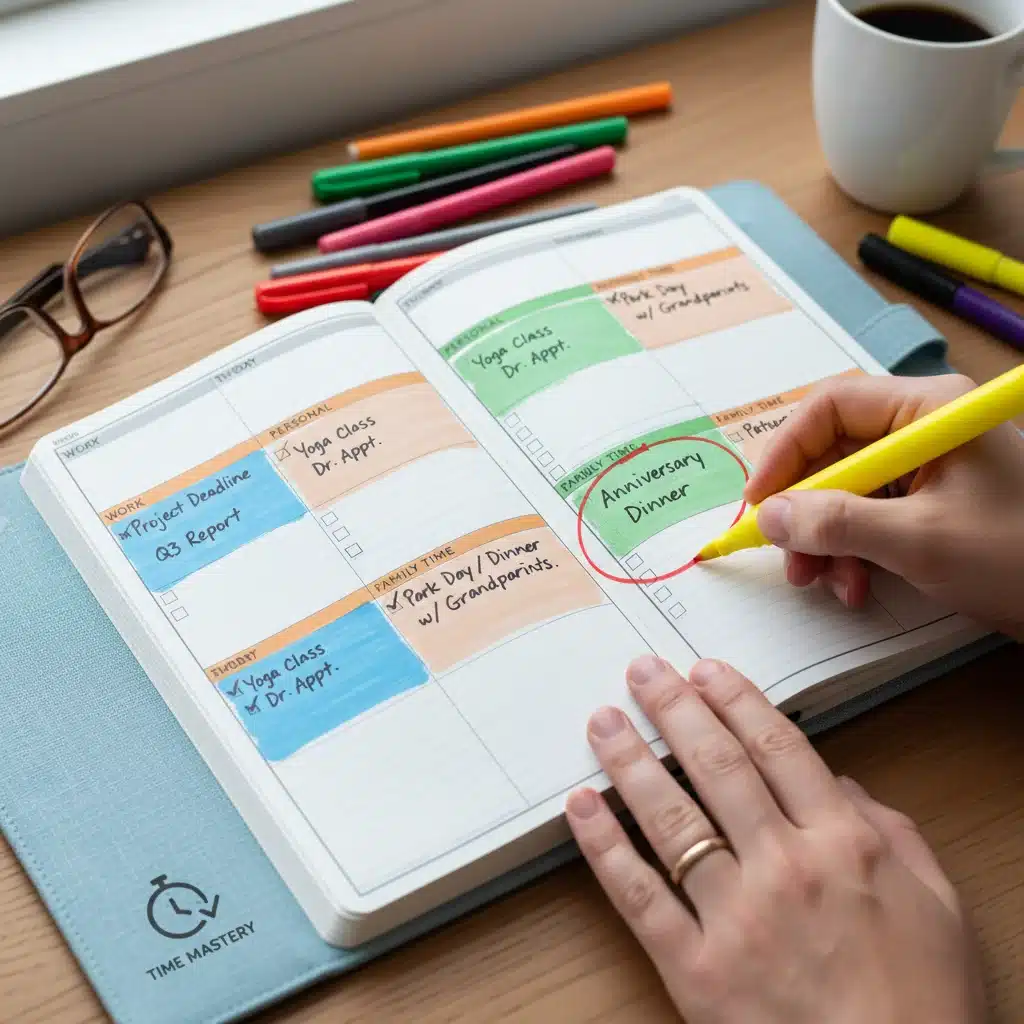
Instead of merely making to-do lists, actively block out time in your calendar for specific tasks, including work projects, personal appointments, exercise, and family time. Treat these blocks as non-negotiable commitments. For instance, dedicate specific hours for deep work, client meetings, and then equally important blocks for family dinner, a workout, or a hobby. This proactive scheduling helps ensure that personal activities don’t get squeezed out by work demands.
- Deep Work Sessions: Allocate uninterrupted blocks for high-concentration tasks. Turn off notifications during this time.
- Personal Time Slots: Schedule your workouts, social outings, and relaxation just like you would a business meeting.
- Buffer Time: Include small buffers between meetings or tasks to allow for transitions and unexpected delays, reducing stress.
C. Leverage Technology Wisely
While technology can be a distraction, it can also be a powerful ally in managing your time. Utilize:
- Project Management Tools: Tools like Asana, Trello, or Monday.com can help organize tasks, track progress, and collaborate efficiently, reducing mental load.
- Calendar Apps: Google Calendar, Outlook Calendar, or Apple Calendar are essential for time blocking and setting reminders for both professional and personal commitments.
- Automation Tools: Explore tools that automate repetitive tasks, freeing up your time for more important work or personal activities.
The goal is to use technology to streamline your responsibilities, not to become more enslaved by them. By mastering time management and prioritization, you lay a solid foundation for a healthier work life balance.
Strategy 2: Set Clear Boundaries and Communicate Effectively
One of the most significant hurdles to achieving work life balance is the inability to set and enforce boundaries. In a culture that often glorifies being ‘always-on,’ establishing clear lines between work and personal life is crucial. This requires intentional effort and effective communication.
A. Define Your Working Hours (and Stick to Them)
Clearly define your start and end times for work each day. Communicate these hours to your colleagues, clients, and family. Once your workday is over, make a conscious effort to disengage. This might mean:
- Closing your work laptop: Physically separating yourself from your workspace.
- Turning off work notifications: Silencing emails, messages, and calls related to work after hours.
- Creating a ‘wind-down’ routine: Engage in an activity that signals the end of your workday, such as a short walk, listening to music, or reading a non-work-related book.
Consistency is key. The more you adhere to your defined hours, the more others will respect them, contributing significantly to your work life balance.
B. Establish ‘No-Work’ Zones and Times
Designate specific areas in your home or specific periods during your day as entirely free from work. For example, the dining table should be for meals and family conversation, not for checking emails. Similarly, commit to ‘no-work’ weekends or evenings. This creates mental and physical separation, allowing your mind to truly rest and recharge. For families, this means dedicated time for children, partners, or other loved ones without the distraction of work.
C. Communicate Your Boundaries Proactively
Don’t assume others will instinctively know your boundaries. Proactively communicate them to your manager, team, and clients. For example:
- Set expectations: Inform your team about your availability outside of working hours.
- Use out-of-office replies: For non-urgent matters, use automated replies that state your return time.
- Delegate when necessary: If you’re overwhelmed, communicate this and explore delegation options.
- Say ‘No’ Gracefully: Learn to decline additional tasks or commitments that would compromise your work life balance without feeling guilty. This is a skill that improves with practice.
Effective communication fosters understanding and respect for your personal time, which is fundamental for a sustainable work life balance.
D. Manage Expectations Around Responsiveness
In today’s hyper-connected world, there’s often an unspoken expectation for instant responses. Challenge this notion. Clearly communicate your response times. For non-urgent matters, state that you will respond within 24-48 hours. This manages expectations and reduces the pressure to constantly check your devices, thereby improving your overall work life balance.
Strategy 3: Prioritize Self-Care and Well-being
Achieving work life balance isn’t just about managing your time and setting boundaries; it’s fundamentally about prioritizing your physical, mental, and emotional well-being. Without adequate self-care, all other strategies will eventually crumble under stress and burnout. For US professionals, who often face high-stress environments, self-care is not a luxury but a necessity.
A. Make Physical Health a Non-Negotiable
Your physical health directly impacts your energy levels, cognitive function, and resilience to stress. Integrate these practices into your daily or weekly routine:
- Regular Exercise: Aim for at least 30 minutes of moderate exercise most days of the week. This could be a brisk walk, jogging, cycling, or a gym session. Exercise is a powerful stress reliever and mood booster.
- Nutritious Diet: Fuel your body with whole, unprocessed foods. Plan your meals to avoid relying on unhealthy convenience options when you’re busy.
- Adequate Sleep: Prioritize 7-9 hours of quality sleep each night. Establish a consistent sleep schedule and create a relaxing bedtime routine. Sleep deprivation severely impairs productivity and increases stress.
- Hydration: Drink plenty of water throughout the day. Dehydration can lead to fatigue and reduced concentration.
Treat these aspects of your physical health with the same importance as any work deadline. They are essential investments in your long-term work life balance.
B. Cultivate Mental and Emotional Well-being
The demands of a professional career can take a toll on your mental and emotional state. Proactive measures are critical:
- Mindfulness and Meditation: Even 10-15 minutes of mindfulness or meditation daily can significantly reduce stress, improve focus, and enhance emotional regulation. There are numerous apps and guided meditations available.
- Hobbies and Interests: Dedicate time to activities you genuinely enjoy outside of work. Whether it’s reading, painting, playing an instrument, gardening, or hiking, these outlets provide a mental escape and a sense of personal fulfillment, enriching your work life balance.
- Social Connections: Nurture relationships with friends and family. Social interaction is a fundamental human need and a powerful buffer against stress. Schedule regular meet-ups or calls.
- Digital Detoxes: Regularly disconnect from screens, especially social media and work-related notifications. Plan tech-free evenings or weekends to truly unplug.
- Professional Support: Don’t hesitate to seek professional help if you’re struggling with stress, anxiety, or burnout. Therapy or counseling can provide valuable tools and coping mechanisms.

C. Practice Regular Reflection and Adjustment
Achieving work life balance is not a one-time fix but an ongoing process of self-assessment and adjustment. Regularly reflect on what’s working and what isn’t. Ask yourself:
- Am I feeling overwhelmed or energized?
- Am I dedicating enough time to my personal priorities?
- Are my boundaries being respected?
- What changes can I make to improve my current situation?
Be flexible and willing to adapt your strategies as your professional and personal circumstances evolve. This iterative approach ensures that your pursuit of work life balance remains relevant and effective over time.
Overcoming Common Obstacles to Work Life Balance
Even with the best strategies, you’ll inevitably encounter obstacles. Understanding and preparing for them can make a significant difference:
- Guilt: Many professionals feel guilty when taking time off or saying ‘no’ to extra work. Remind yourself that prioritizing your well-being ultimately makes you a more effective and sustainable professional.
- Fear of Missing Out (FOMO): The fear of missing out on opportunities or career advancement can lead to overworking. Trust in your abilities and the value you bring, even when you’re not constantly ‘on.’
- Company Culture: If your company culture doesn’t support work life balance, it can be an uphill battle. Look for internal advocates, propose changes, or consider if the environment is truly sustainable for you long-term.
- Unforeseen Circumstances: Life happens. Be prepared for periods where balance might be temporarily disrupted due to emergencies or intense project cycles. The key is to return to your established routines as quickly as possible.
Addressing these obstacles head-on and developing coping mechanisms will strengthen your ability to maintain a healthy work life balance.
The Long-Term Benefits of a Healthy Work Life Balance
Investing in your work life balance yields substantial returns, not just for your personal life but also for your career. The benefits include:
- Reduced Burnout: Less stress, more energy, and a greater sense of well-being.
- Increased Productivity and Creativity: A rested mind is a more efficient and innovative mind.
- Improved Mental Health: Lower risks of anxiety, depression, and other stress-related conditions.
- Stronger Relationships: More quality time and energy for family and friends.
- Enhanced Job Satisfaction: Feeling more content and engaged with your work when you have a fulfilling life outside of it.
- Better Physical Health: Consistent self-care leads to a healthier body.
- Greater Resilience: The ability to bounce back from challenges more effectively.
Ultimately, achieving work life balance is about creating a life that is rich, meaningful, and sustainable. It’s about recognizing that your professional success is intricately linked to your personal well-being.
Conclusion: Your Journey to a Better Work Life Balance
For professionals in the United States, the journey to a healthy work life balance is a continuous one, requiring self-awareness, discipline, and a commitment to prioritizing your overall well-being. By mastering time management and prioritization, setting clear and firm boundaries, and making self-care a non-negotiable part of your routine, you can navigate the demands of modern professional life with greater ease and fulfillment.
Remember, work life balance is not a destination but a dynamic process. There will be days when the scales tip more towards work, and others where personal life takes precedence. The goal is to create a flexible framework that allows you to adapt and consistently return to a state of equilibrium. Start implementing these strategies today, and take proactive steps towards a more balanced, productive, and joyful life this year and beyond.
Your career is important, but your life outside of work is equally, if not more, valuable. Embrace these strategies, and experience the transformative power of a truly balanced existence.