Smart Thermostat Strategies: Slash Winter Energy Bills in US Homes
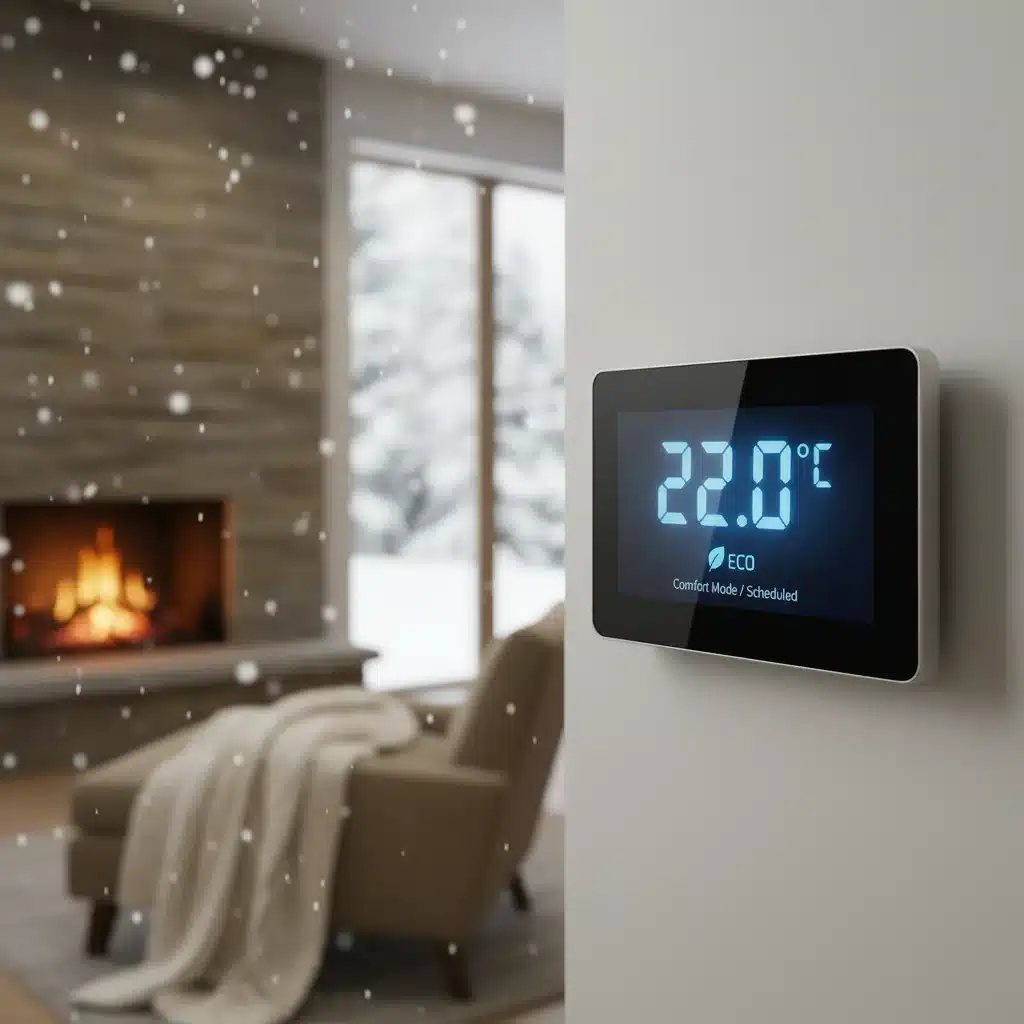
Achieve 20% Energy Savings: Latest Smart Thermostat Strategies for US Homes This Winter
As the crisp air of winter settles across the United States, homeowners brace themselves not just for colder temperatures, but also for the inevitable surge in heating bills. The quest for warmth often comes at a steep price, making energy efficiency a top priority for countless households. Fortunately, technological advancements offer a powerful ally in this battle: the smart thermostat. Far beyond the capabilities of their traditional counterparts, smart thermostats provide an intelligent, adaptive, and highly effective way to manage your home’s heating, promising significant energy savings and enhanced comfort. This comprehensive guide will delve into the latest smart thermostat strategies designed to help US homes achieve up to 20% energy savings this winter, transforming the way you think about and control your home’s climate.
The promise of a 20% reduction in energy consumption isn’t merely an optimistic estimate; it’s a realistic goal backed by data and the inherent capabilities of these sophisticated devices. Unlike manual thermostats that require constant adjustment or programmable ones that adhere rigidly to a set schedule, smart thermostats learn your preferences, adapt to changing conditions, and offer unparalleled control, often from the palm of your hand. By understanding and implementing the right smart thermostat strategies, you can minimize waste, maximize efficiency, and enjoy a warmer, more cost-effective winter.
This article will cover everything from the initial setup and optimal programming to leveraging advanced features like geofencing and multi-zone control. We’ll explore how these devices integrate with other smart home systems, discuss the importance of proper placement, and provide actionable tips for making the most of your smart thermostat investment. Whether you’re considering your first smart thermostat or looking to optimize an existing one, these insights will equip you with the knowledge to significantly reduce your energy footprint and keep more money in your pocket this winter.
Understanding the Core of Smart Thermostat Technology
Before diving into specific strategies, it’s crucial to grasp what makes smart thermostats so effective. At their core, these devices combine advanced sensors, Wi-Fi connectivity, and sophisticated algorithms to provide intelligent climate control. They are designed to learn your daily routines, sense when you’re home or away, and even monitor local weather conditions to adjust heating proactively. This ‘learning’ capability is a cornerstone of their energy-saving potential, allowing them to create an optimized heating schedule that minimizes energy use without sacrificing comfort.
Traditional thermostats, even programmable ones, operate on a more rudimentary logic. You set a schedule, and they follow it, regardless of whether you’re actually home or if the weather has taken an unexpected turn. Smart thermostats, however, are dynamic. They can detect occupancy through motion sensors, integrate with your smartphone’s location services (geofencing), and pull real-time weather data. This allows for a much more responsive and efficient heating system. For instance, if a sudden cold front hits, your smart thermostat can pre-heat your home to ensure it’s warm by the time you arrive, all while optimizing energy usage based on predicted changes. The ability to remotely control your thermostat via a smartphone app also means you’re never more than a tap away from adjusting your home’s temperature, preventing wasteful heating when plans change unexpectedly.
Initial Setup and Placement: Laying the Foundation for Energy Savings
The journey to maximizing your energy savings with smart thermostat strategies begins with proper installation and placement. While many smart thermostats are designed for DIY installation, consulting a professional HVAC technician can ensure optimal performance, especially if your home has complex wiring or an older heating system. Correct installation is paramount for the device to accurately read temperatures and communicate effectively with your HVAC unit.
Once installed, the placement of your smart thermostat is critical. It should be located on an interior wall, away from direct sunlight, drafts, and heat sources (like lamps or electronics) that could skew temperature readings. An inaccurate reading means your thermostat will be constantly over or under-compensating, negating its energy-saving benefits. For instance, placing it near a window could lead it to believe the room is colder than it is, prompting unnecessary heating. Similarly, placing it too close to a heat vent could cause it to shut off prematurely, leaving other areas of your home cold. Ideal placement ensures the thermostat accurately reflects the ambient temperature of your living space, allowing for precise and efficient control.
Furthermore, ensure your home’s Wi-Fi network is robust enough to provide a stable connection to your smart thermostat. A dropped connection can lead to a loss of smart functionality, forcing the device into a default, less efficient mode. Regularly check for firmware updates, as manufacturers frequently release improvements that enhance performance, add new features, and patch security vulnerabilities, all contributing to better energy management.
Leveraging Learning Capabilities: The Heart of Smart Thermostat Strategies
One of the most compelling features of modern smart thermostats is their ability to learn your habits. This is where significant energy savings truly begin. Instead of you meticulously programming a schedule, the thermostat observes your adjustments over time – when you turn up the heat, when you turn it down, and when you’re typically home or away. After a few days or weeks, it begins to build a personalized heating schedule tailored to your lifestyle.
To optimize this learning process, be consistent with your temperature adjustments during the initial learning phase. If you deviate significantly from your typical routine, the thermostat might take longer to establish an accurate pattern. Allow it to learn for at least a week or two before making major manual overrides, as this gives the algorithms enough data to create an efficient baseline. The goal is to let the thermostat anticipate your needs, heating your home only when necessary and to your preferred comfort level.
Many smart thermostats also offer ‘eco’ or ‘away’ modes that automatically activate when the house is empty. Some models even integrate with smart home security systems to detect occupancy more precisely. By allowing the thermostat to enter these energy-saving modes when you’re not home, you avoid heating an empty house, which is one of the biggest sources of energy waste during winter. This automatic adjustment is a key differentiator from traditional programmable thermostats, which require manual activation of ‘away’ modes or adherence to a fixed schedule regardless of actual occupancy.
Advanced Smart Thermostat Strategies for Maximum Savings
Beyond basic learning, several advanced smart thermostat strategies can further refine your energy consumption and enhance comfort.
Geofencing: Heating Your Home, Not the Neighborhood
Geofencing is a powerful feature that uses your smartphone’s location to determine whether you are home or away. When you leave a pre-defined perimeter around your house, the thermostat can automatically lower the temperature. As you approach home, it can begin heating your house so it’s warm and comfortable by the time you walk through the door. This eliminates the need for manual adjustments or rigid schedules, ensuring you’re only heating your home when someone is present or about to be. This dynamic adjustment is incredibly efficient, preventing hours of unnecessary heating.
To maximize geofencing benefits, ensure your smartphone’s location services are enabled for your thermostat app and that the app has permission to access your location in the background. Experiment with the geofence radius – too small, and it might not have enough time to warm up your home; too large, and it might start heating too early. Most apps allow you to customize this distance, finding the sweet spot between comfort and efficiency.
Multi-Zone Heating: Precision Where It Matters
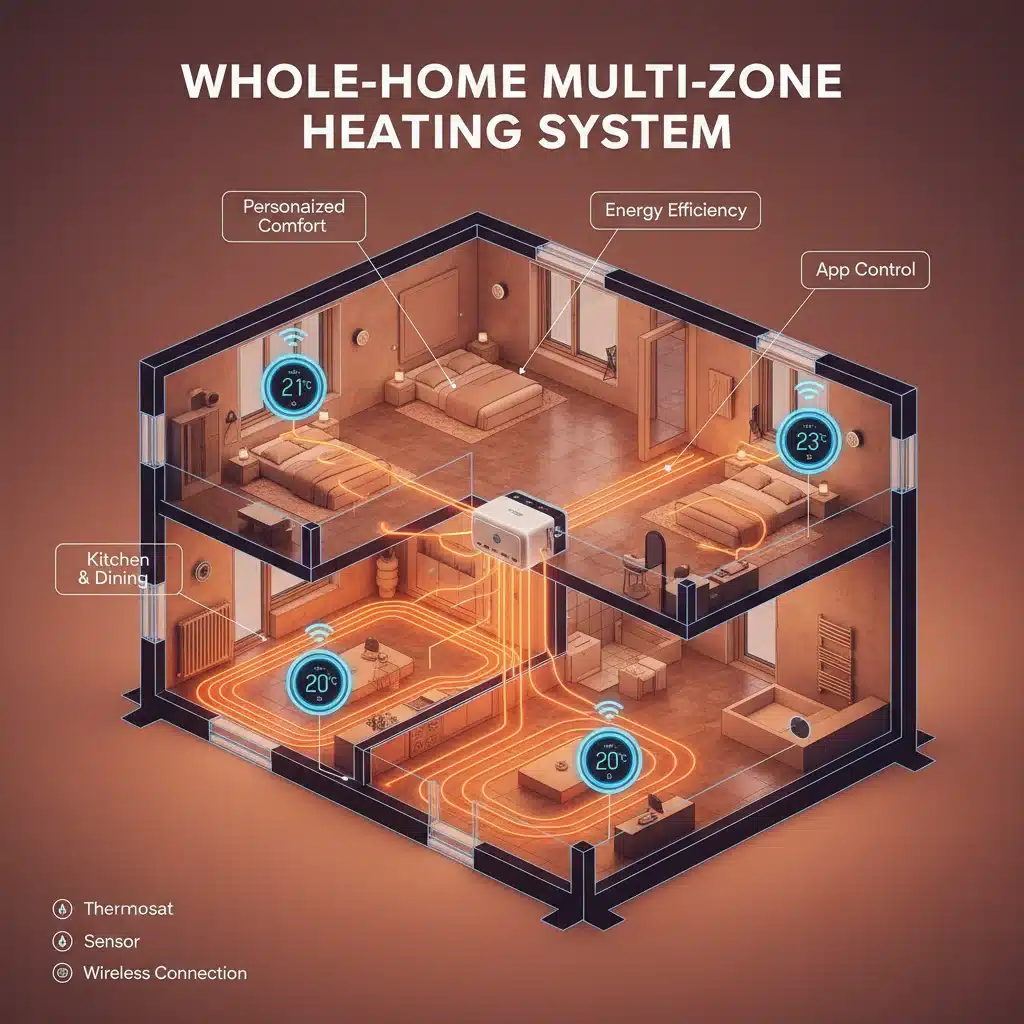
For larger homes or those with distinct living areas, multi-zone heating is a game-changer. Instead of a single thermostat controlling the entire house, multi-zone systems allow you to control the temperature in different areas independently. This means you can keep bedrooms cooler at night while maintaining a comfortable temperature in the living room, or only heat occupied zones during the day.
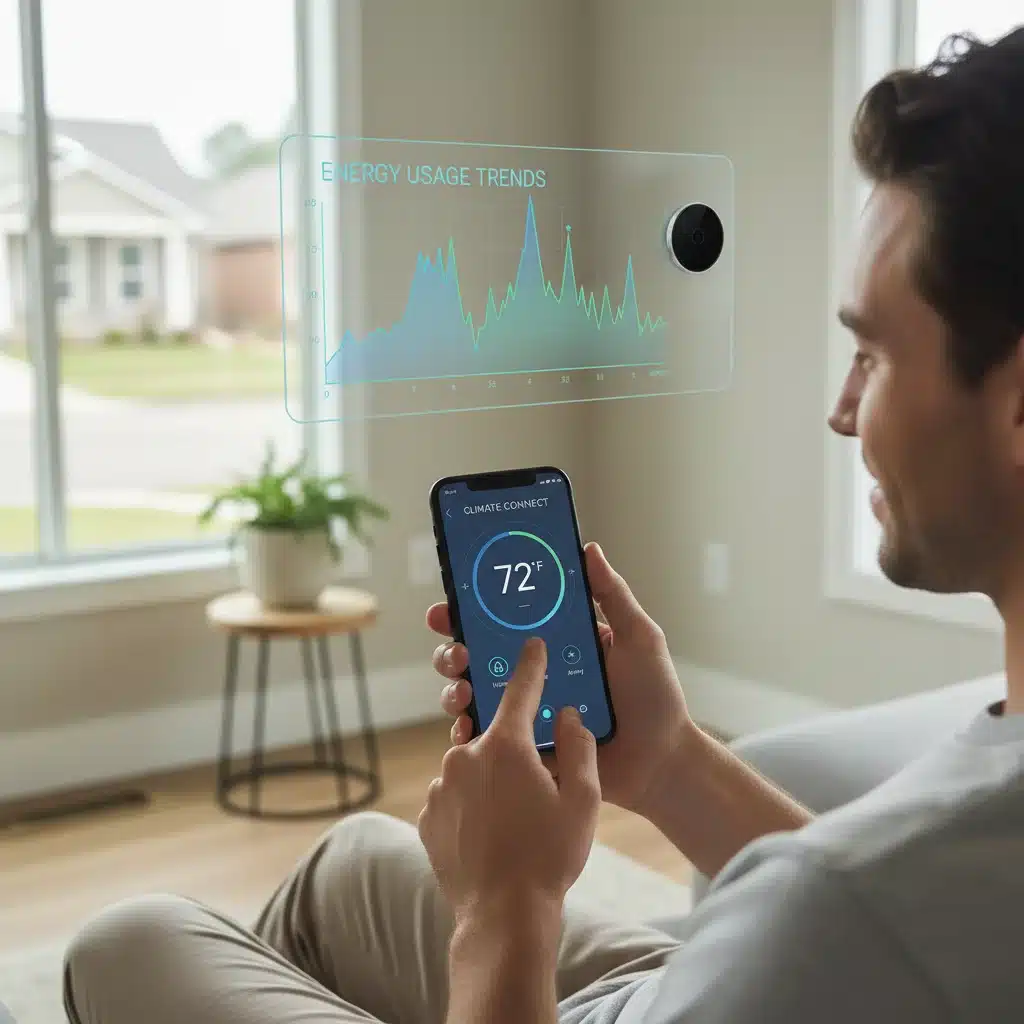
Implementing multi-zone smart thermostat strategies often involves installing multiple smart thermostats or smart sensors in different areas of your home. These devices communicate with each other and a central hub, allowing for granular control. While the initial investment might be higher, the long-term energy savings, especially in larger homes, can be substantial. Imagine not having to heat an unused guest bedroom or a basement that’s only occasionally occupied. Multi-zone control provides personalized comfort and targeted heating, drastically reducing wasted energy.
Integration with Smart Home Ecosystems and Voice Assistants
Modern smart thermostats are rarely standalone devices. They often integrate seamlessly with broader smart home ecosystems like Amazon Alexa, Google Assistant, Apple HomeKit, and Samsung SmartThings. This integration opens up new avenues for energy efficiency and convenience.
Voice control allows for hands-free temperature adjustments, while integration with other smart devices can create powerful automation routines. For example, you could set up a routine where your thermostat lowers the temperature when your smart locks indicate you’ve left the house, or where it increases the heat when your smart coffee maker starts brewing in the morning. These interconnected systems work together to create a truly intelligent and energy-efficient home environment. Explore the capabilities of your smart thermostat within your existing smart home setup to unlock these synergistic benefits.
Optimizing Your Smart Thermostat for Winter Performance
Winter presents unique challenges for home heating. Here are specific smart thermostat strategies to tackle the cold effectively and efficiently:
Scheduling and Hold Temperatures: Finding the Balance
Even with advanced learning capabilities, fine-tuning your schedule and understanding ‘hold’ temperatures is crucial. During winter, it’s generally more energy-efficient to maintain a slightly lower but consistent temperature than to let your home get very cold and then blast the heat. Rapid temperature increases require more energy. Aim for a comfortable daytime temperature (e.g., 68-70°F) and a slightly lower setback temperature when you’re away or asleep (e.g., 60-64°F). The key is to find the lowest comfortable temperature that doesn’t cause your heating system to work excessively hard to recover.
Many smart thermostats offer ‘eco’ or ‘savings’ modes that suggest optimal setback temperatures based on your home’s insulation and local climate. Pay attention to these recommendations and adjust them to your comfort level. Remember, every degree you lower your thermostat during winter can translate to significant savings over the season.
Humidity Control and Air Quality
While primarily focused on temperature, some advanced smart thermostats also monitor and control humidity. In winter, low humidity can make your home feel colder than it actually is, leading you to crank up the heat. By maintaining optimal indoor humidity levels (typically between 30-50%), you can feel more comfortable at a lower thermostat setting, further reducing energy consumption. If your smart thermostat doesn’t directly control a humidifier, it can often integrate with smart humidifiers to manage this aspect of your indoor climate.
Beyond humidity, some smart thermostats can also monitor air quality, alerting you to potential issues and even integrating with smart air purifiers. A healthier indoor environment often correlates with better overall comfort, indirectly contributing to less reliance on excessive heating.
Troubleshooting and Maintenance for Sustained Savings
To ensure your smart thermostat continues to deliver optimal energy savings, a little maintenance and awareness go a long way.
Regular Checks and Updates
Periodically check your thermostat’s settings and schedule to ensure they still align with your lifestyle. Changes in work schedules, family routines, or even home renovations can impact optimal settings. Regularly update the device’s firmware and the accompanying smartphone app to benefit from the latest features, security enhancements, and efficiency improvements. Manufacturers often push updates that refine algorithms and add new energy-saving functionalities.
Monitoring Energy Reports
Most smart thermostat apps provide detailed energy usage reports. Make it a habit to review these reports regularly. They offer invaluable insights into your heating patterns, identifying periods of high consumption and helping you pinpoint areas where further savings can be achieved. Look for trends, compare your usage to previous months or years, and use this data to fine-tune your smart thermostat strategies. Some apps even offer personalized tips based on your usage data, helping you become an even savvier energy manager.
Addressing HVAC System Health
A smart thermostat can only be as efficient as the HVAC system it controls. Ensure your furnace or heat pump is regularly serviced by a qualified professional. Dirty filters, clogged vents, or malfunctioning components can severely hamper your system’s efficiency, forcing your smart thermostat to work harder and consume more energy. Consider pairing your smart thermostat with other home efficiency upgrades, such as improved insulation, weatherstripping, and energy-efficient windows, to create a holistic approach to energy savings. These combined efforts will amplify the benefits of your smart thermostat, leading to even greater reductions in your winter energy bills.
Overcoming Common Challenges and Maximizing ROI
While smart thermostats offer immense benefits, users sometimes encounter challenges. Addressing these proactively can ensure you get the most out of your investment.
Understanding Learning Curves and Manual Overrides
It’s important to allow your smart thermostat sufficient time to learn your habits. If you constantly override its learned schedule in the first few weeks, it will struggle to establish an efficient pattern. Resist the urge to manually adjust temperatures excessively. Instead, observe how the thermostat responds and make minor adjustments to your preferences within the app. If a learned schedule isn’t quite right, most apps allow you to edit or refine specific time blocks without erasing the entire learning process. Patience during the initial learning phase will pay dividends in long-term savings.
Dealing with Connectivity Issues
A smart thermostat relies heavily on a stable Wi-Fi connection. If you experience frequent disconnections, check your home’s Wi-Fi signal strength near the thermostat. You might need a Wi-Fi extender or a mesh Wi-Fi system to ensure consistent connectivity, especially in larger homes or those with thick walls. Ensure your router’s firmware is up to date and that there are no conflicting devices on your network. A reliable connection is crucial for remote control, geofencing, and receiving software updates, all of which contribute to optimal performance and energy efficiency.
Calculating Your Return on Investment (ROI)
The initial cost of a smart thermostat can be a deterrent for some. However, when considering the potential for 20% or more energy savings, the return on investment can be surprisingly quick. Many utility companies offer rebates or incentives for installing smart thermostats, further reducing the upfront cost. Factor in these potential savings and incentives when evaluating your purchase. Over a few winter seasons, the energy savings often outweigh the initial expense, making it a wise investment for long-term financial and environmental benefits. Keep track of your energy bills before and after installation to quantify your savings and celebrate your smart choices.
The Future of Smart Thermostat Strategies: Beyond Basic Heating
The evolution of smart thermostat technology is far from over. Future innovations promise even greater levels of efficiency, integration, and personalized comfort. Expect to see more advanced AI and machine learning capabilities that can predict your needs with even greater accuracy, taking into account factors like personal preferences for humidity, air quality, and even individual metabolic rates.
Further integration with grid-level energy management systems will also become more common. This means your smart thermostat could potentially communicate with your utility provider to adjust heating during peak demand times, earning you credits or lower rates while contributing to overall grid stability. Imagine a future where your home automatically optimizes its energy consumption not just for your comfort and savings, but also for the benefit of the entire community and the planet.
As smart home technology continues to mature, smart thermostats will play an increasingly central role in creating truly intelligent and sustainable living spaces. By embracing these cutting-edge devices and implementing the smart thermostat strategies discussed in this guide, US homeowners can not only achieve significant energy savings this winter but also position their homes at the forefront of energy efficiency for years to come.
Conclusion: Empowering Your Home with Smart Thermostat Strategies
This winter, don’t let escalating energy bills catch you off guard. By strategically employing the latest smart thermostat strategies, US homeowners have an unprecedented opportunity to achieve substantial energy savings, potentially reducing their heating costs by 20% or more. From careful installation and optimal placement to leveraging advanced features like geofencing, multi-zone control, and smart home integration, every step contributes to a more efficient and comfortable living environment.
The journey towards energy independence and reduced utility bills is a continuous one, but the smart thermostat serves as a powerful starting point. It’s an investment that pays dividends not just in monetary savings, but also in enhanced comfort, convenience, and a reduced environmental footprint. Embrace these intelligent technologies, monitor your usage, and fine-tune your settings to create a personalized heating solution that works for your lifestyle and your wallet. This winter, take control of your home’s climate and experience the transformative power of smart thermostat strategies.
By understanding and applying these insights, you are not just installing a device; you are adopting a smarter, more sustainable way to live. The future of home heating is here, and it’s intelligent, efficient, and within your reach. Make this winter the season you finally conquer those high energy bills with the strategic power of your smart thermostat.