Child Care Subsidies: Access Up to $10,000 for Families in 2025

Working families in the United States can access significant federal child care subsidies, potentially up to $10,000, in 2025 to alleviate financial burdens by exploring eligibility, application, and available programs.
Navigating the costs of raising a family can be challenging, but understanding available support can make a significant difference. For working families across the United States, accessing child care subsidies can alleviate a substantial financial burden, with federal assistance potentially reaching up to $10,000 in 2025. This comprehensive guide will illuminate the pathways to these vital resources, ensuring you are well-equipped to secure the support your family needs.
Understanding federal child care assistance programs
Federal child care assistance programs are designed to help low-income and moderate-income families afford quality child care, enabling parents to work or pursue education. These programs often operate through state and local agencies, providing subsidies directly to providers or offering vouchers to families. The overarching goal is to ensure children receive proper care while their parents contribute to the workforce.
The primary vehicle for federal child care aid is the Child Care and Development Fund (CCDF). Administered by the U.S. Department of Health and Human Services, CCDF provides funds to states, territories, and tribal governments to help families pay for child care and to improve the quality of child care services. Each state then establishes its own specific eligibility requirements and policies, making it crucial for families to understand their local guidelines.
The role of the Child Care and Development Fund (CCDF)
The CCDF is a critical program that offers financial assistance for child care and supports efforts to improve child care quality. States receive block grants and have flexibility in how they design and implement their programs, including setting income eligibility limits, co-payment schedules, and provider requirements. This flexibility means that while there’s a federal framework, the specifics can vary significantly from one state to another.
- Financial Aid: Helps eligible families pay for child care costs.
- Quality Improvement: Supports initiatives to enhance the quality and safety of child care settings.
- Provider Support: Offers training and resources for child care providers.
- Parental Choice: Allows parents to choose from a variety of child care arrangements, including centers, family child care homes, and relatives.
Understanding the CCDF’s role is the first step in unlocking potential child care subsidies. While the federal government provides the foundational funding and broad guidelines, the real work of implementation and direct assistance happens at the state and local levels. Families must connect with their state’s child care agency to get precise information on how to apply and what specific benefits are available in their area.
The federal government’s commitment to child care assistance reflects an understanding of its importance for both family well-being and economic stability. By providing these subsidies, the aim is to reduce the financial strain on working families, promote child development, and support parental employment or educational endeavors that lead to greater self-sufficiency. This foundational support is what makes the possibility of accessing up to $10,000 in aid a tangible reality for many.
Eligibility criteria for federal child care subsidies in 2025
Determining eligibility for federal child care subsidies can seem complex, but it generally revolves around a few key factors: income, employment status, and the age of the child. While specific thresholds vary by state, understanding the common requirements is essential for families preparing to apply in 2025. These criteria are designed to target assistance to those who need it most, ensuring resources are distributed effectively.
Most programs require families to meet certain income guidelines, typically set as a percentage of the state median income (SMI) or the federal poverty level (FPL). Families must also usually demonstrate a need for child care due to work, job search, training, or educational activities. The child must generally be under 13 years old, or up to age 19 if they have special needs or are under court supervision.
Income and household size requirements
Income eligibility is often the most significant factor. Each state sets its own income limits, which are usually tied to the state median income. For example, a state might set its initial eligibility at 85% of the SMI. This means that if your household income falls below this threshold, you may qualify for assistance. The larger your family, the higher the income threshold typically allowed, recognizing the increased expenses associated with more dependents.
- State Median Income (SMI): Many states use this as a benchmark for eligibility.
- Federal Poverty Level (FPL): Some programs may also consider this for initial eligibility.
- Sliding Scale Fees: Co-payments are often determined by a family’s income, ensuring affordability.
- Household Composition: The number of adults and children in the household impacts income limits.
It’s important to note that even if your income slightly exceeds the initial eligibility threshold, you might still qualify for a reduced subsidy or be placed on a waiting list. States often have tiered systems, where families with lower incomes receive higher subsidies and pay lower co-payments. Regularly checking your state’s specific guidelines is crucial, as these figures can be updated annually.
Beyond income, other factors like residency status and the type of child care needed can also play a role. Some programs prioritize families with children with disabilities or those experiencing homelessness. Gathering all relevant financial and personal documentation beforehand will streamline the application process and help you accurately assess your eligibility for federal child care subsidies.
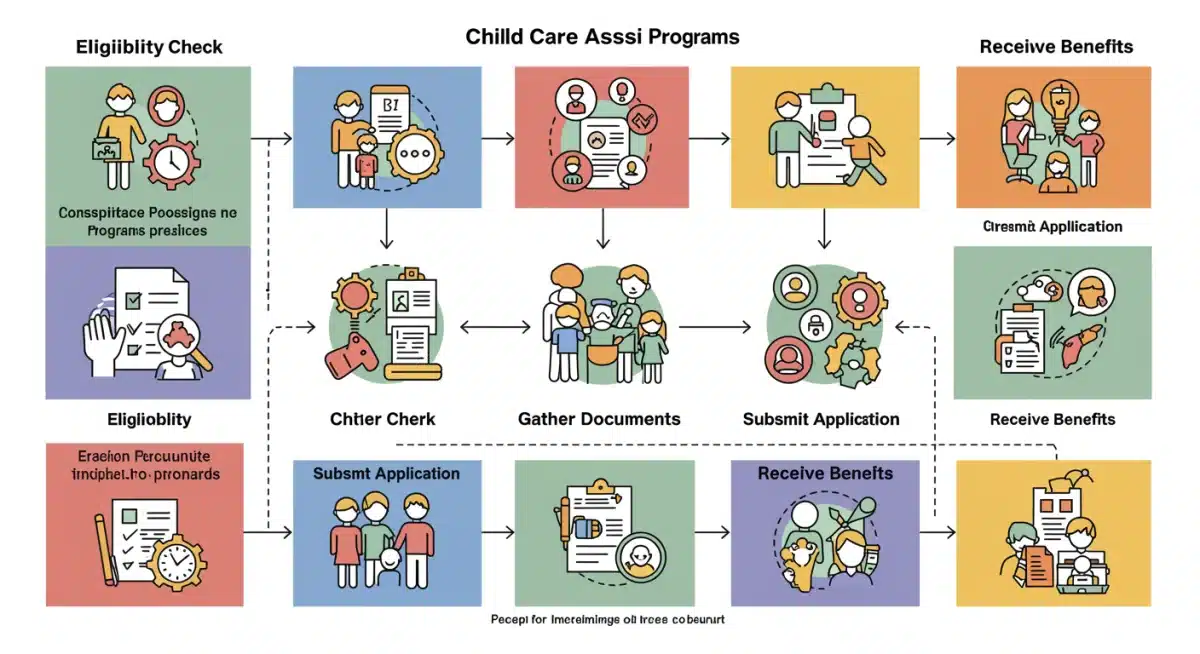
Application process: step-by-step guide
Applying for federal child care subsidies can appear daunting, but by breaking it down into manageable steps, families can navigate the process efficiently. Early preparation and thorough documentation are key to a successful application. This guide outlines the typical stages involved, helping you gather what you need and submit your application with confidence for 2025.
The process generally begins with identifying your state’s specific child care assistance agency, often part of the Department of Social Services or a similar human services department. Once located, you’ll need to obtain their application form and understand their unique documentation requirements. Many states now offer online applications, making the process more accessible.

Documents required for your application
To ensure a smooth application process, having all necessary documents ready is paramount. These typically include proof of identity, residency, income, and employment or educational enrollment. Missing or incomplete documentation can significantly delay the approval of your child care subsidies.
- Proof of Identity: Birth certificates, driver’s licenses, or state IDs for all household members.
- Proof of Residency: Utility bills, lease agreements, or mail with your current address.
- Income Verification: Pay stubs, tax returns, W-2 forms, or benefit statements.
- Employment/Education Verification: Employer statements, school enrollment verification, or job search logs.
- Child’s Information: Birth certificates or other documents confirming the child’s age.
Once you’ve gathered all the required documents, carefully complete the application form, ensuring all information is accurate and consistent. Many agencies offer assistance with the application process, so don’t hesitate to reach out if you have questions or need clarification. Submitting a complete and accurate application from the outset can significantly reduce processing times and bring you closer to receiving child care subsidies.
After submission, there will typically be a review period, during which the agency verifies your information. This may involve interviews or requests for additional documentation. Patience is key during this phase, but proactive follow-up can sometimes help resolve any issues. Understanding each step ensures you are well-prepared to secure the federal assistance your family deserves.
Maximizing your child care subsidy benefits
Once you’ve successfully applied for child care subsidies, understanding how to maximize these benefits can further alleviate financial strain. This involves not only securing the initial assistance but also being aware of potential additional support, maintaining eligibility, and making informed choices about child care providers. The aim is to stretch every dollar of assistance to provide the best possible care for your children.
Maximizing benefits also means staying informed about any changes in program rules or available funding. States may periodically update their policies, and new initiatives can emerge. Regularly checking with your state’s child care agency or relevant government websites will ensure you don’t miss out on any opportunities to increase your support.
Understanding co-payments and additional support
Most child care subsidy programs involve a co-payment from the family, which is typically a percentage of the child care cost based on your income. Understanding how this co-payment is calculated and how it might change with income fluctuations is crucial. Some states offer additional support for specific needs, such as children with disabilities or those requiring specialized care.
- Co-payment Calculation: Varies by state and income level; often a sliding scale.
- Special Needs Support: Additional funds or resources for children with disabilities.
- Quality Bonuses: Some programs offer higher subsidies for care with higher quality ratings.
- Provider Choice: The ability to choose a provider that fits your family’s needs and budget.
Beyond the direct subsidy, explore other potential avenues of support. The Child and Dependent Care Credit, a federal tax credit, can provide further relief by allowing you to claim a percentage of your child care expenses. Additionally, some employers offer Dependent Care Flexible Spending Accounts (FSAs), which enable you to set aside pre-tax money for child care costs. Combining these benefits can significantly reduce your out-of-pocket expenses for child care.
It’s also beneficial to research child care providers that accept subsidies and are within your budget. Some providers may offer different rates or services that align better with the amount of assistance you receive. By being proactive and informed, families can effectively leverage their child care subsidies to ensure their children receive quality care without undue financial burden.
State-specific programs and variations
While federal child care subsidies provide a foundational framework, the real landscape of assistance is shaped by state-specific programs and their unique variations. Each state, territory, and tribal government has the autonomy to design its own policies and eligibility criteria within the broader federal guidelines. This localized approach means that what applies in one state may be different in another, underscoring the importance of localized research.
These variations can include differing income thresholds, co-payment schedules, types of providers eligible for subsidies, and additional support programs. Some states might offer more generous benefits or have specific initiatives to address particular child care challenges within their communities. Families must look beyond the federal overview and delve into their state’s Department of Human Services or Child Care Development Fund agency website for precise information.
Key differences in state child care assistance
The differences across states can be substantial, impacting a family’s ability to access and utilize child care subsidies. Understanding these nuances is vital for accurate planning and application. These variations are often a reflection of each state’s economic conditions, legislative priorities, and the specific needs of its population.
- Income Eligibility: Varies significantly, often tied to a percentage of the State Median Income (SMI).
- Co-payment Structure: Some states have flat fees, while others use a detailed sliding scale based on income and family size.
- Waiting Lists: Due to funding limitations, some states have extensive waiting lists for child care assistance.
- Provider Reimbursement Rates: Affects which child care providers can afford to accept subsidies.
- Quality Initiatives: Some states offer enhanced subsidies for higher-quality child care programs.
Beyond the standard CCDF program, many states also implement their own supplementary initiatives. These might include pre-kindergarten programs, after-school care support, or specific grants for families facing unique circumstances, such as those with children with special needs or those experiencing homelessness. Exploring these additional state-level resources can further enhance the total amount of child care subsidies a family can receive.
It is highly recommended that families contact their local Child Care Resource and Referral (CCR&R) agency. These agencies are invaluable resources that can provide detailed information about state-specific programs, help with the application process, and connect families with eligible child care providers. They serve as a crucial bridge between federal funding and local family needs, ensuring tailored support.
The future of child care subsidies: what to expect in 2025 and beyond
The landscape of child care subsidies is constantly evolving, influenced by economic shifts, legislative priorities, and ongoing advocacy for family support. As we look towards 2025 and beyond, several trends and potential changes could impact how working families access federal assistance. Staying informed about these developments is crucial for anticipating adjustments and continuing to benefit from available programs.
There’s a growing national conversation around the need for more affordable and accessible child care, which could lead to increased federal funding or new legislative initiatives. Policymakers are increasingly recognizing child care as a critical component of economic stability and workforce participation, driving efforts to strengthen existing programs and introduce innovative solutions.
Potential legislative changes and funding increases
One of the most significant factors that could shape child care subsidies in the coming years is the potential for new federal legislation. Discussions often revolve around expanding the Child Care and Development Block Grant (CCDBG), increasing the Child and Dependent Care Tax Credit, or even establishing universal pre-kindergarten programs. Any of these changes could dramatically alter the amount and scope of financial assistance available to families.
- Increased CCDBG Funding: Could lead to higher subsidies and reduced waiting lists.
- Expanded Tax Credits: Potentially offering more significant tax relief for child care expenses.
- Universal Pre-K: Efforts to make early education more widely available and affordable.
- Workforce Development: Linkages between child care support and parental training/education programs.
Advocacy groups and family organizations continue to push for substantial investments in child care infrastructure, highlighting its importance for both children’s development and parents’ ability to work. These efforts could translate into sustained or increased funding for existing programs, potentially allowing more families to qualify and receive greater financial support, possibly reaching the $10,000 mark for many.
Families should monitor news from federal agencies like the Department of Health and Human Services and engage with local advocacy groups to stay abreast of potential changes. Understanding the direction of policy discussions can help families plan for future child care costs and ensure they are ready to adapt to any new opportunities or requirements related to federal child care subsidies.
Resources and support for navigating child care assistance
Navigating the complex world of child care assistance can be challenging, but numerous resources and support networks are available to help working families. From government agencies to non-profit organizations, these entities are dedicated to guiding families through the application process, understanding eligibility, and connecting them with quality child care providers. Leveraging these resources is key to successfully accessing federal child care subsidies.
The first point of contact for most families will be their state’s Child Care and Development Fund (CCDF) agency, often housed within the Department of Social Services or a similar human services department. These agencies provide direct information about state-specific programs, application forms, and eligibility criteria. Many also offer online portals for easier access to information and application submission.
Key organizations and websites for assistance
Beyond state agencies, several national and local organizations play a crucial role in supporting families seeking child care assistance. These groups often provide comprehensive databases of child care providers, educational materials, and personalized assistance to help families make informed decisions about their child care needs and secure financial aid.
- Child Care Aware of America: A national non-profit that helps families find quality child care and understand financial assistance options. Their website offers a wealth of resources and a searchable database.
- State Child Care Resource and Referral (CCR&R) Agencies: Local branches that provide individualized support, including lists of licensed providers, quality ratings, and application assistance for child care subsidies.
- National Association for the Education of Young Children (NAEYC): Offers resources on child development and quality indicators for early learning programs, helping parents make informed choices.
- U.S. Department of Health and Human Services (HHS): Provides overarching information on federal programs like CCDF and links to state-specific resources.
Additionally, don’t overlook the potential for support from your employer. Some companies offer employee assistance programs (EAPs) that include child care referral services or even direct financial contributions towards child care costs. Union memberships or professional associations might also provide unique benefits or resources that can supplement federal child care subsidies.
Engaging with these resources not only simplifies the process of applying for and receiving child care assistance but also empowers families to make the best choices for their children’s development and well-being. By staying informed and utilizing available support systems, working families can confidently access the federal aid designed to ease their financial burden in 2025 and beyond.
| Key Aspect | Brief Description |
|---|---|
| Federal Funding Source | Primarily the Child Care and Development Fund (CCDF), providing block grants to states. |
| Eligibility Factors | Income, employment/education status, and child’s age (under 13, or 19 with special needs). |
| Application Process | Contact state child care agency, gather documents (ID, income, residency), submit application. |
| State Variations | Income limits, co-payments, and available programs differ significantly by state. |
Frequently asked questions about child care subsidies
While the potential for up to $10,000 in federal assistance exists, the exact amount varies significantly. It depends on your state’s specific program, your household income, family size, the cost of care, and the number of children needing assistance. Eligibility and benefit levels are determined at the state and local levels.
To find your state’s program, visit the website of your state’s Department of Social Services, Human Services, or a similar agency. Many states also have Child Care Resource and Referral (CCR&R) agencies that can provide detailed, localized information and direct you to the correct application portal.
Generally, you have the flexibility to choose from a range of licensed or regulated child care providers that are approved to accept subsidies. This includes child care centers, family child care homes, and sometimes even relative caregivers. Always confirm with the provider and your state agency that they accept your specific subsidy program.
If your employment status changes, it’s crucial to notify your child care subsidy agency immediately. Many programs have provisions to allow for a temporary period of job search or to transition to training programs while still receiving assistance. Timely communication ensures continuity of benefits or proper guidance on next steps.
Generally, direct child care subsidies paid on your behalf to a provider are not considered taxable income. However, if you receive reimbursement directly from an employer or a dependent care flexible spending account, specific tax rules may apply. Consult a tax professional for advice on your individual situation regarding these benefits.
Conclusion
Accessing federal child care subsidies can be a transformative financial relief for working families in the United States, potentially offering up to $10,000 in assistance in 2025. While the journey involves understanding federal frameworks like the CCDF, navigating state-specific eligibility criteria, and meticulously completing application processes, the rewards are significant. By leveraging available resources, staying informed about legislative changes, and maximizing benefits, families can ensure their children receive quality care while maintaining financial stability. This guide serves as a foundational tool to empower families to confidently pursue the support they are entitled to, fostering both child development and parental peace of mind.