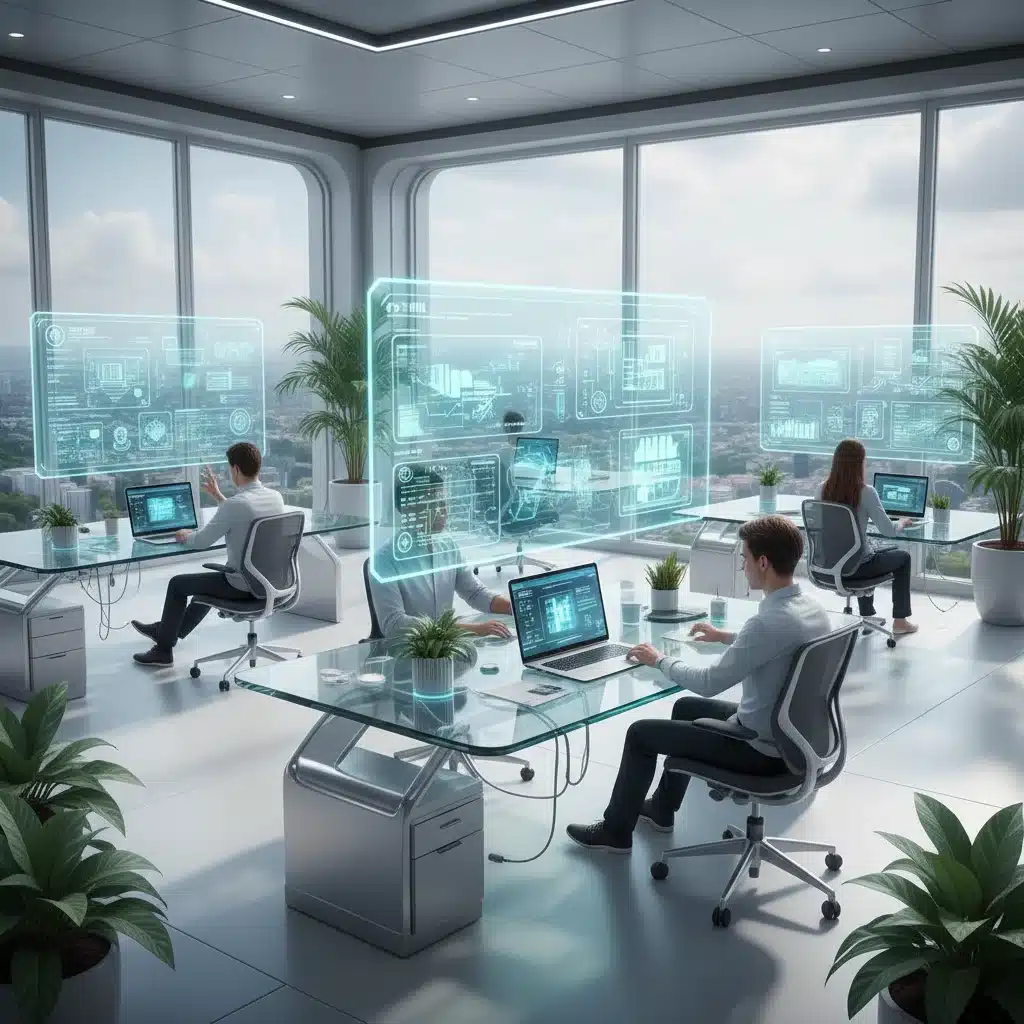
The Future of Personal Computing: 3 Trends Defining Laptops and Desktops in 2026
The landscape of personal computing is in a constant state of flux, driven by relentless innovation and evolving user demands. As we inch closer to 2026, it’s becoming increasingly clear that the traditional notions of what defines a laptop or a desktop are rapidly transforming. This evolution is not just about faster processors or larger storage; it’s about a fundamental rethinking of how we interact with our devices, how they integrate into our lives, and their impact on the world around us. Understanding the key trends shaping the future personal computing experience is crucial for consumers, developers, and manufacturers alike.
Anúncios
In this comprehensive exploration, we will delve into the three most impactful trends poised to redefine laptops and desktops by 2026. From the pervasive influence of artificial intelligence to the imperative of sustainability and the emergence of novel form factors, these trends are not merely incremental upgrades but revolutionary shifts. Prepare to discover how your next personal device will be smarter, more eco-conscious, and more adaptable than ever before.
1. The Rise of AI-Powered Personal Computing: Intelligence at Your Fingertips
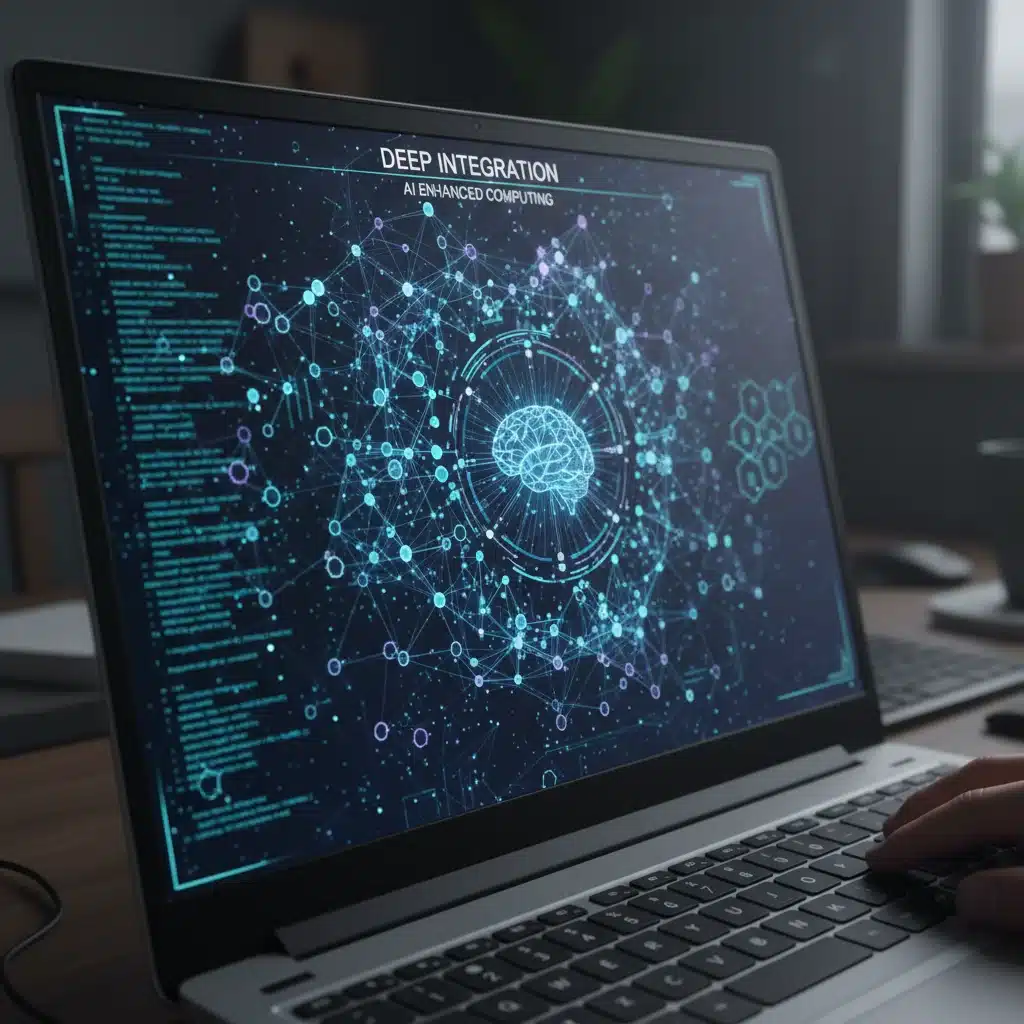
Artificial Intelligence (AI) is no longer a futuristic concept confined to science fiction; it is rapidly becoming the core engine driving the evolution of personal computing. By 2026, AI will be deeply embedded in every facet of our laptops and desktops, transforming them from mere tools into intelligent companions. This integration will manifest in several critical ways, fundamentally altering user experience and device capabilities. The shift towards AI-powered future personal computing is perhaps the most significant trend to watch.
Anúncios
Enhanced Performance and Efficiency Through AI
One of the most immediate impacts of AI will be on performance and efficiency. Modern processors are already incorporating dedicated AI accelerators (NPUs – Neural Processing Units) to handle machine learning tasks more effectively. By 2026, these NPUs will be standard, working in tandem with CPUs and GPUs to optimize everything from background processes to demanding creative applications. AI will intelligently manage power consumption, predict user needs, and dynamically allocate resources, leading to longer battery life for laptops and more responsive performance for desktops. Imagine your laptop proactively adjusting its settings for a video conference, ensuring optimal audio and video quality without manual intervention, or your desktop prioritizing background tasks based on your current workflow. This intelligent resource management is a cornerstone of the future personal computing experience.
Personalized User Experiences
AI will usher in an era of hyper-personalized computing. Your devices will learn your habits, preferences, and even emotional states to tailor experiences. Operating systems will adapt interfaces, suggest relevant content, and automate routine tasks based on your historical interactions. For instance, an AI assistant won’t just respond to commands; it will anticipate your next move, offering solutions before you even articulate a problem. This could range from pre-loading frequently used applications at specific times of day to suggesting relevant documents for your current project. The goal is to create a seamless, intuitive, and highly individualized interaction that makes computing feel less like a chore and more like an extension of your own thoughts. This level of personalization will be a hallmark of the future personal computing landscape.
Advanced Security and Privacy
While AI often raises privacy concerns, it also holds the key to significantly enhanced security. AI-powered algorithms will be far more adept at detecting and neutralizing cyber threats in real-time, learning from new attack vectors and adapting defenses dynamically. Biometric authentication will become more sophisticated, incorporating behavioral patterns beyond simple fingerprints or facial recognition. Furthermore, AI can be used to protect privacy by anonymizing data locally on the device, processing sensitive information without sending it to the cloud. This on-device AI processing, often referred to as ‘edge AI,’ will be critical for maintaining both security and privacy in the future personal computing ecosystem.
Creative and Productivity Augmentation
For creatives and professionals, AI will act as a powerful co-pilot. Image and video editing software will leverage AI to automate complex tasks like object removal, color correction, and content generation. Writers will benefit from AI-powered grammar and style suggestions, as well as tools that can generate drafts or summarize lengthy documents. Programmers will have AI assistants that can debug code, suggest improvements, and even write snippets based on natural language prompts. This augmentation will not replace human creativity but amplify it, allowing users to focus on higher-level conceptual tasks while AI handles the mundane or technically challenging aspects. The impact on productivity will be transformative, making AI a vital component of the future personal computing toolkit.
2. Sustainability and Circular Economy: Eco-Conscious Computing
As environmental awareness grows, the technology industry faces increasing pressure to adopt more sustainable practices. By 2026, sustainability will be a core design principle for laptops and desktops, moving beyond mere marketing buzzwords to fundamental changes in manufacturing, materials, and lifecycle management. The concept of a circular economy, where resources are kept in use for as long as possible, will drive innovation in the future personal computing sector.
Modular and Repairable Designs
The era of disposable electronics is slowly giving way to a focus on longevity and repairability. By 2026, we can expect a significant increase in modular laptop and desktop designs. This means components like RAM, storage, batteries, and even processors will be more easily replaceable and upgradeable by end-users or authorized repair centers. This approach not only extends the lifespan of devices but also reduces electronic waste. Companies will offer clearer repair guides, readily available spare parts, and design choices that prioritize easy disassembly. The ‘right to repair’ movement will gain further traction, pushing manufacturers to embrace this modularity as a standard for future personal computing devices.
Eco-Friendly Materials and Manufacturing
The materials used in personal computing devices will undergo a significant transformation. Expect to see a greater reliance on recycled plastics, aluminum, and rare earth metals. Biodegradable and bio-based materials will also start to appear in non-structural components. Manufacturing processes will become more energy-efficient, utilizing renewable energy sources and minimizing water consumption. Companies will also focus on reducing the carbon footprint of their supply chains, from raw material extraction to final assembly. Packaging will be minimalist, plastic-free, and made from recycled or sustainably sourced materials. These efforts will make the future personal computing industry significantly greener.
Energy Efficiency and Low Power Consumption
Beyond materials, the operational energy consumption of devices will be a major focus. Processors will continue to improve their performance-per-watt ratios, meaning more power for less energy. AI will play a role here too, optimizing power usage in real-time. Expect more stringent energy efficiency certifications and consumer demand for devices with lower power footprints. This is crucial not only for reducing electricity bills but also for minimizing the overall environmental impact of personal computing, especially with the proliferation of devices globally. Energy-efficient design will be a key selling point for future personal computing hardware.
Product Take-Back and Recycling Programs
The circular economy model emphasizes closing the loop on product lifecycles. By 2026, robust take-back and recycling programs will be commonplace, with manufacturers taking greater responsibility for their products at the end of their useful life. Consumers will have easier access to drop-off points or mail-in services for old electronics, ensuring proper recycling and resource recovery. Companies will invest in technologies that allow for more efficient dismantling and material separation, maximizing the amount of valuable resources that can be reused in new products. This commitment to end-of-life management is essential for truly sustainable future personal computing.
3. Evolving Form Factors and Immersive Experiences: Beyond the Clamshell
While the traditional clamshell laptop and tower desktop will remain relevant, 2026 will see a significant diversification in form factors and a push towards more immersive user experiences. Innovation in display technology, haptics, and connectivity will open up new possibilities for how we interact with our personal computing devices. The definition of a personal computer will broaden considerably, reflecting the diverse needs of users in a hybrid world. This exploration of new forms is integral to the future personal computing vision.
Foldable and Rollable Displays
Foldable laptops are already on the market, but by 2026, they will become more refined, durable, and affordable. Beyond folding, rollable displays could emerge, allowing devices to expand from a compact form factor into a much larger screen real estate. Imagine a tablet that unrolls into a 17-inch display, or a phone that extends into a small laptop-like screen. These innovations will blur the lines between different device categories, offering unprecedented versatility for productivity and entertainment on the go. The ability to dynamically change screen size will be a game-changer for mobile future personal computing.
Augmented Reality (AR) and Virtual Reality (VR) Integration
AR and VR technologies will move beyond niche gaming and enterprise applications to become more integrated into mainstream personal computing. While dedicated headsets will still exist, expect to see AR capabilities built into everyday laptops and desktops, perhaps through advanced webcams that can map your environment or through companion smart glasses that seamlessly extend your digital workspace. VR will offer more immersive collaborative environments for work and social interaction, transforming how we connect and create. The boundaries between the physical and digital worlds will continue to dissolve, with personal computers acting as gateways to these enhanced realities. This deeper immersion will be a defining characteristic of future personal computing experiences.
Haptic Feedback and Multi-Modal Interaction
Interaction with personal computers will become richer and more tactile. Advanced haptic feedback systems will simulate textures, resistance, and even impacts, making virtual objects feel more real. This could revolutionize gaming, creative design, and even remote work, where virtual handshakes could have a physical sensation. Beyond haptics, multi-modal interaction combining voice, gesture, eye-tracking, and traditional input methods will become standard. You might dictate an email, then refine it with gestures, and finally send it with a glance, all seamlessly integrated. This natural and intuitive interaction will redefine how we ‘use’ a computer in the future personal computing era.
Ubiquitous Connectivity and Edge Computing
5G and eventually 6G will provide ubiquitous, low-latency connectivity, making cloud computing even more powerful. However, a parallel trend is the rise of edge computing, where processing occurs closer to the data source (i.e., on your device). This combination will allow for seamless transitions between local and cloud-based processing, optimizing performance and privacy. Your personal computer will be part of a larger, interconnected ecosystem, capable of offloading intensive tasks to the cloud when needed, or performing them locally for speed and security. This distributed intelligence will be a hallmark of future personal computing, enabling new applications and services.
The Interconnectedness of Trends: A Holistic Future
It is important to recognize that these three trends – AI-powered computing, sustainability, and evolving form factors – are not isolated. Instead, they are deeply interconnected and mutually reinforcing. For example, AI will be crucial for optimizing energy efficiency in sustainable designs, and it will enable the intelligent management of resources in modular devices. New form factors, like foldables and AR glasses, will require advanced AI to provide seamless and intuitive user experiences. Sustainable manufacturing processes will benefit from AI-driven optimization, reducing waste and energy consumption.
The push for modularity and repairability, a cornerstone of sustainable design, will also facilitate upgrades, allowing users to keep their devices longer and benefit from future AI advancements without needing to buy an entirely new machine. The demand for powerful, yet efficient, AI processing will drive innovation in chip design, which in turn will influence the size, weight, and thermal management capabilities of new form factors. This holistic interplay suggests a future where personal computing devices are not just powerful, but also smart, responsible, and adaptable to an unprecedented degree.
Consider the scenario of a highly modular, AI-powered laptop with a foldable display. Its AI would manage power consumption to extend battery life, prioritize tasks based on your workflow, and even suggest optimal times for hardware upgrades based on component wear and tear. When a component needs replacement, its modular design, built from recycled materials, makes the process simple and eco-friendly. This device could seamlessly transition from a compact tablet for on-the-go tasks to a large-screen workstation for creative projects, all while providing an immersive experience augmented by AI-driven insights and haptic feedback. This is the promise of the future personal computing landscape.
Challenges and Opportunities on the Horizon
While the future of personal computing is brimming with exciting possibilities, it also presents its share of challenges. Data privacy and ethical AI development will remain paramount concerns, requiring robust regulatory frameworks and transparent practices from tech companies. The digital divide could widen if these advanced technologies are not made accessible and affordable to a broad spectrum of users globally. Furthermore, the sheer complexity of integrating AI, advanced materials, and novel form factors will demand significant R&D investment and collaborative efforts across the industry.
However, these challenges also present immense opportunities. Companies that prioritize ethical AI, sustainable practices, and inclusive design will likely gain a significant competitive advantage. The demand for skilled professionals in AI, materials science, and human-computer interaction will soar. The advancements in personal computing could also unlock solutions to pressing global issues, from personalized education to remote healthcare, further cementing its role as a transformative technology. The journey towards the future personal computing experience is as much about solving problems as it is about creating new capabilities.
Conclusion: A Smarter, Greener, and More Flexible Future
By 2026, personal computing will have undergone a profound metamorphosis. The three trends of AI-powered intelligence, unwavering commitment to sustainability, and a diverse array of evolving form factors will collectively redefine what we expect from our laptops and desktops. Devices will be more intuitive, anticipating our needs and augmenting our capabilities in ways that feel natural and seamless. They will be designed with the planet in mind, from the materials they are made of to their end-of-life management. And they will offer unprecedented flexibility, adapting to our diverse lifestyles and work environments, blurring the lines between different device categories.
The future personal computing landscape promises a more integrated, intelligent, and responsible technological companion. As these trends mature, they will not only enhance our productivity and entertainment but also push us towards a more sustainable and interconnected digital existence. The journey has just begun, and the innovations on the horizon are set to make our personal computing experiences more exciting and impactful than ever before.
Stay tuned as the world of personal computing continues its rapid evolution, bringing us closer to a future where technology truly understands and serves humanity’s complex needs.