Mastering Your Device’s Notifications: A 2026 Guide to Digital Well-being
In the whirlwind of our hyper-connected 2026, the incessant pings, buzzes, and flashes from our devices have become the soundtrack to our lives. While designed to keep us informed and connected, these constant interruptions often lead to what many now refer to as ‘notification fatigue.’ This isn’t just a minor annoyance; it’s a significant impediment to our focus, productivity, and overall digital well-being notifications. As technology continues to evolve at a breakneck pace, so too must our strategies for managing its impact on our mental and emotional states.
This comprehensive guide is your essential toolkit for navigating the complex landscape of device notifications in 2026. We’ll delve deep into understanding why these alerts are so disruptive, explore the latest technological advancements designed to help us regain control, and provide actionable strategies to customize, manage, and optimize your notification settings across all your devices. Our goal is simple: to help you transform your digital experience from one of constant distraction to one of intentional engagement, fostering a healthier and more productive relationship with your technology. By the end of this guide, you’ll be equipped with the knowledge and techniques to not just survive, but thrive in the digital age, ensuring your devices serve you, rather than the other way around.
The Silent Epidemic: Understanding Notification Fatigue in 2026
Before we can master our notifications, we must first understand the profound impact they have on our lives. Notification fatigue, a term that has gained significant traction in recent years, describes the mental exhaustion and decreased responsiveness that results from an overload of digital alerts. In 2026, with the proliferation of smart devices, IoT ecosystems, and increasingly sophisticated AI-driven applications, the volume and complexity of notifications have reached unprecedented levels. Every app, every service, every smart home device vies for our attention, creating a constant state of low-level anxiety and distraction.
The human brain is not wired for this relentless onslaught of information. Each notification, regardless of its perceived importance, triggers a small cognitive switch, pulling our attention away from our current task and forcing our brains to re-engage. This ‘context switching’ comes at a significant cost, reducing productivity, increasing stress, and diminishing our capacity for deep work and sustained focus. Studies in 2026 continue to highlight the detrimental effects on memory, decision-making, and even sleep patterns. Furthermore, the dopamine hits associated with checking notifications can create a compulsive loop, making it even harder to disengage. Recognizing this silent epidemic is the crucial first step towards reclaiming our digital well-being notifications.
The Evolution of Notification Management: What’s New in 2026?
Fortunately, as the problem has grown, so too have the solutions. The year 2026 brings with it a suite of advanced features and philosophical shifts in how device manufacturers and app developers approach notifications. Gone are the days of simple ‘on/off’ toggles. Modern operating systems (OS) and applications now offer granular control, predictive analytics, and AI-driven insights to help us manage the deluge.
Smarter AI-Powered Filtering
One of the most significant advancements is the integration of more sophisticated AI into notification systems. These intelligent algorithms learn your habits, priorities, and even your emotional state to deliver only the most relevant alerts at the most opportune times. For example, your phone might automatically silence non-urgent work emails during your designated family time, or hold back social media alerts when it detects you’re in a deep work session. Some systems can even analyze the sentiment of an incoming message to determine its urgency, prioritizing a distressed call from a loved one over a casual group chat message.
Contextual Awareness
Notifications in 2026 are also far more contextually aware. Your devices now leverage location data, calendar entries, connected smart home devices, and even biometric sensors to understand your current environment and activities. If you’re in a meeting, your smartwatch might automatically hold all but critical alerts. If you’re driving, only navigation and emergency calls will break through. This proactive approach minimizes interruptions without requiring constant manual adjustment, making optimizing your digital well-being more seamless than ever.
Digital Well-being Dashboards 2.0
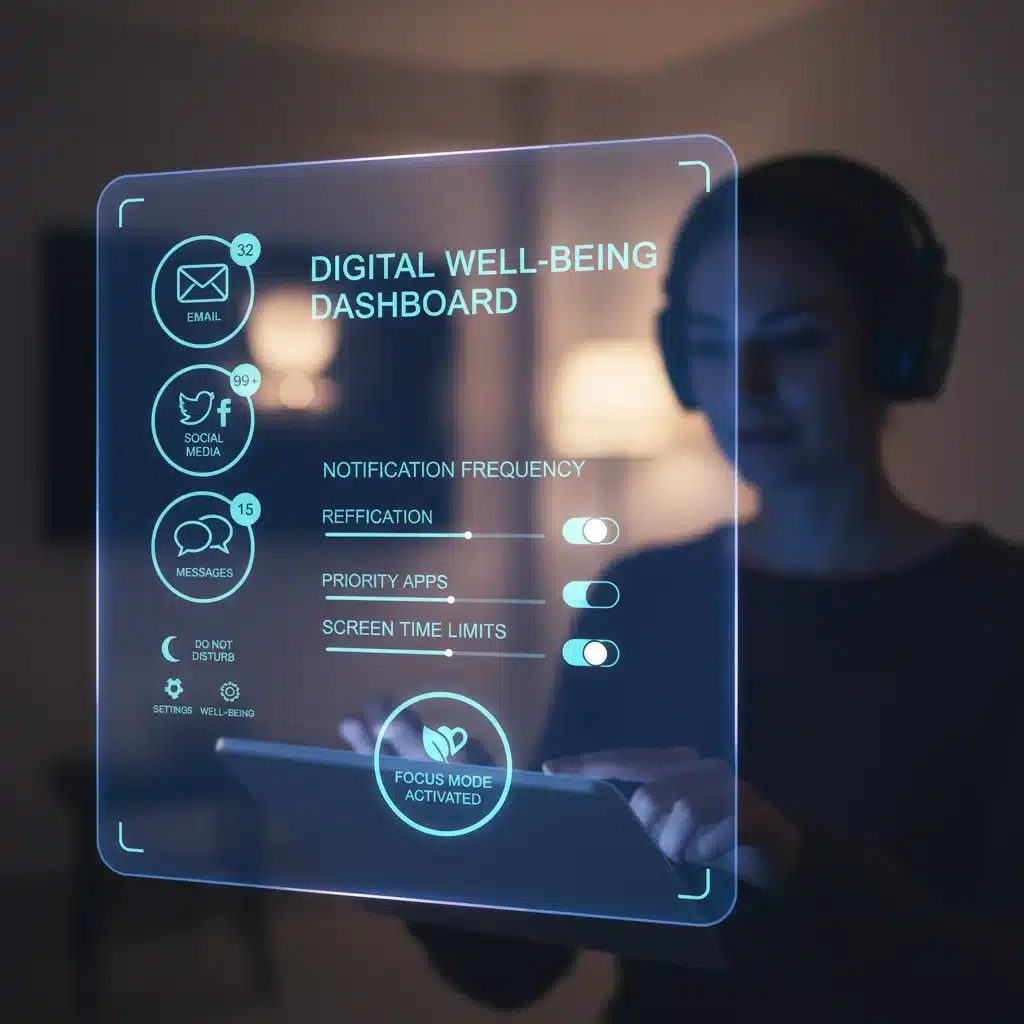
Operating systems have significantly enhanced their digital well-being dashboards. These are no longer just repositories for screen time data. In 2026, they offer personalized insights into your notification habits, identifying which apps are the biggest culprits, suggesting optimal quiet times, and even providing nudges for healthier device usage. You can often set ‘focus modes’ that are highly customizable, allowing specific contacts or apps to break through only under predefined conditions.
Strategic Approaches to Notification Mastery
While technology provides the tools, true mastery requires a strategic approach. Here’s how you can leverage 2026’s advancements to take back control:
1. The Great Notification Audit: Declutter and Prioritize
The first step is always an audit. Go through every app on your primary devices (smartphone, tablet, smartwatch, computer) and ask yourself: ‘Do I truly need notifications from this app?’ Be ruthless. For many apps, especially social media, news, and games, turning off all notifications might be the best course of action. For others, consider which types of alerts are essential (e.g., direct messages) versus those that are merely informational (e.g., likes, comments).
- Categorize: Group apps into ‘Essential,’ ‘Important but not urgent,’ and ‘Non-essential.’
- Default to Off: When downloading new apps, assume notifications are off until you explicitly decide otherwise.
- Review Regularly: Your needs change. Periodically revisit your settings to ensure they still align with your priorities.
2. Leveraging Focus Modes and Custom Profiles
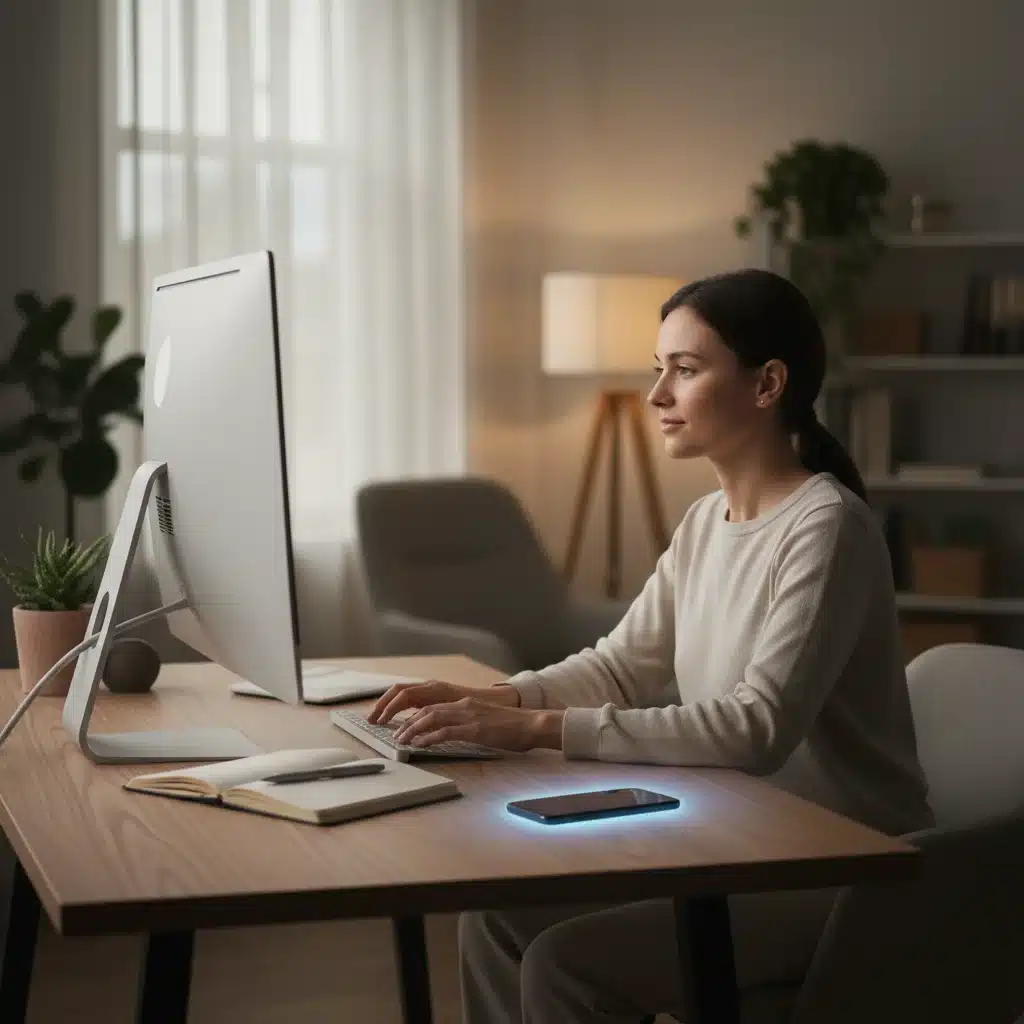
Modern OS offer powerful focus modes that go beyond simple ‘Do Not Disturb.’ In 2026, these are highly customizable environments tailored to specific activities. Create profiles for ‘Work,’ ‘Sleep,’ ‘Exercise,’ ‘Family Time,’ or ‘Deep Focus.’ Each profile can have unique settings:
- Allowed Apps: Specify which apps can send notifications.
- Allowed Contacts: Define who can reach you (e.g., only family during family time, only colleagues during work).
- Notification Types: Allow only specific types of notifications (e.g., only calls, no messages).
- Automation: Schedule these modes to activate automatically based on time, location, or calendar events.
Experiment with these modes to find what works best for your daily routines. This proactive management significantly reduces the cognitive load of constantly deciding whether to engage with an alert.
3. Mastering Visual and Auditory Cues
Notifications aren’t just about whether they appear, but how they appear. In 2026, you have extensive control over visual and auditory cues:
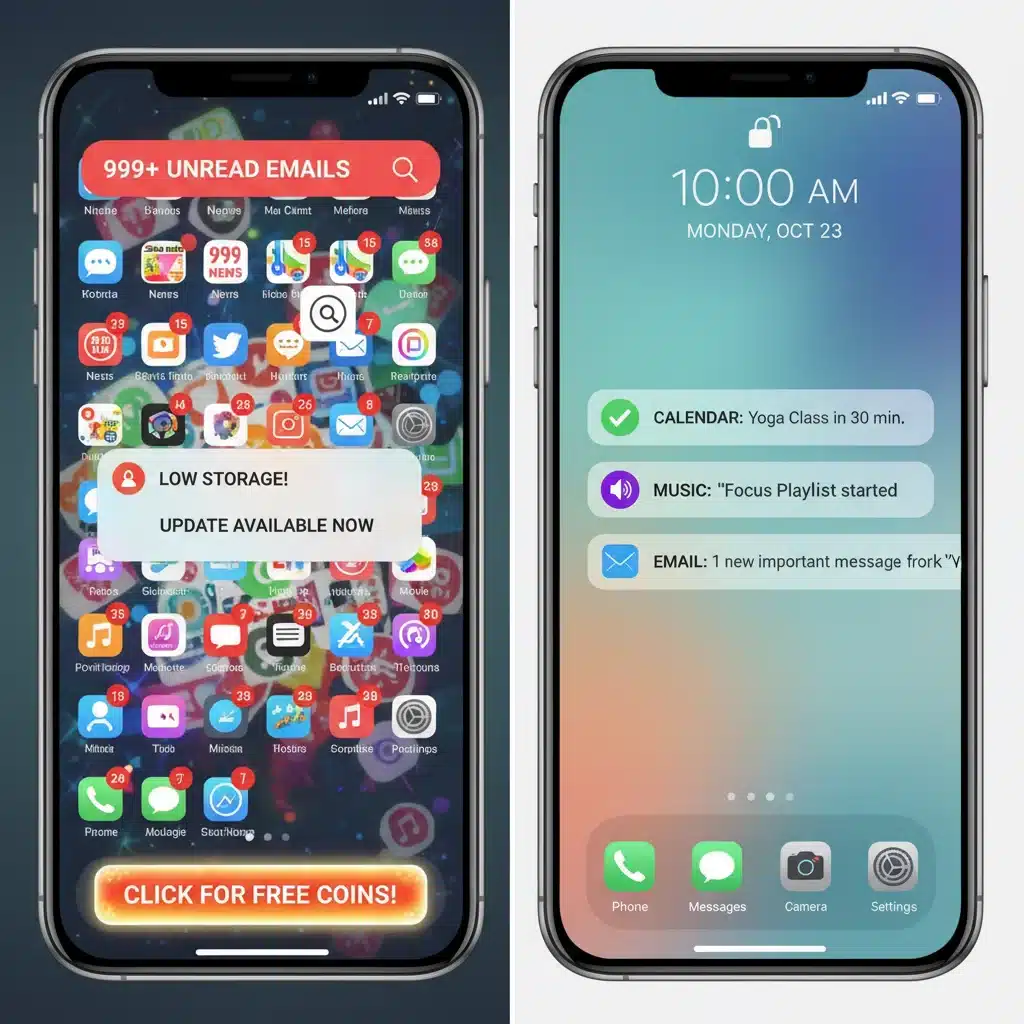
- Silence the Sound: For most apps, vibrations and silent notifications are often sufficient. Reserve audible alerts for truly urgent matters.
- Turn Off Pop-ups/Banners: These are the most disruptive. Often, a discreet badge icon or a notification in the pull-down shade is enough.
- LED/Haptic Feedback: Utilize subtle haptic feedback on smartwatches or specific LED colors on some devices to differentiate important alerts without needing to look at your screen.
- Smartwatches and Wearables: Leverage your smartwatch for quick glances at essential notifications, keeping your phone out of sight and out of mind for less critical alerts.
The goal is to receive information without being forced to immediately engage, thus preserving your focus. This granular control is vital for achieving optimal digital well-being notifications.
4. The Power of Batching and Scheduled Summaries
Instead of receiving notifications as they arrive, consider batching them. Many operating systems and apps now offer scheduled summaries, where less urgent notifications are collected and delivered at specific times of the day (e.g., morning, midday, evening). This allows you to check in on non-critical updates without constant interruption.
- Email: Turn off push notifications for email and instead check your inbox at designated times.
- Social Media: Use scheduled summaries or set specific times to browse social feeds rather than being constantly pulled in.
- News Apps: Opt for daily digests or check news manually during breaks.
This strategy transforms reactive notification checking into a proactive, intentional activity, significantly boosting your productivity and reducing anxiety.
5. Leveraging AI and Machine Learning for Personalization
As mentioned earlier, 2026’s AI is a game-changer. Ensure your device’s AI and machine learning features are enabled for notification management. These systems learn your patterns over time, becoming increasingly adept at predicting what’s important and when. The more you use your device and allow the AI to observe your interactions (within privacy limits you define), the better it becomes at filtering the noise.
- Review AI Suggestions: Pay attention to your device’s suggestions for notification settings; they are often surprisingly accurate.
- Provide Feedback: Some systems allow you to explicitly mark notifications as ‘important’ or ‘unimportant,’ further refining the AI’s learning.
- Understand Privacy Settings: Be aware of what data your device uses for this personalization and adjust privacy settings to your comfort level.
Beyond the Device: Cultivating a Mindset of Intentional Engagement
While technical solutions are crucial, true digital well-being notifications also requires a shift in mindset. Technology is a tool, and like any tool, its impact depends on how we wield it.
Digital Boundaries and Rituals
Establish clear digital boundaries in your life. This might include:
- No-Phone Zones: Designate certain areas of your home (e.g., bedroom, dining table) as phone-free.
- Digital Detox Periods: Schedule regular short breaks from all devices – an hour, an afternoon, or even a full day.
- Wind-Down Routines: Avoid screens for at least an hour before bedtime to improve sleep quality.
- Mindful Usage: Before picking up your device, ask yourself: ‘What is my intention?’ This simple question can prevent mindless scrolling.
The Importance of Presence
In a world of constant alerts, the ability to be fully present is a superpower. By mastering your notifications, you free up cognitive resources to engage more deeply with the people and activities around you. This isn’t just about productivity; it’s about enriching your relationships, enjoying your hobbies, and experiencing life more fully without the constant pull of the digital world.
The Future of Digital Well-being and Notifications
As we look beyond 2026, the evolution of digital well-being notifications will continue. Expect even more sophisticated AI, potentially leveraging biofeedback from wearables to understand your cognitive load and adjust notifications dynamically. Augmented reality (AR) and virtual reality (VR) will introduce new forms of alerts, necessitating proactive strategies for managing these immersive experiences. The lines between our physical and digital worlds will blur further, making the principles of intentional engagement and strategic notification management even more critical.
We might see ‘digital concierges’ that learn your preferences so deeply they can anticipate your needs and filter information with uncanny accuracy, allowing only truly critical data to reach you. The focus will shift from simply silencing notifications to enhancing the quality of the information we receive, ensuring it genuinely adds value to our lives rather than detracting from it. The goal is not to eliminate digital interaction but to make it more meaningful and less intrusive.
The integration of smart home ecosystems will also play a larger role. Imagine your smart home system proactively dimming lights and silencing devices when it detects you’re winding down for the evening, or your car automatically adjusting notification settings based on your driving conditions and passenger presence. These interconnected systems will create a more holistic approach to digital well-being, where all your devices work in concert to protect your peace of mind.
Conclusion: Reclaiming Your Focus in a Connected World
Mastering your device’s notifications in 2026 is not about rejecting technology; it’s about embracing it with intention and control. By understanding the impact of notification fatigue, leveraging the advanced tools available in modern operating systems, and cultivating a mindful approach to digital engagement, you can transform your relationship with your devices. This journey towards better digital well-being notifications is continuous, requiring regular adjustments and self-reflection. However, the rewards – increased focus, reduced stress, improved productivity, and a greater sense of presence in your life – are immeasurable. Take the first step today: audit your notifications, set your boundaries, and reclaim your peace in the digital age.
Frequently Asked Questions about Digital Well-being Notifications
-
What is digital well-being and why are notifications so crucial to it?
Digital well-being refers to the impact of technology use on our mental, physical, and emotional health. Notifications are crucial because they are often the primary source of digital interruptions, directly affecting our focus, stress levels, and ability to disconnect. Effective notification management is fundamental to maintaining a healthy digital balance.
-
How often should I review my notification settings?
It’s advisable to conduct a comprehensive notification audit at least quarterly. However, you should also review settings whenever you install new apps, notice increased distraction, or experience significant changes in your daily routine or priorities.
-
Are there any universal ‘best practices’ for notification settings?
While personalization is key, some universal best practices include: turning off all non-essential notifications by default, using ‘Do Not Disturb’ or ‘Focus Modes’ regularly, silencing auditory alerts for most apps, and utilizing scheduled summaries for less urgent information. Prioritize notifications that require immediate action and silence the rest.
-
My device’s AI notification filtering isn’t working well. What can I do?
Ensure your device’s operating system is up to date. Actively use the feedback mechanisms (if available) to mark notifications as important or unimportant. The AI learns over time, so consistent usage and feedback will improve its accuracy. Also, check your privacy settings to ensure the AI has sufficient data access to understand your habits (within your comfort level).
-
How can I encourage family and friends to respect my notification boundaries?
Open communication is key. Explain why you’re adjusting your notification settings (e.g., for better focus, less stress). Inform them about your ‘focus modes’ or ‘quiet hours’ and how to reach you in emergencies. Lead by example by respecting their boundaries as well. Consider using communication methods that allow for asynchronous responses, like email or text, for non-urgent matters.
-
What role do smartwatches play in notification management?
Smartwatches can be excellent tools for notification management. They allow you to quickly glance at essential alerts without needing to pull out your phone, reducing the temptation to get drawn into other apps. You can often customize which notifications appear on your watch versus your phone, allowing for a more discreet and less disruptive experience for critical information.
-
Is it possible to completely eliminate notification-related stress?
Completely eliminating stress might be challenging in a hyper-connected world, but you can significantly reduce it. The goal is not zero notifications, but rather intentional, controlled notifications that serve you, not distract you. By implementing the strategies in this guide, you can create a much calmer and more focused digital environment, greatly mitigating notification-related stress.