Labor Market Dynamics 2026: Understanding the 10% Increase in Remote Work Adoption Across US Industries

Labor Market Dynamics 2026: Understanding the 10% Increase in Remote Work Adoption Across US Industries
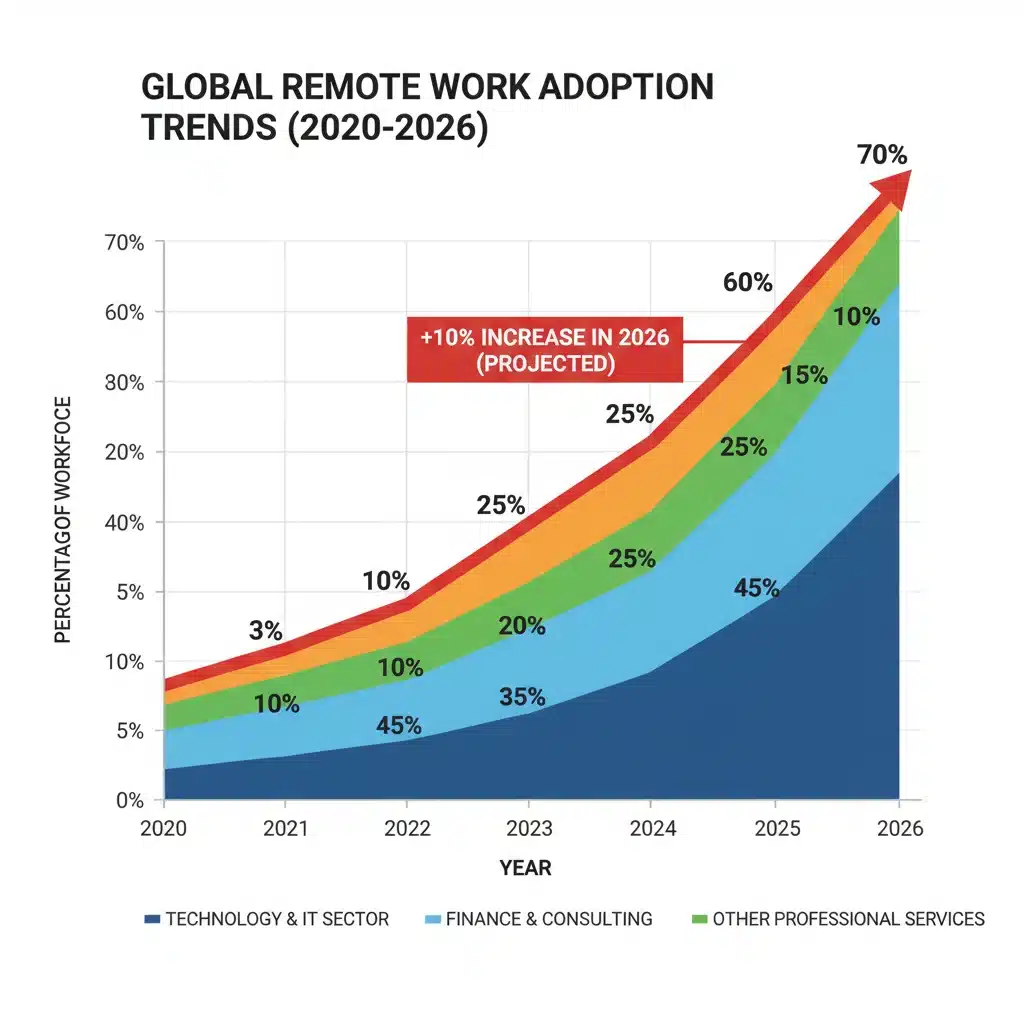
The landscape of work is undergoing an unprecedented transformation, with remote work emerging as a dominant force reshaping labor market dynamics. By 2026, experts project a significant 10% increase in Remote Work Adoption US industries, a trend that promises to redefine how businesses operate, how employees engage, and how entire economies function. This shift is not merely a temporary adjustment but a fundamental re-evaluation of traditional work structures, driven by technological advancements, evolving employee expectations, and a clearer understanding of its myriad benefits and challenges.
This comprehensive article delves into the intricate factors fueling this surge in Remote Work Adoption US, exploring its profound implications across various sectors, from technology and finance to healthcare and education. We will examine the drivers behind this growth, the specific industries leading the charge, and the economic, social, and operational impacts that this widespread adoption is creating. Furthermore, we will dissect the challenges that accompany such a monumental shift and offer strategic insights for both employers and employees to navigate this evolving professional world successfully. Understanding these dynamics is crucial for anyone looking to thrive in the future of work.
The Unstoppable Rise of Remote Work Adoption US: Key Drivers
The acceleration of Remote Work Adoption US is not a singular phenomenon but the culmination of several interconnected factors. While the global health crisis undoubtedly served as a catalyst, pushing many organizations to embrace remote models out of necessity, the underlying trends were already in motion. The past few years have simply expedited a transformation that was, arguably, inevitable.
Technological Advancements as Enablers
At the heart of increased Remote Work Adoption US lies the relentless march of technology. High-speed internet, cloud computing, and sophisticated collaboration tools have made it not just possible but efficient for teams to work together from disparate locations. Platforms for video conferencing, project management, and secure data access have evolved rapidly, offering seamless communication and productivity features that rival, and in some cases surpass, in-person interactions. These technological pillars provide the infrastructure necessary for a distributed workforce to function effectively, bridging geographical gaps and fostering a sense of connectivity.
Evolving Employee Expectations and Work-Life Balance
Another powerful driver is the changing priorities of the modern workforce. Employees, particularly younger generations, increasingly value flexibility, autonomy, and a better work-life balance. The ability to work remotely offers significant advantages in this regard, eliminating commutes, providing more control over one’s schedule, and allowing for greater integration of personal and professional responsibilities. Companies that embrace Remote Work Adoption US are finding it a powerful tool for attracting and retaining top talent, as it signals a progressive and employee-centric culture. This demand from the labor force is pushing more employers to consider and implement remote policies.
Cost Efficiencies for Businesses
For businesses, the financial incentives of Remote Work Adoption US are substantial. Reducing or optimizing office space can lead to significant savings on rent, utilities, and maintenance. Furthermore, a broader talent pool becomes accessible, as geographical limitations are removed, allowing companies to hire the best candidates regardless of their location. This can lead to more competitive hiring, reduced relocation costs, and increased diversity within the workforce. The operational efficiencies gained through remote setups often translate directly to improved bottom lines, making it an attractive proposition for forward-thinking organizations.
Increased Productivity and Focus
Contrary to initial skepticism, many studies have shown that remote work can actually boost productivity. Employees often report fewer distractions in a home office environment, leading to deeper focus and higher quality work. The elimination of daily commutes frees up valuable time and reduces stress, allowing employees to start their workday refreshed and more engaged. While not universally true for every individual or role, the overall trend suggests that when managed effectively, Remote Work Adoption US can lead to a more productive workforce.
Industries Leading the Charge in Remote Work Adoption US
While the increase in Remote Work Adoption US is a broad trend, certain industries are embracing this shift more rapidly and comprehensively than others. These sectors often share characteristics such as reliance on digital tools, knowledge-based work, and a workforce that is adaptable to virtual collaboration.
Technology and Software Development
Unsurprisingly, the technology sector has been at the forefront of Remote Work Adoption US. Software development, IT support, cybersecurity, and data analytics roles are inherently suited to remote models, requiring little to no physical presence. Tech companies were among the first to implement remote-first or hybrid models, leveraging their own products and expertise to create seamless virtual work environments. This industry continues to innovate in remote collaboration, setting benchmarks for others.
Finance and Professional Services
The finance industry, including banking, accounting, and investment firms, has seen a remarkable acceleration in Remote Work Adoption US. While historically office-centric, the digital nature of financial transactions and advisory services has made remote work increasingly viable. Professional services, such as consulting, legal services, and marketing agencies, also benefit greatly from remote models, allowing consultants and experts to serve clients globally without geographical constraints.
Education and E-Learning
The education sector experienced a massive, albeit forced, pivot to remote models during the pandemic. However, the success of online learning platforms and virtual administrative roles has solidified Remote Work Adoption US within this industry. E-learning specialists, curriculum developers, online tutors, and even some administrative functions are now routinely performed remotely, expanding access to education and talent.
Healthcare (Non-Clinical Roles)
While patient-facing roles in healthcare remain on-site, a significant portion of the healthcare industry’s administrative, billing, IT, and telemedicine support functions have transitioned to remote work. The rise of telehealth has directly contributed to this, allowing medical professionals to consult with patients virtually, while support staff manage records and appointments from home. This selective Remote Work Adoption US within healthcare streamlines operations and improves efficiency.
Impacts of Increased Remote Work Adoption US
The projected 10% increase in Remote Work Adoption US by 2026 will have far-reaching consequences, impacting not just individual businesses but entire economic and social structures.
Economic Restructuring and Urban Planning
One of the most significant impacts is the potential for economic restructuring. As companies reduce their physical footprints in major urban centers, there’s a shift in commercial real estate markets. This could lead to a revitalization of suburban and rural economies as remote workers choose to live in areas with lower costs of living and better quality of life. This decentralization could alleviate pressure on overcrowded cities and distribute economic opportunities more broadly across the nation. Urban planners are already grappling with how to adapt city infrastructures to a less office-centric future, considering changes in transportation, housing, and local businesses.
Enhanced Talent Acquisition and Retention
For businesses, the ability to recruit from a national or even global talent pool is a game-changer. Companies are no longer restricted by geographical boundaries when searching for specialized skills, leading to more diverse and highly qualified workforces. This expanded access to talent also translates into improved retention rates, as employees are less likely to leave a job that offers the flexibility and autonomy they desire. The increased Remote Work Adoption US creates a more competitive talent market for employers, but also significantly empowers employees.
Productivity and Innovation Shifts
While individual productivity can increase, the impact on team-level productivity and innovation is a more nuanced discussion. Effective remote collaboration requires intentional strategies and advanced tools to foster creativity and spontaneous idea generation. Companies embracing Remote Work Adoption US are investing in virtual brainstorming platforms, digital whiteboards, and regular virtual team-building activities to maintain a cohesive and innovative culture. The challenge lies in replicating the serendipitous encounters and informal knowledge sharing that often occur in traditional office settings.
Social and Psychological Implications for Employees
The shift to remote work also carries significant social and psychological implications for employees. While many appreciate the flexibility, some struggle with feelings of isolation, blurred lines between work and personal life, and potential challenges in maintaining strong professional networks. Companies embracing Remote Work Adoption US must prioritize employee well-being, offering resources for mental health, promoting digital boundaries, and facilitating virtual social interactions to combat potential negative effects. The long-term impact on social dynamics and community building remains an area of ongoing study.
Challenges and Mitigation Strategies for Remote Work Adoption US
Despite its numerous advantages, the widespread Remote Work Adoption US is not without its challenges. Successfully navigating this transition requires proactive planning and robust strategies from both organizations and individuals.
Maintaining Company Culture and Employee Engagement
One of the biggest hurdles is preserving a strong company culture and ensuring high employee engagement in a distributed environment. Without the daily interactions of an office, it can be difficult to foster a sense of belonging and shared purpose. Mitigation strategies include regular virtual team meetings, dedicated online spaces for informal communication, virtual social events, and robust internal communication channels. Leadership plays a crucial role in actively modeling desired behaviors and ensuring that remote employees feel valued and connected to the company’s mission.
Ensuring Cybersecurity and Data Privacy
With employees accessing company networks from various personal devices and home networks, cybersecurity risks escalate. Protecting sensitive data becomes paramount. Companies must implement stringent cybersecurity protocols, including multi-factor authentication, VPNs, endpoint detection and response (EDR) solutions, and regular security training for all employees. Investing in robust IT infrastructure and continuous monitoring is essential to safeguard against breaches in an environment of increased Remote Work Adoption US.
Effective Performance Management and Accountability
Managing performance and ensuring accountability can be different in a remote setting. Traditional oversight methods may not be as effective. Organizations are shifting towards results-oriented management, focusing on outcomes rather than hours spent at a desk. Clear goal setting, regular check-ins, transparent feedback mechanisms, and performance tracking tools are vital. Trust and clear expectations are the cornerstones of successful remote performance management.
Bridging the Digital Divide and Ensuring Equity
Not all employees have equal access to reliable internet, suitable home office setups, or the digital literacy required for effective remote work. Companies must address the digital divide to ensure equitable opportunities for all employees. This might involve providing stipends for internet access, offering ergonomic equipment, or providing comprehensive training on remote work tools and best practices. Ensuring that the benefits of Remote Work Adoption US are accessible to everyone is a matter of both fairness and business efficacy.
The Future Outlook: Beyond 2026 for Remote Work Adoption US
The projected 10% increase in Remote Work Adoption US by 2026 is just another milestone in an ongoing evolution. The future of work will likely be characterized by even greater flexibility and a more nuanced understanding of hybrid models.
The Hybrid Work Model as the New Standard
While fully remote models will continue to thrive in certain sectors, the hybrid model is emerging as a popular and sustainable solution for many organizations. This approach combines the benefits of remote work with the advantages of in-person collaboration, allowing employees to split their time between home and office. The key to successful hybrid models lies in intentional design, ensuring that office days are purpose-driven and that remote employees remain fully integrated into team activities. The flexibility offered by hybrid approaches will continue to drive Remote Work Adoption US in diverse forms.
Emphasis on Skills-Based Hiring and Lifelong Learning
As work becomes more distributed and roles evolve, the focus will shift even further towards skills-based hiring over traditional credentials or geographical proximity. Companies will prioritize candidates with adaptable skill sets, digital literacy, and strong self-management capabilities. For employees, this means a greater emphasis on lifelong learning and continuous upskilling to remain competitive in a rapidly changing labor market. The dynamic nature of remote work necessitates a workforce that is agile and eager to acquire new competencies.
Regulatory and Policy Adjustments
Governments and regulatory bodies will also need to adapt to the realities of widespread Remote Work Adoption US. This includes addressing issues related to taxation, labor laws across different states, data privacy regulations, and ensuring fair treatment for remote workers. As remote work becomes more ingrained, expect to see new policies and legal frameworks emerge to support and regulate this new way of working, ensuring both employer and employee rights are protected.
Technological Innovations for Enhanced Remote Experience
The technology supporting remote work will continue to advance, offering even more immersive and efficient collaboration tools. Expect breakthroughs in virtual reality (VR) and augmented reality (AR) for meetings and training, more sophisticated AI-powered assistants for task management, and improved cybersecurity solutions tailored for distributed environments. These innovations will further optimize the remote work experience, making it even more seamless and productive, thereby reinforcing the trend of Remote Work Adoption US.
Conclusion
The projected 10% increase in Remote Work Adoption US by 2026 is a clear indicator of a fundamental shift in the American labor market. This transformation, driven by technological progress, evolving employee expectations, and tangible business benefits, is reshaping industries, urban landscapes, and individual careers. While challenges related to culture, cybersecurity, and equity persist, proactive strategies and continuous adaptation can mitigate these hurdles.
For businesses, embracing remote work is no longer just an option but a strategic imperative for attracting top talent, achieving cost efficiencies, and fostering innovation. For employees, it offers unprecedented flexibility and autonomy, albeit with the responsibility of maintaining self-discipline and digital boundaries. As we move further into the 21st century, the ability to effectively manage and leverage Remote Work Adoption US will be a defining characteristic of successful organizations and thriving careers. The future of work is here, and it is undeniably distributed.