USB-C Standard 2026: Understanding Device Compatibility and Future Tech
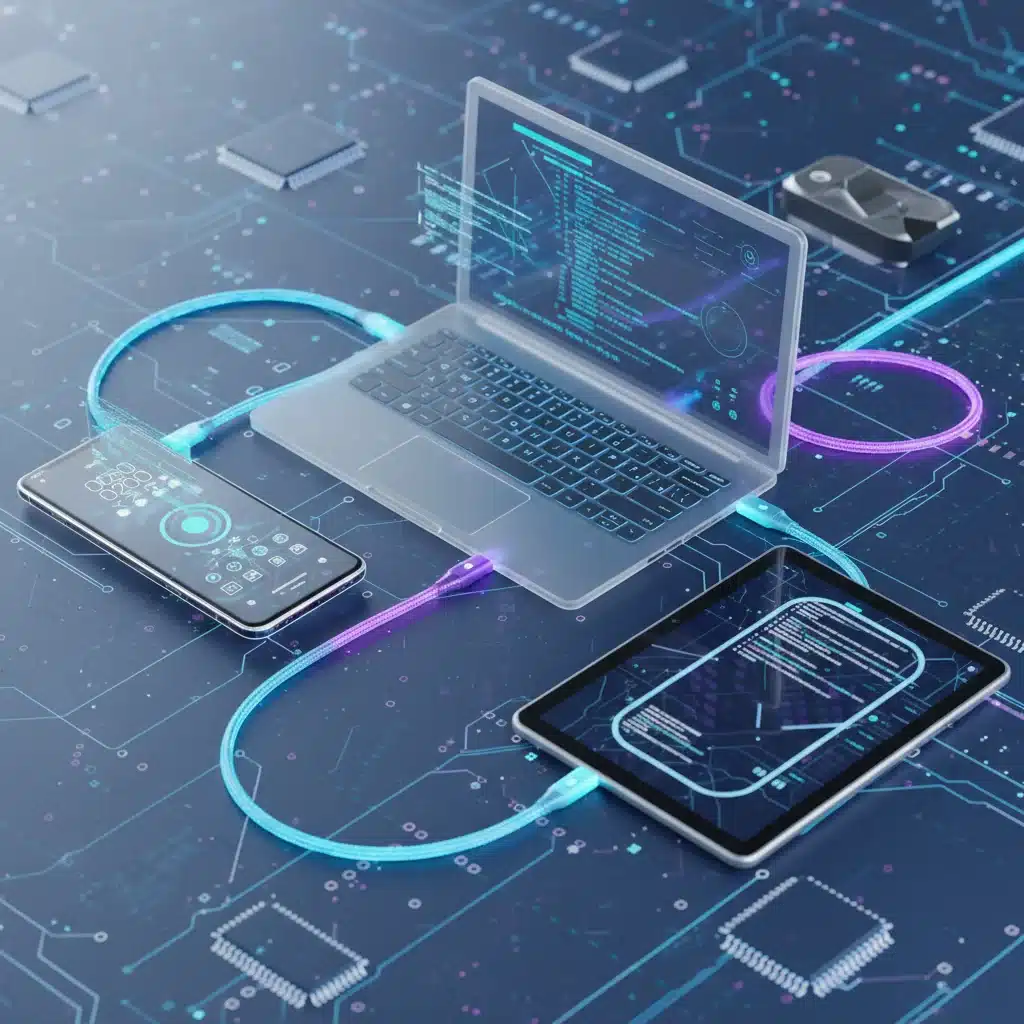
In the rapidly evolving landscape of consumer electronics, staying abreast of the latest technological standards is not just a hobby for enthusiasts; it’s a necessity for anyone looking to make informed purchasing decisions. One of the most significant and pervasive technological shifts we’ve witnessed in recent years is the widespread adoption of USB-C. This versatile connector has revolutionized how we charge our devices, transfer data, and connect peripherals. However, as technology never stands still, new iterations and standards are constantly on the horizon. The year 2026 is poised to bring forth significant advancements in the USB-C ecosystem, potentially redefining what we expect from our devices in terms of connectivity and performance. Understanding the upcoming USB-C 2026 compatibility is crucial for consumers, manufacturers, and developers alike.
The journey of USB-C has been marked by continuous innovation. From its initial promise of a reversible connector and higher data rates, it has grown to encompass a broad spectrum of functionalities, including power delivery up to 240W and support for high-resolution video output. This evolution, while beneficial, has also introduced a degree of complexity. Consumers often find themselves grappling with different versions of USB-C, each offering varying capabilities, leading to confusion and compatibility challenges. The 2026 standard aims to address some of these complexities while pushing the boundaries of what’s possible with a single cable and port. This article will delve deep into what the new USB-C standard entails, its implications for device compatibility, and how you can prepare for the future of connected technology.
The Evolution of USB-C: A Brief Retrospective
Before we peer into the future, it’s essential to understand the past. The original USB (Universal Serial Bus) standard was introduced in the mid-1990s as a way to standardize connections between computers and peripherals. It was a game-changer, replacing a multitude of proprietary and often cumbersome ports. Over the years, USB evolved through several iterations: USB 1.0, 2.0, and 3.0 (later rebranded as USB 3.1 Gen 1 and USB 3.2 Gen 1). Each version brought incremental improvements in speed and power delivery.
The true paradigm shift came with USB 3.1 and the introduction of the USB-C connector in 2014. Unlike its predecessors, USB-C was designed to be reversible, meaning there’s no ‘wrong’ way to plug it in – a minor convenience that brought immense user satisfaction. More importantly, it was engineered to be a truly universal connector, capable of handling not just data transfer but also power delivery and video output through a feature called ‘Alternate Mode.’ This allowed a single USB-C port to replace multiple legacy ports, leading to thinner devices and a cleaner desk setup.
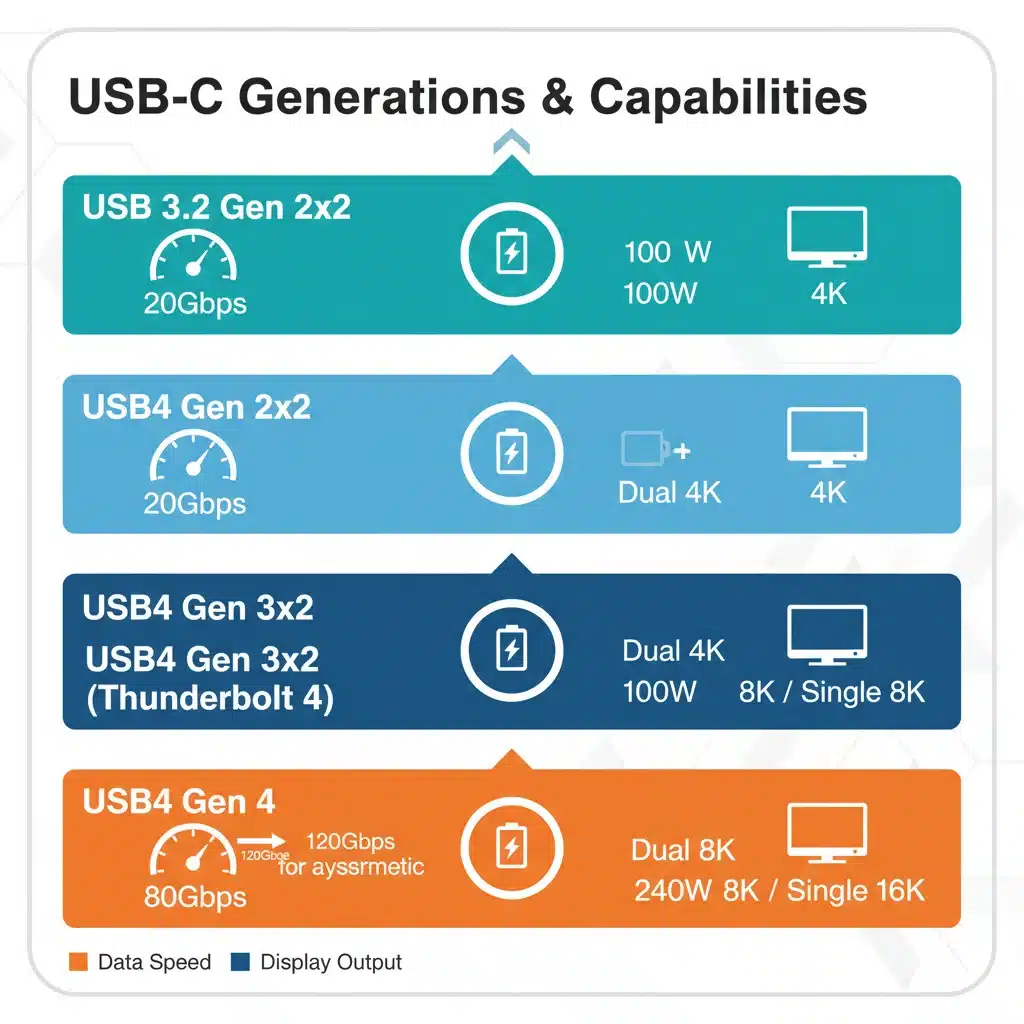
Subsequent advancements, such as USB 3.2, then USB4, and most recently USB4 Version 2.0 (often referred to as USB 80Gbps), have continually boosted data transfer speeds and power delivery capabilities. USB4, for instance, integrated Thunderbolt 3 technology, allowing for speeds up to 40Gbps and the ability to drive multiple 4K displays. USB4 Version 2.0 pushed this further to 80Gbps. This rapid progression highlights the industry’s commitment to creating a single, powerful, and versatile connectivity solution. However, this also means that not all USB-C cables and ports are created equal, leading to the current challenge of understanding what capabilities a specific USB-C connection offers. This is where understanding USB-C 2026 compatibility becomes paramount.
What to Expect from the USB-C 2026 Standard
While specific details of the ‘USB-C 2026 standard’ are still emerging and subject to finalization by the USB Implementers Forum (USB-IF), we can anticipate several key areas of focus based on current technological trends and the trajectory of previous USB advancements. The primary goals will likely revolve around enhancing performance, simplifying user experience, and ensuring robust backward and forward compatibility. The push for a truly universal connector means addressing the current fragmentation in capabilities.
Increased Data Transfer Speeds
The relentless demand for faster data transfer, driven by large files, high-resolution media, and increasingly data-intensive applications, will undoubtedly be a central theme. Following USB4 Version 2.0’s 80Gbps, it’s not unreasonable to expect the 2026 standard to either solidify this as a baseline for premium devices or introduce even higher speeds, potentially breaking the 100Gbps barrier for consumer-facing applications. Such speeds would enable instantaneous transfers of massive video files, rapid backups, and seamless interaction with high-performance external GPUs and storage arrays. For professionals working with 8K video, virtual reality, or scientific data, these speed enhancements will be transformative. It’s a key factor in ensuring USB-C 2026 compatibility with future high-bandwidth demands.
Enhanced Power Delivery Capabilities
Power Delivery (PD) over USB-C has already seen significant advancements, with Extended Power Range (EPR) enabling up to 240W. This means a single USB-C cable can now power not just laptops and smartphones, but also larger devices like gaming laptops, monitors, and even some small appliances. The 2026 standard will likely refine PD protocols, potentially improving efficiency, introducing smarter power negotiation between devices, and perhaps even increasing the maximum power output further, albeit with careful consideration for safety and cable design. Imagine a future where nearly all your electronic devices, from your phone to your high-end desktop monitor, can be powered and charged through a single, intelligent USB-C connection.
Improved DisplayPort and Video Capabilities
USB-C’s Alternate Mode for DisplayPort (Alt Mode) has been a boon for external display connectivity. As monitor resolutions climb to 8K and beyond, and refresh rates for gaming and professional applications increase, the bandwidth requirements for video transmission are skyrocketing. The 2026 standard will likely integrate the latest DisplayPort revisions, enabling support for even higher resolutions, refresh rates, and advanced display technologies like HDR and variable refresh rate (VRR) over a single cable. This will further solidify USB-C’s role as the go-to port for docking stations and external monitors, simplifying setups and reducing cable clutter. This seamless video integration is a critical aspect of USB-C 2026 compatibility for multimedia users.
Standardization and Simplified Labeling
Perhaps one of the most anticipated improvements, especially from a consumer perspective, is a clearer and more consistent labeling scheme. The current situation, with terms like USB 3.2 Gen 1×1, Gen 2×2, USB4, and Thunderbolt, can be incredibly confusing. The USB-IF has been working towards clearer branding, but more needs to be done. The 2026 standard will hopefully introduce a more intuitive nomenclature that clearly indicates a cable’s or port’s capabilities (e.g., speed, power delivery, video support) at a glance, making it easier for consumers to choose the right accessories. This simplification is vital for widespread USB-C 2026 compatibility adoption.
Impact on Device Compatibility: What Consumers Need to Know
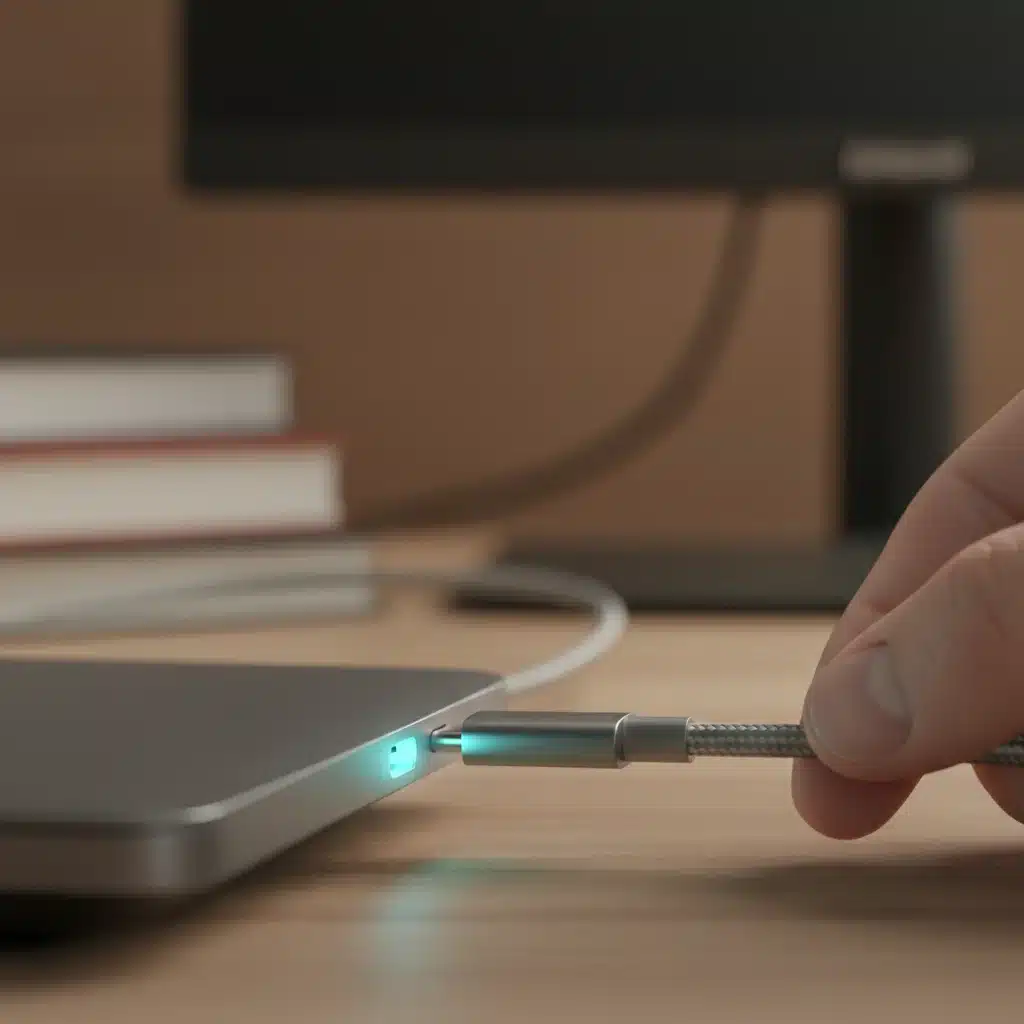
The introduction of a new USB-C standard always raises questions about compatibility. Will your existing devices and cables still work? Will you need to upgrade everything? The good news is that USB-C is designed with backward compatibility in mind, but there are nuances that consumers must understand to avoid frustration and ensure optimal performance.
Backward Compatibility: A Core Principle
One of the foundational principles of the USB standard is backward compatibility. This means that newer USB-C ports and cables are generally designed to work with older USB-C devices, albeit at the lower speed and power capabilities of the older device. For example, a new device with a 2026-compliant USB-C port will still connect to an older USB-C accessory, but the connection will operate at the accessory’s maximum speed (e.g., 20Gbps if it’s a USB 3.2 Gen 2×2 device). This ensures that your existing peripherals don’t become instantly obsolete.
Forward Compatibility: The Challenge
While backward compatibility is generally robust, forward compatibility is where things get tricky. An older USB-C cable or device may physically connect to a newer 2026-compliant port, but it won’t be able to utilize the full capabilities of the new standard. For instance, an older USB-C cable rated for 10Gbps will not be able to achieve 80Gbps or higher speeds even if connected to a 2026-compliant port and device. Similarly, a cable not rated for 240W power delivery will limit the charging speed of a device capable of receiving higher power.
This is particularly relevant for cables. As speeds and power delivery increase, the quality and construction of the cable become critical. Newer standards often require active cables, which contain chips to manage signal integrity and power negotiation over longer distances. Using an inadequate cable can lead to suboptimal performance, intermittent connections, or even a complete lack of functionality for advanced features. Therefore, when purchasing new devices that adhere to the USB-C 2026 compatibility standard, it’s highly advisable to invest in cables specifically rated for those capabilities.
The Role of Device Manufacturers
Device manufacturers play a crucial role in ensuring a smooth transition to the new standard. They must clearly communicate the capabilities of their USB-C ports and bundled cables. Adopting standardized labeling and providing detailed specifications will empower consumers to make informed choices. Furthermore, manufacturers need to design their products to fully leverage the new standard’s potential, ensuring that the entire ecosystem (host device, cable, and peripheral) is compatible to deliver the promised performance.
Preparing for the USB-C 2026 Standard
As 2026 approaches, there are several steps consumers can take to prepare for the new USB-C standard and ensure a seamless transition for their technology ecosystem.
Educate Yourself on Specifications
The most important step is to educate yourself. When purchasing new devices or accessories, pay close attention to the USB-C specifications. Look beyond just the ‘USB-C’ label and delve into the details: what USB generation does it support (e.g., USB4 Version 2.0)? What is the maximum data transfer speed? What is the power delivery capability (e.g., up to 240W)? Does it support DisplayPort Alt Mode? Understanding these specifications will help you identify products that are truly future-proof and compatible with the evolving 2026 standard.
Invest in Quality Cables
Cables are often an overlooked component, but they are critical for optimal USB-C performance. As the 2026 standard rolls out, ensure you purchase certified USB-C cables that explicitly state their capabilities. Look for cables that support the highest data transfer speeds (e.g., 80Gbps or higher), extended power range (240W), and video output. While these cables might be slightly more expensive, they will prevent performance bottlenecks and ensure full USB-C 2026 compatibility with your new devices. Avoid generic or unbranded cables, as they often do not meet the necessary specifications.
Prioritize Devices with Newer USB-C Implementations
When upgrading smartphones, laptops, tablets, or even monitors and external storage, prioritize devices that already incorporate the latest available USB-C standards (like USB4 Version 2.0). These devices are more likely to be forward-compatible with the 2026 standard or at least offer a smoother transition. While it’s not always feasible to buy the absolute bleeding edge, being aware of the current top-tier USB-C implementations will guide your purchasing decisions.
Consider Docking Stations and Hubs
For users with multiple peripherals, a high-quality USB-C docking station or hub can be a smart investment. Look for docks that support the latest USB-C protocols, offer ample power delivery, and provide a variety of ports (USB-A, HDMI, DisplayPort, Ethernet, etc.). A robust docking station can act as a central hub for all your connectivity needs, ensuring that even if your laptop has limited ports, you can still connect all your accessories efficiently and maintain USB-C 2026 compatibility across your setup.
Potential Challenges and Solutions
While the vision for USB-C is one of universal simplicity and high performance, the transition to new standards is rarely without its challenges. Understanding these potential hurdles can help users navigate the evolving landscape effectively.
Confusion and Misinformation
The primary challenge remains consumer confusion. The sheer number of USB versions, speeds, and power capabilities, coupled with often unclear product labeling, can lead to frustration. The solution lies in continued industry efforts to standardize naming conventions and clear, concise communication from manufacturers. Consumers, in turn, should seek out reputable sources of information and be wary of products that lack detailed specifications.
Cost of New Accessories
Adopting new standards often means investing in new cables, adapters, and peripherals to fully leverage the enhanced capabilities. High-performance, active USB-C cables can be more expensive than their simpler counterparts. While this is an inevitable part of technological progress, consumers should factor these potential accessory costs into their overall budget when planning device upgrades. Over time, as the new standard becomes ubiquitous, costs are expected to decrease.
Interoperability Issues
Despite best efforts, minor interoperability issues can sometimes arise between different manufacturers’ implementations of a new standard. These are typically resolved through firmware updates or driver improvements. Keeping devices and operating systems updated is a good practice to ensure the latest compatibility fixes and performance enhancements. This proactive approach helps maintain smooth USB-C 2026 compatibility.
The Future Beyond 2026: What’s Next for USB-C?
The 2026 USB-C standard will undoubtedly be a significant milestone, but it’s important to remember that the journey of innovation is continuous. Looking beyond 2026, we can anticipate further advancements that will continue to push the boundaries of what a single connector can achieve.
Optical USB-C Cables
As data transfer speeds climb, the limitations of copper cables become more pronounced, especially over longer distances. Optical USB-C cables, which use fiber optics instead of copper wires, could become more mainstream. These cables offer significantly higher bandwidth and can maintain signal integrity over much longer runs, opening up possibilities for new device architectures and distributed computing setups. Imagine a future where your main workstation unit is in a different room, connected to your display and peripherals via a single, ultra-fast optical USB-C cable.
Even Higher Power Delivery
While 240W is already substantial, the demand for power will only grow as devices become more powerful and new applications emerge. Future USB-C standards might explore even higher power delivery capabilities, potentially enabling it to power a wider range of industrial equipment, specialized medical devices, or even serve as a primary power source for small smart homes. This would further reduce the need for proprietary power bricks, promoting greater efficiency and sustainability.
Enhanced Security Features
With increasing reliance on USB-C for data transfer and power, security will become an even more critical concern. Future standards might incorporate more robust hardware-level security features, such as enhanced authentication protocols to prevent unauthorized data access or power siphoning. This would add an extra layer of protection for sensitive data and critical infrastructure connected via USB-C.
Integration with Wireless Technologies
While USB-C excels at wired connectivity, future innovations could see even tighter integration with wireless charging and data transfer technologies. Imagine a device that can seamlessly switch between wired USB-C for maximum performance and wireless for convenience, with the USB-C standard providing the underlying framework for intelligent power and data management. This hybrid approach could offer the best of both worlds, ensuring maximum USB-C 2026 compatibility with both wired and wireless ecosystems.
Conclusion
The upcoming USB-C 2026 standard represents another significant leap forward in universal connectivity. With anticipated improvements in data transfer speeds, power delivery, video capabilities, and hopefully, a clearer labeling system, USB-C is set to further cement its position as the indispensable port of the future. While the transition will require consumers to pay closer attention to specifications and potentially invest in new, higher-quality cables, the benefits of a truly unified and powerful connector are immense. By understanding the evolving landscape of USB-C 2026 compatibility, educating yourself on product specifications, and making informed purchasing decisions, you can ensure your technological ecosystem remains efficient, high-performing, and ready for whatever the future holds. The promise of a single cable for everything is closer than ever, and 2026 will be a pivotal year in making that vision a widespread reality.