Unlocking Productivity: 7 AI Tools for Everyday Tasks That Save You 2 Hours Daily

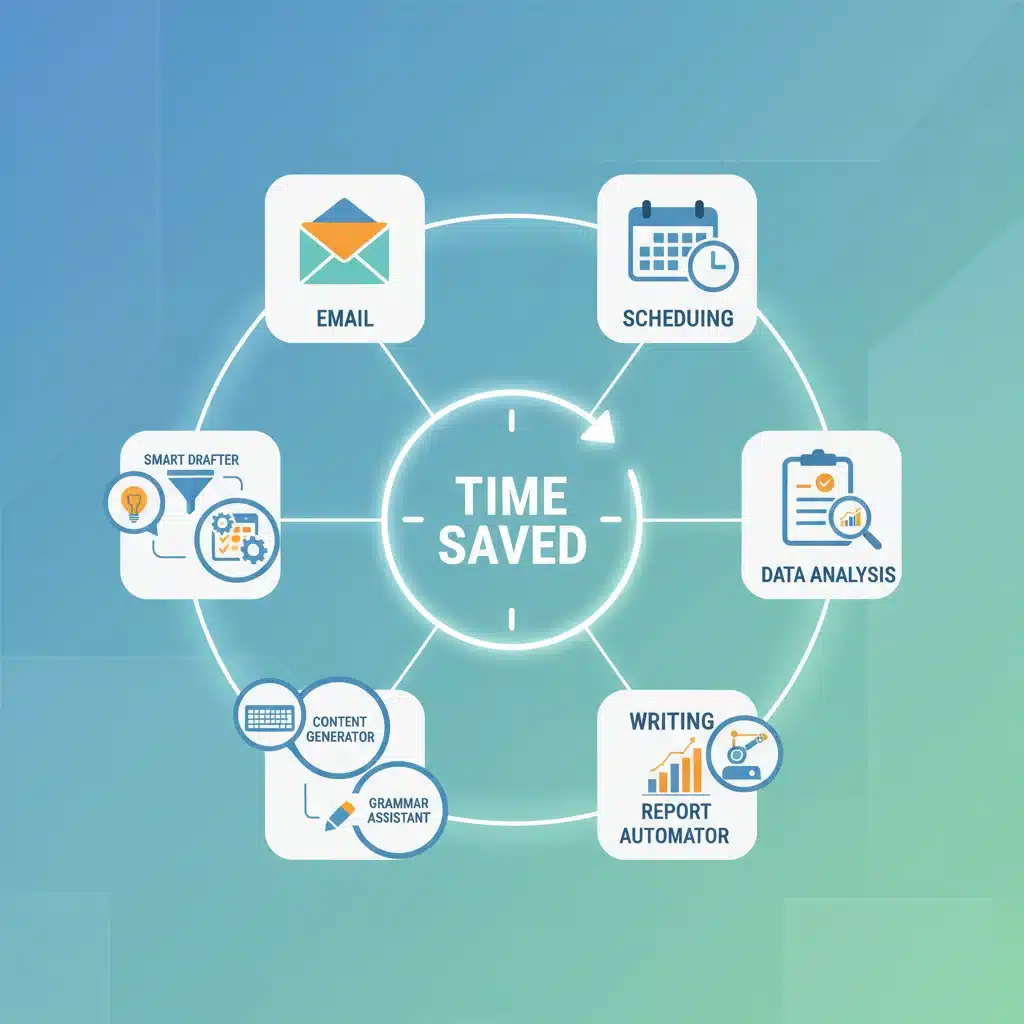
In today’s fast-paced world, time is arguably our most valuable commodity. We constantly seek ways to maximize our output, reduce stress, and achieve a better work-life balance. Enter artificial intelligence (AI) – a revolutionary force that is not just transforming industries but also offering practical solutions for our everyday struggles. This article delves into the realm of AI productivity tools, revealing how integrating just a few of these innovations into your daily routine can genuinely save you two hours or more each day. Imagine what you could do with that extra time – learn a new skill, spend quality moments with loved ones, or simply relax and recharge.
The promise of AI isn’t about replacing human effort entirely, but rather augmenting it. These intelligent tools are designed to handle repetitive, time-consuming, and often mundane tasks, freeing up your cognitive resources for more creative, strategic, and fulfilling work. From managing your inbox to crafting compelling content, the applications of AI productivity tools are vast and ever-expanding. We’ll explore seven specific categories of tools that stand out for their effectiveness and ease of integration, providing you with actionable insights to kickstart your journey towards enhanced efficiency.
As we navigate the complexities of modern life, the ability to streamline operations and optimize workflows becomes paramount. This guide is your roadmap to understanding, selecting, and implementing the most impactful AI productivity tools available today. Prepare to transform your daily grind into a well-oiled, efficient machine, giving you back precious hours you never thought you had.
The Dawn of a New Era: Why AI is Your Ultimate Productivity Partner
The concept of artificial intelligence has moved far beyond science fiction. It’s now an integral part of our digital landscape, constantly evolving and becoming more accessible. For individuals and businesses alike, AI represents an unprecedented opportunity to redefine productivity. But why exactly are AI productivity tools so effective?
Firstly, AI excels at automation. Many daily tasks, from scheduling meetings to organizing data, follow predictable patterns. AI algorithms can learn these patterns and execute the tasks autonomously, often faster and with fewer errors than humans. This automation doesn’t just save time; it also reduces mental fatigue associated with repetitive work, allowing you to focus on more complex challenges.
Secondly, AI offers unparalleled analytical capabilities. It can process vast amounts of information – far more than any human – and extract meaningful insights. This is invaluable for tasks like market research, data analysis, or even just sifting through emails to prioritize urgent messages. By providing immediate, data-driven insights, AI empowers you to make faster and more informed decisions.
Thirdly, AI enhances personalization. Many AI productivity tools learn from your habits and preferences, tailoring their assistance to your specific needs. Whether it’s suggesting relevant content, optimizing your calendar, or personalizing communication, this bespoke approach makes the tools feel like an extension of your own capabilities, rather than just generic software.
Finally, AI fosters continuous improvement. These tools are often designed to learn and adapt over time, becoming more efficient and accurate with every interaction. This means that the more you use them, the more value they provide, creating a virtuous cycle of enhanced productivity. Understanding these fundamental benefits is the first step towards embracing AI as your ultimate productivity partner.
1. Intelligent Email Management: Taming the Inbox Beast
Email overload is a universal struggle. The constant influx of messages can be a huge drain on time and mental energy. Traditional email filters only go so far. This is where AI productivity tools for email management truly shine, promising to reclaim significant chunks of your day.
How AI Transforms Your Inbox:
- Smart Prioritization: AI algorithms analyze the content, sender, and your past interactions to determine the urgency and importance of emails. They can highlight critical messages, move promotional emails to a separate folder, and even suggest quick replies for common inquiries.
- Automated Summarization: For lengthy emails or threads, AI can generate concise summaries, allowing you to grasp the main points without reading every word.
- Drafting Assistance: Many AI tools can help you compose emails faster by suggesting phrases, correcting grammar, and even generating entire draft responses based on the context of the conversation.
- Meeting Scheduling: Integrated AI assistants can coordinate schedules, propose meeting times, and send out invitations without you lifting a finger.
Tools to Consider:
- Superhuman: While not purely AI, it uses smart shortcuts and a highly efficient interface to drastically reduce email time. Its AI features include smart snippets and read-status tracking.
- Boomerang for Gmail: Offers AI-powered features like Inbox Pause, Send Later, and Respondable, which uses AI to analyze your email and provide real-time feedback on its likely effectiveness.
- Spark Mail App: Features an intelligent inbox that automatically categorizes emails (Personal, Notifications, Newsletters) and allows for quick replies and smart search.
By leveraging these AI productivity tools, you can transform your inbox from a source of stress into a streamlined communication hub, saving you an estimated 30 minutes to an hour daily.
2. AI-Powered Writing Assistants: Crafting Content with Speed and Precision
Whether you’re writing emails, reports, blog posts, or marketing copy, the act of writing can be incredibly time-consuming. Staring at a blank page, battling writer’s block, and meticulously editing can eat away at your day. AI productivity tools for writing are revolutionizing this process, enabling you to produce high-quality content faster and more efficiently.
The AI Writing Advantage:
- Overcoming Writer’s Block: AI can generate ideas, outlines, and even full paragraphs based on a few prompts, helping you overcome the initial hurdle of starting.
- Grammar and Style Correction: Beyond basic spell check, AI tools offer advanced grammar, punctuation, and style suggestions, ensuring your writing is clear, concise, and professional.
- Content Generation: For repetitive content needs, such as product descriptions, social media updates, or email sequences, AI can generate multiple variations quickly.
- Tone and Readability Analysis: Some tools can analyze the tone of your writing and suggest adjustments to ensure it resonates with your target audience. They can also assess readability, making sure your message is easily understood.
Tools to Consider:
- Grammarly: An indispensable tool for grammar, spelling, punctuation, clarity, engagement, and delivery. Its AI suggestions are incredibly accurate and context-aware.
- Jasper (formerly Jarvis): A powerful AI copywriting tool that can generate blog posts, marketing copy, social media content, and more, all based on specific prompts and desired tones.
- Copy.ai: Similar to Jasper, Copy.ai offers a wide range of templates for various content types, helping you generate creative and effective copy in minutes.
Integrating an AI writing assistant can dramatically cut down the time you spend on drafting and editing, potentially saving you 45 minutes to an hour daily, depending on your writing volume.

3. Smart Scheduling and Calendar Management: Never Miss a Beat
Juggling multiple meetings, appointments, and deadlines can feel like a full-time job in itself. The back-and-forth emails to find a suitable time, the risk of double-booking, and the constant need to update your calendar are significant time sinks. AI productivity tools for scheduling are designed to automate this entire process, ensuring your calendar is always optimized and up-to-date.
How AI Streamlines Your Schedule:
- Automated Meeting Coordination: AI assistants can communicate with attendees, check everyone’s availability, propose optimal meeting times, and send out invitations – all without your direct involvement.
- Intelligent Time Blocking: Based on your preferences and typical work patterns, AI can suggest and even block out time for focused work, breaks, or specific projects, helping you adhere to a more structured day.
- Conflict Resolution: If a new appointment conflicts with an existing one, AI can often identify the conflict and suggest alternative times or even reschedule less critical events.
- Travel Time Integration: For in-person meetings, AI can factor in travel time based on real-time traffic data, ensuring you arrive on schedule.
Tools to Consider:
- Calendly: While not fully AI, it uses smart logic to simplify meeting scheduling. Its AI-powered features are increasingly being integrated to suggest optimal times.
- Doodle: Excellent for group scheduling, Doodle utilizes intelligent algorithms to find the best meeting times for multiple participants.
- Reclaim.ai: This tool uses AI to intelligently block time for tasks, meetings, and habits in your calendar, optimizing your schedule for maximum productivity and flexibility. It learns your preferences and adapts.
By offloading the complexities of scheduling to AI productivity tools, you can save anywhere from 20 to 40 minutes per day, reducing administrative overhead and freeing you to focus on your core responsibilities.
4. Advanced Note-Taking and Knowledge Management: Capturing Ideas Effortlessly
Ideas strike at the most unexpected moments, and important information is constantly being shared. The challenge lies in capturing these insights effectively and organizing them in a way that makes them easily retrievable. Traditional note-taking can be messy and inefficient. AI productivity tools are transforming knowledge management, making it easier to capture, organize, and recall information.
AI’s Role in Knowledge Management:
- Smart Transcription: AI can transcribe voice notes, meeting recordings, and even video content into searchable text, saving hours of manual transcription.
- Automatic Tagging and Categorization: Based on content, AI can automatically tag and categorize your notes, making them incredibly easy to search and retrieve later.
- Contextual Search: Beyond keyword search, AI can understand the context of your queries, providing more relevant results from your vast knowledge base.
- Summarization of Documents: Upload long articles or documents, and AI can generate concise summaries, allowing you to quickly grasp key information without reading everything.
Tools to Consider:
- Otter.ai: Specializes in real-time transcription of conversations, meetings, and lectures. It can identify speakers and generate summaries, making meeting minutes a breeze.
- Notion AI: Integrated into the popular Notion workspace, this AI can summarize notes, brainstorm ideas, translate content, and even help you draft documents within your existing knowledge base.
- Evernote (with AI features): While a long-standing note-taking app, Evernote is incorporating AI for improved search, content suggestions, and organization.
By leveraging these intelligent note-taking and knowledge management AI productivity tools, you can save 20 to 30 minutes daily by reducing time spent on manual organization and information retrieval.
5. Data Analysis and Reporting: Unearthing Insights Faster
For many professionals, data analysis and report generation are critical yet time-consuming tasks. Sifting through spreadsheets, identifying trends, and then synthesizing that information into a coherent report can take hours, if not days. AI productivity tools are revolutionizing this domain, enabling faster insights and more efficient reporting.
How AI Boosts Data Productivity:
- Automated Data Cleaning: AI can identify and correct errors, remove duplicates, and standardize formats within datasets, saving immense manual effort.
- Pattern Recognition: AI algorithms can quickly identify complex patterns, correlations, and anomalies in large datasets that might be missed by human analysts.
- Automated Report Generation: Based on predefined templates and data inputs, AI can generate comprehensive reports, including charts, graphs, and textual summaries, in a fraction of the time.
- Predictive Analytics: Some advanced AI tools can even use historical data to forecast future trends, providing valuable insights for strategic planning.
Tools to Consider:
- Microsoft Power BI (with AI capabilities): Integrates AI to help users find insights faster, create natural language queries, and automate data preparation.
- Tableau (with Einstein Discovery): Salesforce’s Tableau combined with Einstein Discovery brings powerful AI-driven insights and predictive analytics directly into your data visualizations.
- Google Sheets (with Explore feature): Google Sheets uses AI to analyze your data and automatically suggest charts, pivot tables, and answers to your questions without you having to manually configure them.
For anyone dealing with significant amounts of data, these AI productivity tools can be a game-changer, potentially saving you an hour or more each day by accelerating analysis and reporting.
6. Project Management and Task Automation: Keeping Everything on Track
Managing projects, delegating tasks, and ensuring deadlines are met can be a complex and demanding process. Traditional project management often involves manual updates, constant check-ins, and a lot of administrative overhead. AI productivity tools are transforming project management by automating routine tasks, providing predictive insights, and streamlining communication.
AI in Project Management:
- Automated Task Assignment: Based on workload, skills, and availability, AI can intelligently assign tasks to team members.
- Predictive Risk Assessment: AI can analyze project data to identify potential bottlenecks, delays, or resource conflicts before they become major issues.
- Progress Tracking and Reporting: AI can automatically collect data on task completion, team performance, and project milestones, generating real-time progress reports.
- Smart Reminders and Notifications: AI can send personalized reminders for upcoming deadlines or overdue tasks, ensuring nothing falls through the cracks.
- Resource Optimization: By analyzing resource allocation and utilization, AI can suggest ways to optimize your team’s efficiency and prevent burnout.
Tools to Consider:
- Asana (with AI integrations): While Asana is a robust project management platform, its integrations with AI tools allow for smarter task assignment, progress analysis, and automation of routine workflows.
- Jira (with AI plugins): For software development teams, AI plugins for Jira can help prioritize backlogs, estimate task completion times, and identify potential issues.
- ClickUp (with AI features): ClickUp is rapidly integrating AI to assist with task creation, summarization of comments, and even content generation within tasks, enhancing overall project efficiency.
By implementing AI productivity tools in your project management workflow, you can save 30 minutes to an hour daily, ensuring projects stay on schedule and teams operate at peak efficiency.
7. Personalized Learning and Skill Development: Growing Smarter, Faster
In a rapidly evolving professional landscape, continuous learning is not just an advantage; it’s a necessity. However, finding the right resources, structuring your learning, and retaining information can be challenging. AI productivity tools are now extending into personalized learning, helping you acquire new skills and knowledge more efficiently.
AI’s Impact on Learning:
- Personalized Learning Paths: AI can assess your current knowledge and learning style to recommend tailored courses, articles, and exercises that best suit your needs and goals.
- Adaptive Content Delivery: Learning platforms powered by AI can adjust the difficulty and pace of content based on your performance, ensuring you are always challenged but not overwhelmed.
- Intelligent Tutoring: AI chatbots can act as virtual tutors, answering questions, providing explanations, and offering practice problems in real-time.
- Content Curation: AI can sift through vast amounts of educational content online to curate the most relevant and high-quality resources for your specific learning objectives.
- Memory Retention Tools: Some AI tools use spaced repetition algorithms to optimize your review schedule, helping you commit information to long-term memory more effectively.
Tools to Consider:
- Coursera (with AI recommendations): Offers AI-powered course recommendations based on your career goals and learning history.
- Duolingo: Uses AI to personalize language learning, adapting lessons to your progress and weaknesses, making learning more efficient and engaging.
- ChatGPT/Bard (for quick explanations): While general AI, these tools can provide instant explanations on complex topics, summarize articles, and even help you brainstorm ideas for learning projects.
By integrating AI productivity tools into your learning routine, you can accelerate your skill development and knowledge acquisition, saving significant time compared to traditional methods of self-study and potentially gaining an extra 30 minutes to an hour of effective learning time daily.
Integrating AI into Your Daily Workflow: Best Practices for Maximum Gain
Simply knowing about these AI productivity tools isn’t enough; the real magic happens when you strategically integrate them into your existing workflow. Here are some best practices to ensure you maximize your time savings and efficiency gains:
- Start Small, Scale Up: Don’t try to implement all seven tools at once. Choose one or two areas where you feel the most time drain (e.g., email or writing) and start with an AI tool designed for that. Once you’re comfortable, gradually introduce more.
- Define Your Goals: Before adopting any tool, clearly identify what you want to achieve. Do you want to reduce email response time? Automate report generation? Improve content quality? Specific goals will help you choose the right tools and measure their impact.
- Train the AI (Where Applicable): Many AI tools learn from your interactions. The more you use them and provide feedback, the better they become at understanding your preferences and needs. Invest a little time upfront to "train" the AI for optimal results.
- Integrate, Don’t Isolate: Look for AI productivity tools that integrate seamlessly with your existing software ecosystem (e.g., Google Workspace, Microsoft 365, Slack). This prevents context switching and creates a more cohesive workflow.
- Regularly Review and Optimize: Periodically assess how the AI tools are performing. Are they truly saving you time? Are there new features you can leverage? Technology evolves rapidly, so continuous optimization is key.
- Maintain Human Oversight: While AI is powerful, it’s not infallible. Always maintain a degree of human oversight, especially for critical tasks. Review AI-generated content, confirm scheduled appointments, and verify data insights.
- Educate Your Team: If you’re introducing AI productivity tools in a team setting, ensure everyone understands their purpose, how to use them effectively, and the benefits they bring. Training and clear guidelines are essential for successful adoption.
By following these best practices, you can ensure that your adoption of AI productivity tools is not just a passing trend but a sustainable strategy for long-term efficiency and success.
The Cumulative Impact: Reclaiming Your Time and Enhancing Your Life
Individually, each of these AI productivity tools offers significant benefits. But their true power lies in their cumulative impact. Imagine saving 30 minutes on email, 45 minutes on writing, 20 minutes on scheduling, and 25 minutes on data analysis. That’s already over two hours reclaimed in a single day! This isn’t just about doing more work; it’s about doing the right work, more efficiently, and with less stress.
Reclaiming two hours daily translates to an extra 10 hours a week, 40 hours a month, and a staggering 480 hours a year. What would you do with an extra 480 hours? You could pursue a passion project, dedicate more time to personal development, improve your health and well-being, or simply enjoy more leisure time. The potential for personal and professional growth is immense.
The journey to enhanced productivity with AI is ongoing. As AI technology continues to advance, new and more sophisticated tools will emerge, offering even greater opportunities for optimization. By staying informed and open to integrating these innovations, you position yourself at the forefront of efficiency, ready to tackle challenges with newfound speed and precision.
Conclusion: Embrace the Future of Work with AI
The era of AI productivity tools is not just a glimpse into the future; it’s our present reality. From intelligent email management to sophisticated data analysis and personalized learning, AI offers tangible, immediate benefits that can transform your daily workflow. By strategically adopting just a few of these powerful solutions, you can realistically save two hours or more every single day, dramatically enhancing your efficiency, reducing stress, and freeing up valuable time for what truly matters.
Don’t let the fear of new technology hold you back. Start small, experiment with the tools that resonate most with your needs, and observe the transformative impact they have on your productivity. The future of work is collaborative – a partnership between human ingenuity and artificial intelligence. Embrace these AI productivity tools, and unlock a new level of efficiency, creativity, and work-life balance that was once unimaginable. Your extra two hours await.