Unlock Your Smartphone’s Hidden Potential: Advanced Features 2026
Anúncios
In the ever-evolving landscape of mobile technology, our smartphones have transcended their original purpose as mere communication devices. Today, they are powerful, pocket-sized computers capable of feats we could only dream of a decade ago. Yet, despite their incredible capabilities, many users only scratch the surface of what their devices can truly do. As we navigate through 2026, the gap between basic usage and advanced utilization of smartphone advanced features is wider than ever. This article aims to bridge that gap, unveiling five cutting-edge features that you’re likely not leveraging, but absolutely should be.
Anúncios
The constant innovation in the smartphone industry means that each new generation of devices comes packed with a plethora of enhancements, from improved processors and cameras to sophisticated software functionalities. However, these innovations often go unnoticed by the average user, either due to a lack of awareness or a perception that they are too complex to implement. Our goal here is to demystify these powerful tools and show you how integrating them into your daily routine can significantly enhance your productivity, security, creativity, and overall digital experience. Prepare to unlock the true potential of your device and transform your interaction with technology.
1. Hyper-Personalized Adaptive UI: Your Phone, Reimagined for You
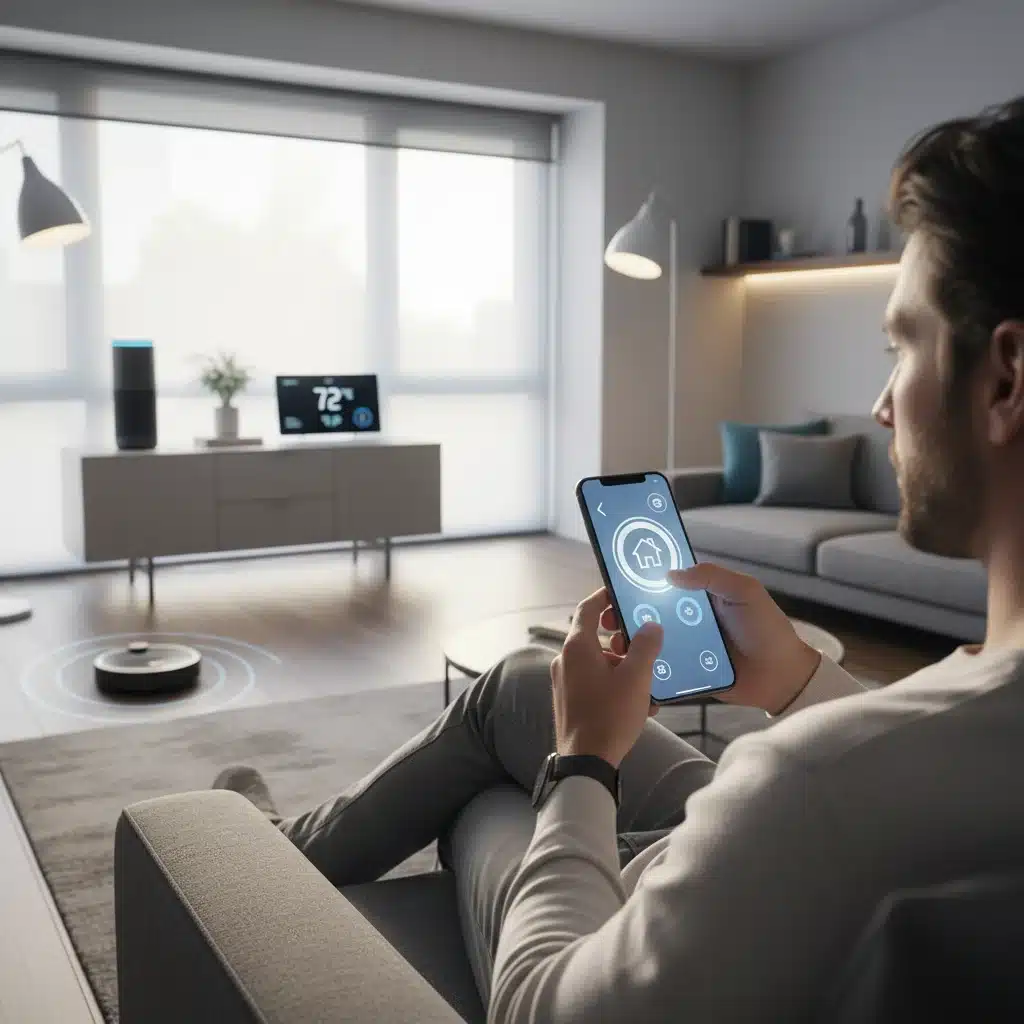
Gone are the days of static user interfaces. In 2026, one of the most significant smartphone advanced features is the Hyper-Personalized Adaptive UI. This isn’t just about changing your wallpaper or rearranging icons; it’s an intelligent system that learns your usage patterns, preferences, and even your emotional state to dynamically adjust the interface to suit your immediate needs. Imagine a phone that knows when you’re driving and automatically surfaces navigation controls, or when you’re winding down for the night and shifts to a calming, minimalist layout with quick access to sleep-tracking apps.
Anúncios
This advanced UI goes beyond simple automation. It uses on-device AI and machine learning to predict your next move, offering relevant apps, shortcuts, and information before you even think to look for them. For instance, if you regularly check weather and traffic reports first thing in the morning, your phone’s home screen might automatically display these widgets prominently. If your calendar indicates a meeting, it could pre-load your video conferencing app and relevant documents. The system also adapts to your gestures, voice commands, and even eye-tracking, making interaction incredibly intuitive and efficient. This feature is a game-changer for those seeking a truly bespoke mobile experience, significantly reducing cognitive load and saving precious time throughout the day. Embracing this level of personalization allows your smartphone to become an extension of yourself, anticipating your needs and streamlining your digital life in ways previously unimaginable. It’s about making your device work smarter for you, rather than you working harder to navigate your device.
The benefits of a Hyper-Personalized Adaptive UI extend to accessibility as well. Users with specific needs can experience an interface that fluidly adjusts font sizes, color contrasts, and input methods based on their preferences, making smartphone usage more inclusive. Furthermore, this dynamic adaptation can also optimize battery life by intelligently prioritizing background processes and screen refresh rates based on the current context of use. For example, during intensive gaming, the UI might maximize performance, while during a low-power reading session, it scales back resources to conserve energy. Unlocking this smartphone advanced feature means not just a prettier interface, but a more efficient, accessible, and power-conscious device that truly understands and responds to its owner’s unique demands.
2. Quantum-Secure Biometric Authentication: Beyond Fingerprints and Faces
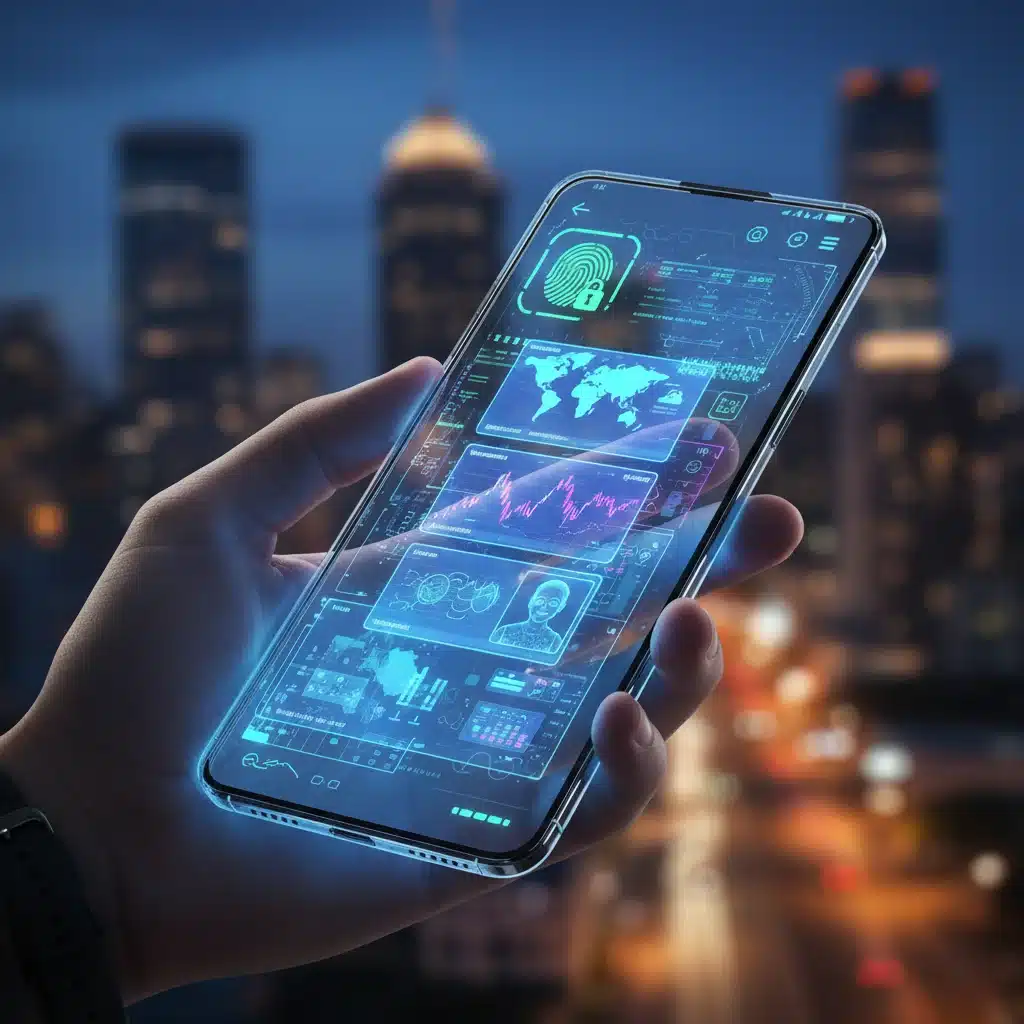
While fingerprint scanners and facial recognition have become standard, 2026 brings an even more robust layer of security: Quantum-Secure Biometric Authentication. This isn’t just about faster unlocks; it’s about protecting your data against emerging threats, including those posed by quantum computing. Traditional biometric methods, while convenient, can theoretically be spoofed with advanced techniques. Quantum-secure systems, however, employ cryptographic techniques that are resistant to quantum attacks, ensuring your personal and financial information remains impenetrable.
This advanced authentication often combines multiple biometric modalities with quantum-resistant encryption algorithms. For example, it might simultaneously scan your retina, analyze your unique gait, and monitor your unique heart rhythm patterns, then encrypt this multi-modal data using a quantum-secure algorithm before verification. The sheer complexity and uniqueness of these combined biometrics, coupled with unbreakable encryption, make it virtually impossible for unauthorized access. This is particularly crucial for mobile banking, secure corporate access, and protecting highly sensitive personal data. Understanding and activating these advanced security layers is no longer optional but a necessity in an increasingly sophisticated digital threat landscape. Your digital identity is your most valuable asset, and these smartphone advanced features are designed to safeguard it against the most formidable adversaries. It’s a proactive step towards future-proofing your digital security against unforeseen vulnerabilities.
Beyond just unlocking your phone, Quantum-Secure Biometric Authentication can be integrated into various aspects of your digital life. Imagine authorizing high-value transactions, signing digital documents, or accessing sensitive cloud storage with an authentication method that is not only convenient but also provides an unprecedented level of assurance. This feature often works in conjunction with secure hardware enclaves within your smartphone, creating a dedicated, isolated environment for processing and storing your biometric data, further minimizing the risk of compromise. Enabling and understanding the nuances of these advanced security settings is paramount for anyone serious about protecting their digital footprint in 2026. It’s an investment in peace of mind, knowing that your most personal data is guarded by the strongest available technology.
3. Real-time Holographic Projection & AR Collaboration: Beyond the Screen
Augmented Reality (AR) has been around for a while, but 2026 takes it to an entirely new level with Real-time Holographic Projection and AR Collaboration. Your smartphone is no longer just a window to digital content; it’s a projector that can cast interactive 3D holograms into your physical space. This is not science fiction; it’s a tangible smartphone advanced feature transforming how we interact with information and each other.
Imagine conducting a virtual meeting where participants appear as lifelike holograms around your coffee table, or collaborating on a 3D design project where you can manipulate virtual objects in real space with your hands. Doctors can project anatomical models for educational purposes, architects can visualize building designs on-site, and educators can bring historical events to life in the classroom. This technology moves beyond simple overlays, offering true spatial computing where digital content seamlessly integrates and interacts with the physical world. The implications for gaming, education, professional collaboration, and even personal entertainment are immense, offering an immersive experience that traditional screens simply cannot replicate. Learning to harness this feature opens up a new dimension of digital interaction, making your smartphone a powerful tool for creation and collaboration in a mixed-reality environment.
The real magic of Real-time Holographic Projection and AR Collaboration lies in its collaborative capabilities. Multiple users, each with their enabled smartphone, can simultaneously view and interact with the same holographic projections from different perspectives, in different physical locations. This creates unprecedented opportunities for remote teamwork, shared learning experiences, and even synchronized entertainment. For example, a group of friends scattered across the globe could gather virtually to watch a sporting event, with player statistics and replays appearing as interactive holograms in their respective living rooms. This smartphone advanced feature is not just about individual experience; it’s about connecting people and digital content in a profoundly immersive and shared reality. Mastering this technology will redefine how we perceive and engage with digital information, making interactions more intuitive, engaging, and collaborative than ever before. It marks a significant leap from two-dimensional screens to truly three-dimensional, interactive digital environments.
4. AI-Powered Predictive Resource Management: Unseen Efficiency
Your smartphone is a complex machine, constantly juggling numerous applications, background processes, and hardware demands. While you might manually close apps or adjust settings, 2026 introduces AI-Powered Predictive Resource Management, one of the most impactful yet often invisible smartphone advanced features. This intelligent system constantly monitors your usage patterns, anticipates your needs, and dynamically allocates resources (CPU, RAM, battery, network) to optimize performance and battery life without any manual intervention.
For instance, if the AI learns you typically use a specific navigation app every morning, it might pre-load certain map data or prioritize network bandwidth for that app around that time. Conversely, if an app is consuming excessive resources in the background but hasn’t been used in days, the AI might automatically put it into a deep sleep state, conserving battery and processing power. This goes far beyond simple task killers; it’s a sophisticated, self-learning system that makes your phone run smoother, faster, and last longer on a single charge. It learns from every interaction, every app launch, and every idle moment, constantly refining its predictions to ensure your device is always operating at peak efficiency tailored to your unique habits. Embracing this feature means a noticeable improvement in your phone’s responsiveness and endurance, making your daily mobile experience significantly more seamless and frustration-free. This isn’t just about minor tweaks; it’s a fundamental shift in how your device manages itself, providing an optimized experience that adapts to your lifestyle.
The benefits of AI-Powered Predictive Resource Management extend beyond mere performance and battery life. It also plays a crucial role in maintaining the long-term health of your device. By preventing unnecessary strain on components and optimizing thermal management, it can contribute to a longer lifespan for your smartphone. Furthermore, this intelligent system can identify potential software conflicts or resource bottlenecks before they impact your user experience, often resolving them in the background. For power users who demand consistent performance from their devices, or for those who simply want their phone to last longer without constant charging, understanding and appreciating this smartphone advanced feature is key. It’s the invisible hand that keeps your device running like new, adapting to your evolving needs and ensuring a consistently optimized mobile experience without you ever having to lift a finger.
5. Decentralized Identity & Self-Sovereign Data Management: Your Data, Your Control
In an era of increasing concerns over data privacy, Decentralized Identity and Self-Sovereign Data Management stands out as a critical smartphone advanced feature for 2026. This paradigm shift puts you, the user, firmly in control of your digital identity and personal data, moving away from centralized systems where your information is often stored and managed by third-party companies.
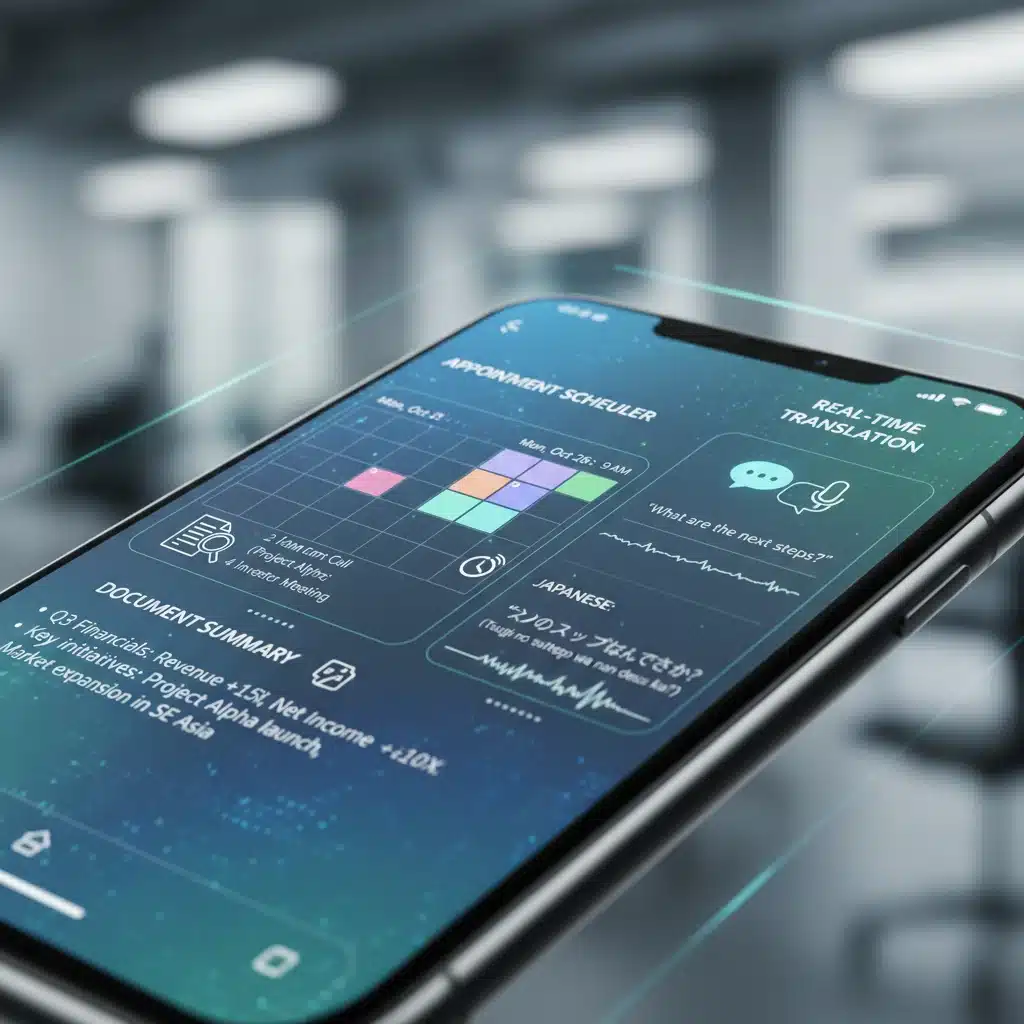
Leveraging blockchain technology and secure enclaves on your device, this feature allows you to create and manage verifiable digital credentials (e.g., your driver’s license, passport, medical records) directly on your smartphone. Instead of relying on a company to verify your identity or store your data, you present cryptographic proofs directly from your device, sharing only the specific information required for a transaction or service, and nothing more. For example, instead of sharing your entire driver’s license to prove you’re over 21, your phone can simply issue a verifiable credential that states ‘User is over 21’ without revealing your name, address, or date of birth. This minimizes your digital footprint, drastically reduces the risk of data breaches, and empowers you with unprecedented control over who accesses your personal information and for what purpose. Understanding and adopting this feature is fundamental for anyone serious about reclaiming their digital privacy and security in the modern age. It’s a foundational step towards a more secure and user-centric internet, where individuals are empowered to manage their own digital presence and interactions.
The implications of Decentralized Identity and Self-Sovereign Data Management are vast, extending beyond privacy to encompass secure and seamless interactions across various platforms. Imagine logging into websites or apps without creating new accounts, instead using a single, verifiable digital identity managed by your phone. Or applying for a loan by providing only the necessary financial proofs, without handing over sensitive documents to multiple institutions. This smartphone advanced feature enables a more secure, efficient, and private digital economy. It’s about shifting the power dynamics from large corporations to individual users, giving you granular control over your data and interactions. As data breaches become more common and privacy concerns escalate, mastering these tools will be essential for navigating the digital world safely and confidently. It represents a fundamental re-architecture of how we handle personal information online, fostering trust and security through individual empowerment and cryptographic assurance.
Embracing the Future: Maximizing Your Smartphone Advanced Features
The journey through these five smartphone advanced features reveals a future where our mobile devices are not just tools, but intelligent, adaptive, and highly secure extensions of ourselves. From hyper-personalized UIs that anticipate our every move to quantum-secure biometrics that safeguard our most sensitive data, and from holographic projections that redefine collaboration to AI-driven resource management that ensures peak performance, the capabilities available in 2026 are truly astounding. Yet, these advancements are only as powerful as our willingness to explore and integrate them into our daily lives.
Decentralized identity management, in particular, marks a pivotal shift towards a more user-centric digital world, offering unprecedented control over our personal data. As technology continues its relentless march forward, staying informed and proactive about these innovations is crucial. Don’t let your smartphone be just another device; unlock its full potential and transform your digital experience. The future of mobile technology is here, and it’s more powerful and personal than you ever imagined. By taking the time to understand and implement these advanced functionalities, you’re not just upgrading your phone usage; you’re upgrading your entire digital lifestyle, ensuring you’re at the forefront of technological empowerment.
The true value of these smartphone advanced features lies in their synergistic effect. When combined, they create an ecosystem of unparalleled efficiency, security, and immersion. Imagine a device that not only predicts your needs but also protects your identity with quantum-level security, allows you to collaborate in a holographic space, and manages its own resources to ensure seamless operation, all while giving you ultimate control over your data. This is the promise of 2026’s smartphone technology. It’s an invitation to move beyond basic interactions and embrace a truly intelligent, integrated, and empowering mobile experience. The time to explore these capabilities is now, to ensure you’re not just keeping up with technology, but actively shaping your interaction with it.