US Energy Transition: Policy Shifts to Boost Renewables by 25% by 2027
Anúncios
US Energy Transition: Two Major Policy Shifts Expected to Boost Renewables by 25% by 2027
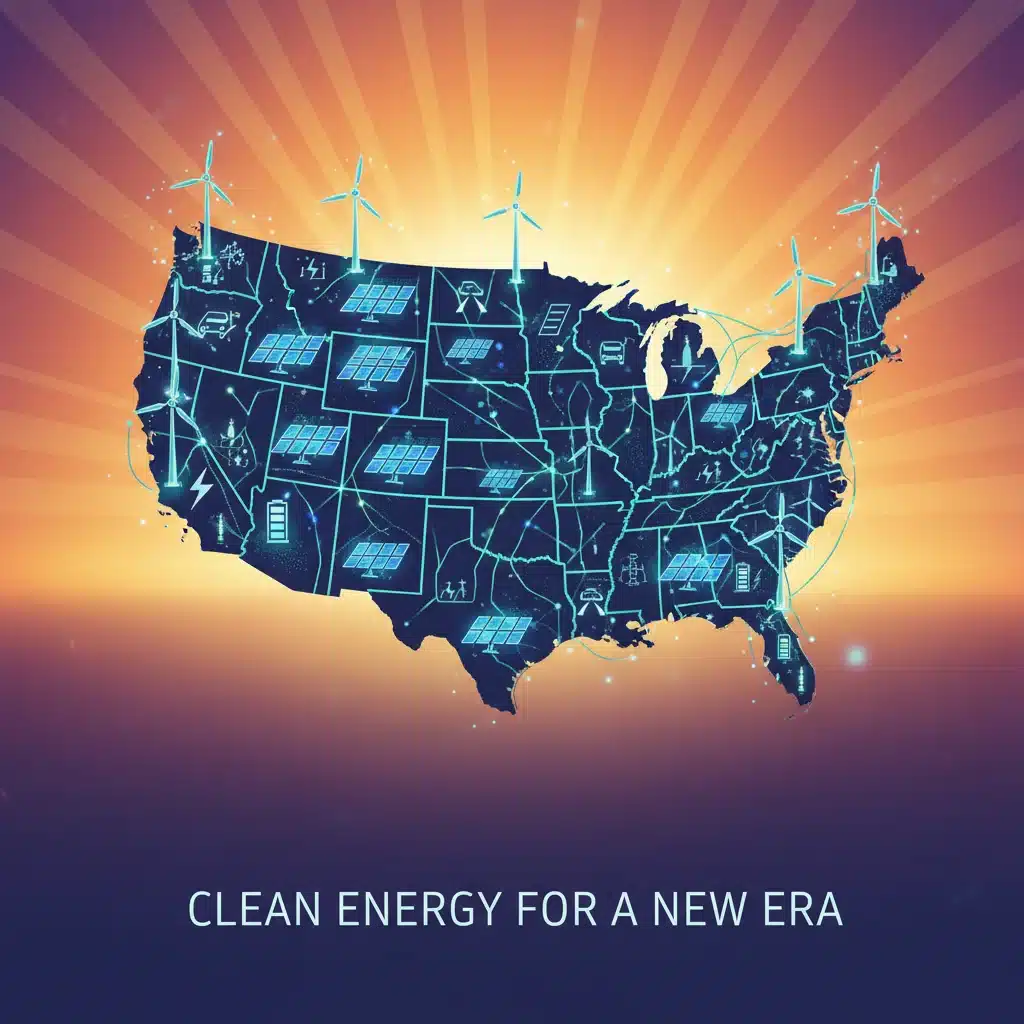
The United States stands at a pivotal juncture in its journey towards a sustainable future. The urgency of climate change, coupled with advancements in renewable energy technologies, has propelled the nation towards an unprecedented US Energy Transition. This monumental shift is not merely an aspiration but a tangible goal, underpinned by significant policy initiatives designed to accelerate the adoption of clean energy sources. Experts project that two major policy shifts are poised to dramatically reshape the energy landscape, leading to an impressive 25% boost in renewable energy capacity by 2027. This article delves into these transformative policies, their projected impact, and what this means for the future of energy in America.
Anúncios
Understanding the Imperative for a Robust US Energy Transition
For decades, the US energy sector has been dominated by fossil fuels, a reliance that has contributed significantly to greenhouse gas emissions and climate change. However, a growing consensus among policymakers, scientists, and the public highlights the need for a rapid pivot towards cleaner alternatives. The benefits of this US Energy Transition are manifold: enhanced energy security, reduced air pollution, job creation in green industries, and a substantial contribution to global climate goals. The economic viability of renewable energy, particularly solar and wind, has also reached a tipping point, making them increasingly competitive with traditional energy sources.
The ambitious target of a 25% increase in renewable energy capacity by 2027 is a testament to the nation’s commitment. This growth will primarily be driven by solar, wind, and storage technologies, which are becoming more efficient and cost-effective. Achieving this goal requires a concerted effort from all sectors, including government, industry, and consumers, to embrace and facilitate this transformative change. The upcoming policy shifts are designed to provide the necessary framework and incentives to make this accelerated transition a reality.
Anúncios
Policy Shift 1: The Inflation Reduction Act (IRA) and its Renewable Energy Incentives
The first and arguably most impactful policy shift driving the US Energy Transition is the Inflation Reduction Act (IRA), signed into law in August 2022. While its name suggests a broader economic focus, the IRA represents the largest climate investment in US history, allocating hundreds of billions of dollars towards clean energy and climate programs. Its provisions are meticulously designed to incentivize the production and adoption of renewable energy technologies, from utility-scale projects to residential installations.
Key Provisions of the IRA Boosting Renewables:
- Extended and Enhanced Tax Credits: The IRA extends and significantly enhances the Investment Tax Credit (ITC) for solar and the Production Tax Credit (PTC) for wind energy for at least ten years. These credits provide substantial financial incentives for developers, making renewable projects more attractive and profitable. The ITC, for instance, offers a 30% tax credit for solar projects, which can be further boosted if projects meet certain domestic content, energy community, or low-income community requirements.
- Manufacturing Incentives: To bolster domestic supply chains, the IRA includes tax credits for manufacturing clean energy components within the US. This encourages the production of solar panels, wind turbine components, and battery storage systems domestically, reducing reliance on foreign supply chains and creating American jobs.
- Direct Pay Option: A revolutionary aspect of the IRA is the ‘direct pay’ or ‘elective payment’ option for certain tax credits. This allows non-taxable entities (like municipalities, rural electric cooperatives, and tribal governments) to receive the cash value of tax credits directly from the IRS, effectively democratizing access to clean energy development.
- Clean Energy Technology Deployment: Beyond utility-scale projects, the IRA offers incentives for homeowners and businesses to install rooftop solar, heat pumps, and electric vehicles, thereby increasing distributed generation and reducing overall energy demand from fossil fuels.
The IRA’s comprehensive approach tackles both the supply and demand sides of renewable energy. By providing long-term certainty for tax credits, it de-risks investments in renewable projects, encouraging developers to plan for sustained growth. The domestic manufacturing incentives are crucial for building a resilient clean energy economy, while direct pay ensures that a wider range of entities can participate in the clean energy boom. These measures collectively create a powerful tailwind for the US Energy Transition, making the 25% renewable energy boost by 2027 a highly achievable target.

Policy Shift 2: Modernizing Grid Infrastructure and Interconnection Reforms
The second critical policy shift, though perhaps less visible to the public than direct subsidies, is the concerted effort towards modernizing the US electricity grid and streamlining interconnection processes. A robust and adaptable grid is fundamental to a successful US Energy Transition, as it enables the efficient integration of intermittent renewable sources like solar and wind, and facilitates the transmission of clean energy from generation sites to demand centers.
Addressing Grid Challenges for Renewable Integration:
- Grid Modernization Initiatives: Various federal and state-level initiatives are channeling investments into upgrading aging grid infrastructure. This includes deploying smart grid technologies, enhancing transmission lines, and developing advanced energy storage solutions. A smarter grid can better manage fluctuations in renewable energy supply and demand, ensuring reliability and stability.
- Interconnection Queue Reforms: Historically, one of the biggest bottlenecks for new renewable energy projects has been the lengthy and complex interconnection queue process. Projects often face years of delays and significant costs to connect to the grid. Regulatory bodies, notably the Federal Energy Regulatory Commission (FERC), are actively pursuing reforms to streamline these processes. FERC Order No. 2023, for example, aims to accelerate the interconnection of new generation to the transmission grid by implementing a ‘first-ready, first-served’ cluster study approach, rather than the traditional ‘first-come, first-served’ method.
- Regional Transmission Planning: Enhanced regional transmission planning is crucial for optimizing the placement of new transmission lines to access high-quality renewable resources and deliver power to load centers. This involves better coordination among states and utilities to identify and build necessary infrastructure, overcoming NIMBYism (Not In My Backyard) and other local opposition.
- Investment in Energy Storage: The IRA also provides significant incentives for battery storage projects, which are vital for firming up renewable energy and providing grid stability. As more storage capacity comes online, the grid’s ability to absorb and dispatch renewable energy improves dramatically, reducing curtailment and enhancing overall system efficiency.
These grid-focused policies are foundational to the accelerated US Energy Transition. Without an updated, flexible, and resilient grid, even the most generous incentives for renewable generation would hit a ceiling. By addressing these infrastructural challenges, the US is paving the way for a truly integrated and sustainable energy system, capable of handling a much higher penetration of renewables and making the 25% growth target not just achievable, but sustainable in the long term.
Projected Impact: A 25% Boost in Renewables by 2027
The combined force of the IRA’s financial incentives and the ongoing grid modernization and interconnection reforms is expected to lead to a significant acceleration in renewable energy deployment. Analysts from various energy agencies and research firms largely concur that a 25% increase in renewable energy capacity by 2027 is a conservative yet robust projection. This translates into hundreds of gigawatts of new solar, wind, and battery storage coming online within the next five years.
Breaking Down the Expected Growth:
- Solar Power Dominance: Solar PV (photovoltaic) is anticipated to be the largest contributor to this growth, driven by falling costs, technological improvements, and the strong ITC. Both utility-scale solar farms and distributed rooftop solar installations will see substantial expansion.
- Wind Energy Expansion: Onshore and offshore wind projects will continue to expand, particularly in regions with strong wind resources. The PTC, along with state-level mandates and offshore wind development goals, will fuel this growth.
- Energy Storage Integration: Battery storage, critical for managing the intermittency of solar and wind, will see unprecedented growth. This will enhance grid reliability and enable greater penetration of renewables.
- Job Creation and Economic Benefits: This surge in renewable energy deployment will create hundreds of thousands of jobs across the manufacturing, installation, operations, and maintenance sectors, providing a significant boost to local economies.
- Reduced Emissions: The most significant environmental impact will be a substantial reduction in greenhouse gas emissions from the electricity sector, moving the US closer to its climate targets under the Paris Agreement.
This projected growth is not just about adding capacity; it’s about fundamentally transforming how the US generates and consumes energy. It signifies a move away from a centralized, fossil-fuel-dependent system towards a more distributed, diversified, and cleaner energy mix. The ripple effects will be felt across industries, from transportation to manufacturing, as electrification becomes a dominant trend in the broader US Energy Transition.

Challenges and Opportunities in the Accelerated US Energy Transition
While the outlook is overwhelmingly positive, the path to a 25% increase in renewables by 2027 is not without its challenges. Supply chain constraints, labor shortages, and local permitting hurdles can still slow down project development. Moreover, ensuring grid reliability with a higher penetration of renewables requires continuous innovation in forecasting, demand-side management, and advanced control systems.
Navigating the Road Ahead:
- Supply Chain Resilience: Efforts to onshore manufacturing and diversify global supply chains will be crucial to mitigate risks and ensure a steady supply of components.
- Workforce Development: Investing in training programs and educational initiatives to build a skilled clean energy workforce is essential to meet the growing demand for talent.
- Community Engagement: Effective engagement with local communities is vital to address concerns and secure support for new projects, particularly for large-scale transmission lines and renewable energy facilities.
- Technological Innovation: Continued investment in research and development for next-generation renewable technologies, advanced energy storage, and grid solutions will ensure sustained progress beyond 2027.
Despite these challenges, the opportunities presented by this accelerated US Energy Transition are immense. It offers a chance to build a more resilient, equitable, and sustainable energy system that benefits all Americans. The technological advancements, economic incentives, and policy support are aligning to create an unstoppable momentum towards a cleaner energy future.
Beyond 2027: The Long-Term Vision for US Clean Energy
The 25% boost in renewable energy by 2027 is a significant milestone, but it is just one step in a much longer journey towards a fully decarbonized economy. The policies currently in place, particularly the IRA, are designed to provide a stable foundation for sustained growth well into the next decade and beyond. The long-term vision for the US Energy Transition includes achieving a carbon-free electricity grid, electrifying transportation and industrial sectors, and developing innovative solutions for hard-to-abate emissions.
This will involve further advancements in areas such as green hydrogen production, carbon capture technologies, and advanced nuclear power. The initial momentum generated by these two major policy shifts will create a virtuous cycle, attracting more investment, fostering innovation, and driving down costs even further. The US aims to become a global leader in clean energy technology and deployment, setting an example for other nations and contributing significantly to the global fight against climate change.
Conclusion: A New Era for US Energy
The United States is unequivocally committed to accelerating its US Energy Transition. The two major policy shifts – the comprehensive incentives of the Inflation Reduction Act and the critical reforms in grid modernization and interconnection – are not just incremental changes; they represent a fundamental reorientation of the nation’s energy strategy. The projected 25% increase in renewable energy capacity by 2027 is a tangible outcome of this commitment, signaling a new era for energy production and consumption in America.
This transition will bring about profound economic, environmental, and social benefits, positioning the US at the forefront of the global clean energy revolution. While challenges remain, the robust policy framework and the spirit of innovation promise a future powered by clean, sustainable, and abundant energy. The journey ahead will require continued dedication and collaboration, but the foundation has been laid for a transformative shift that will redefine the American energy landscape for generations to come.